
Table of Contents
Table of Contents
Key Takeaways
What are 7 Design Trends in Church Refurbishing?
1. Modern Minimalism
2. Using Sustainable and Eco-Friendly Materials
3. Adapting to Reuse of Church Spaces
4. Enhancing Comfort and Accessibility
5. Integrating Technology
6. Use of Multi-Purpose Spaces
7. Use of Community-Centric Designs
Frequently Asked Questions
Key Takeaways
|
The design of a church is more than just its physical appearance; it embodies the spirit and mission of the congregation and expresses religious beliefs through unique architecture. Modern church design trends are evolving to meet the needs of diverse communities, ensuring that worship spaces are both functional and inspiring. A key player in these transformations is church pew refurbishing, which preserves the heritage of these sacred spaces and adapts them to contemporary needs. Let’s explore the top seven design trends in church refurbishing.
What are 7 Design Trends in Church Refurbishing?
1. Modern Minimalism
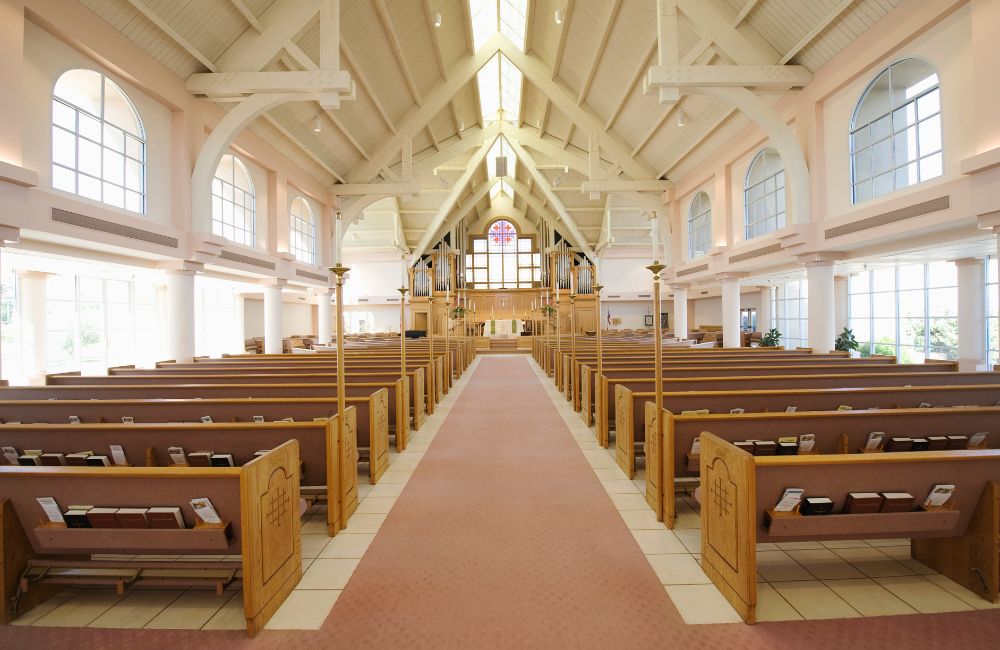
Modern minimalism has become popular in various architectural and interior design fields, including church design. This approach to design focuses on simplicity, functionality, and creating serene spaces that promote peace and contemplation. As congregations seek to create spiritually uplifting and practically functional environments, modern minimalism provides an ideal solution. Church pew refurbishing within this framework plays a critical role, transforming traditional pews into sleek, simple, and highly functional elements of the church interior.
What is Modern Minimalism?
Modern minimalism is characterized by its emphasis on simplicity and functionality. It aims to create uncluttered spaces that foster a sense of calm and focus, which is particularly important in a worship setting. Key elements of modern minimalist design include clean lines, neutral color palettes, and a reduction in unnecessary decor. Minimalism creates a serene environment conducive to worship and reflection by eliminating excess and focusing on the essentials.
In church design, this means keeping pews and other furniture simple and unadorned. The focus is on high-quality materials and craftsmanship rather than elaborate decoration. Neutral colors like whites, grays, and natural wood tones are prevalent, allowing the beauty of the materials and the space itself to shine through. This approach not only enhances the aesthetic appeal of the church but also supports a more focused and distraction-free worship experience.
Impact on Congregation Experience
The impact of minimalist design on the congregation is profound. By reducing visual clutter, minimalist design helps congregants concentrate on the service and their spiritual connection, free from the distractions of overly ornate decor. The simplicity of design often enhances the acoustic quality of the space, making it more pleasant for services. Sounds are clearer, and echoes are minimized, allowing everyone to hear and participate fully in the worship.
Church pew refurbishing in a minimalist style emphasizes both functionality and comfort. Pews are designed to be comfortable for long periods of sitting, with ergonomic considerations such as supportive backs and seats. Subtle cushions can be integrated for additional comfort without detracting from the clean lines and simple aesthetic. This blend of form and function ensures that the physical environment supports the congregation’s spiritual needs.
2. Using Sustainable and Eco-Friendly Materials
Sustainability has become a pivotal focus in many aspects of modern life, including church design. While environmentalists trace the start of the modern environmental movement to 1962, the Catholic church has been aware of environmental issues since 1891.
Today, congregations are still becoming more environmentally conscious, and there is a growing trend to incorporate sustainable and eco-friendly materials into refurbishing church pews. This approach addresses environmental concerns and aligns with the core values of many religious communities, which emphasize stewardship and care for creation. Church pew refurbishing companies play a crucial role in this movement by providing aesthetically pleasing and environmentally responsible options.
Sustainability in Church Design
Sustainable church designs are more than just a trend; they represent a commitment to reducing the environmental footprint of church buildings and promoting a message of stewardship. This approach resonates deeply with many congregations, aligning with the theological concept of caring for God’s creation. By choosing sustainable materials for church pew refurbishing, churches demonstrate their dedication to environmental responsibility. This can inspire congregants to adopt similar values, fostering a community-wide culture of sustainability. Moreover, sustainable designs often lead to long-term savings and operational efficiencies, which are crucial for the financial health of church communities.
Types of Eco-Friendly Materials Used in Refurbishing
The selection of materials is a critical aspect of sustainable church pew refurbishing. Eco-friendly materials include reclaimed wood, reducing the need for new timber and adding a unique, historical character to the pews. Low-VOC (volatile organic compound) finishes are another important material, as they emit fewer harmful chemicals into the air, improving indoor air quality and creating a healthier environment for worship. Sustainable fabrics, such as those made from organic cotton or recycled fibers, are popular for upholstering pews. These durable and environmentally friendly fabrics ensure that the refurbished pews are both long-lasting and eco-conscious.
Benefits to the Church Community
The benefits of using sustainable materials in church pew refurbishing extend beyond environmental impacts. Firstly, these materials can significantly enhance indoor air quality, creating a healthier worship environment for congregants. This is particularly important for individuals with allergies or respiratory issues, as low-VOC finishes and sustainable fabrics reduce the presence of harmful pollutants. Secondly, sustainable materials often lead to long-term cost savings. Although the initial investment might be higher, these materials’ durability and low maintenance requirements mean that they last longer and require fewer replacements. Lastly, adopting sustainable practices in church refurbishing can strengthen the church’s mission of stewardship and care for creation, aligning the physical space with the spiritual values preached within. This can foster a sense of pride and responsibility among congregants, encouraging them to participate in and support other green initiatives within the church community.
3. Adapting to Reuse of Church Spaces
In an era where sustainability and innovation are increasingly prioritized, churches seek ways to maximize their existing spaces. Adaptive reuse is a trend that has gained significant traction, offering a creative solution to the challenges of maintaining historical integrity while meeting contemporary needs. This approach involves repurposing church spaces for new functions, such as community centers or educational facilities, without losing the core worship area. By doing so, churches can continue serving their congregations effectively while expanding their reach and utility.
Concept of Adaptive Reuse
Adaptive reuse is centered around making the most out of existing structures. For churches, this means taking underutilized spaces and transforming them to serve new purposes. This might involve turning unused basements into vibrant fellowship halls, converting side chapels into versatile meeting rooms, or repurposing outdated classrooms into modern educational facilities. The goal is to retain the essence and historical significance of the church while updating its functionality to meet present-day needs. Adaptive reuse not only preserves the architectural beauty of churches but also ensures that these spaces remain relevant and useful for future generations.
Transforming Church Spaces While Preserving Pews
A critical aspect of adaptive reuse in churches is refurbishing pews to fit new layouts and functionalities. This process is more than just a physical transformation; it is about respecting the past while adapting to the present. Church pew refurbishing involves modifying them to suit different seating arrangements or integrating them seamlessly into newly purposed spaces. For instance, pews might be rearranged to create a more open and flexible seating plan for community events or be integrated into new areas such as conference rooms or educational spaces. By doing so, churches can maintain the traditional elements of their interiors while making them suitable for various modern uses. This approach ensures that the historical charm and significance of the pews are preserved, even as their functionality is expanded.
4. Enhancing Comfort and Accessibility
In today’s church design, comfort and accessibility are essential to ensure all congregants can fully participate in worship services. Church pew refurbishing has evolved to meet these needs, incorporating ergonomic designs and accessibility features that cater to everyone, from young children to the elderly and individuals with disabilities. By focusing on these aspects, churches can create an inclusive and welcoming environment that enhances the worship experience for all attendees.
Trends in Ergonomic Designs
Ergonomic designs in church pew refurbishing are increasingly crucial as congregations seek to provide better support and comfort during services. These designs focus on reducing physical strain and enhancing the overall sitting experience. For example, ergonomically designed pews may feature contoured seats and backs that conform to the human body’s natural shape, providing better lumbar support and reducing pressure points. These improvements are particularly beneficial during long services, helping congregants remain comfortable and focused on worship rather than physical discomfort. Church pew refurbishing that incorporates ergonomic principles ensures that every seat offers the best possible support, accommodating the needs of all attendees.
Accessibility Considerations in Pew Refurbishing
Making church pews accessible is a crucial aspect of modern refurbishing efforts. Accessibility features ensure that all congregants, including those with disabilities, can participate fully in services. Wider seating allows for more comfort and ease of movement, while lower height options make pews accessible to individuals who may have difficulty with standard-height seating. Additionally, integrating spaces for wheelchairs within pew configurations is essential for inclusivity. These spaces should be strategically placed to allow wheelchair users to have unobstructed views and easy access to all areas of the church. By prioritizing accessibility in church pew refurbishing, churches demonstrate their commitment to welcoming all community members.
Enhancing Comfort for All Ages and Abilities
Church pew refurbishing that enhances comfort for all ages and abilities involves incorporating features that address the diverse needs of congregants. Padded seating is one such feature, providing additional cushioning to reduce discomfort during extended periods of sitting. Lumbar support is another critical element, offering extra support to prevent strain and promote good posture. Armrests can also be added to pews to assist individuals with limited mobility in sitting down and standing up. These enhancements make the worship experience more enjoyable and accessible for everyone, from young children to seniors, ensuring that all congregants can participate fully and comfortably in church activities.
5. Integrating Technology
Integrating technology into church design is becoming increasingly important as it enhances the worship experience and operational efficiency. Modern church pew refurbishing can seamlessly incorporate various technological upgrades that improve the functionality and accessibility of the worship space. Technology can play a pivotal role in making services more engaging and interactive, catering to the needs of a tech-savvy congregation.
Technology in Modern Church Design
Technology in church design encompasses a range of elements, including sound systems, lighting, and audiovisual equipment. These technological components can significantly enhance the worship experience by providing clear sound, dynamic lighting, and visual aids that help convey messages more effectively. Integrating these technologies into church pew refurbishing involves discreetly embedding speakers, microphones, and wiring within the pews. This integration ensures the technology is seamlessly incorporated into the church’s aesthetic, providing high-quality sound and visual support without detracting from the overall design.
Technological Upgrades in Pew Refurbishing
Technological upgrades in church pew refurbishing might include built-in speakers, charging ports for personal devices, and connectivity options for hearing aids. Built-in speakers can ensure that everyone in the congregation hears the sermon clearly, regardless of their seating position. Charging ports allow congregants to keep their devices powered throughout the service, particularly useful for younger members or those using digital Bibles or other worship apps. Connectivity for hearing aids ensures that individuals with hearing impairments can fully participate in the service, receiving clear audio directly to their devices. These upgrades make services more accessible and engaging for all attendees, enhancing the worship experience.
6. Use of Multi-Purpose Spaces
In contemporary church design, multi-purpose spaces have become increasingly important. Modern churches are not just places for worship; they serve as vibrant community centers that host various activities. These spaces must be versatile and adaptable, from social events to educational programs and outreach services. Church pew refurbishing is crucial in making these multi-purpose spaces functional and welcoming.
Need for Multi-Purpose Church Spaces
Churches today serve as much more than just places of worship. They have become central hubs for community activities, providing spaces for social events, educational programs, outreach services, and more. This evolution reflects the growing recognition of the church’s role in fostering community and supporting diverse activities. Multi-purpose church spaces are essential for accommodating these varied uses. They allow churches to maximize the utility of their facilities, ensuring that they can serve multiple functions throughout the week. This versatility helps churches remain relevant and vital to their communities, offering a welcoming space for various activities and gatherings.
Designing Pews for Flexibility
Creating flexible seating solutions is crucial for multi-purpose church spaces. This flexibility often involves designing pews that can be easily reconfigured to suit different needs. Foldable pews, for example, can be collapsed and stored when not in use, freeing up space for other activities. Stackable seating is another popular option, allowing pews to be stacked and moved as needed. These designs ensure that the seating can be quickly adapted to accommodate various events, from traditional worship services to community meetings, educational classes, and social gatherings. The goal is to create a dynamic and adaptable space that can be used for various purposes without compromising comfort or aesthetics.
7. Use of Community-Centric Designs
In today’s church layouts, the emphasis on fostering community engagement has never been more critical. Churches serve as not only places of worship but also hubs for fellowship, interaction, and community building. Community-centric designs aim to create spaces that invite congregants to gather, interact, and build relationships, thereby strengthening the fabric of the congregation. This involves designing warm, welcoming areas with inviting entrances, comfortable seating, and flexible gathering spaces. By prioritizing community engagement in their designs, churches can create environments that enhance the sense of belonging and foster deeper connections among congregation members. Church pew refurbishing is critical in achieving these goals, transforming traditional seating into spaces that support and encourage interaction and community spirit.
Designing for Community Engagement
In modern church layouts, designs that foster community engagement are crucial. Churches are places for worship, fellowship, interaction, and community building. Community-centric designs focus on creating spaces that encourage congregants to gather, interact, and build relationships. This involves designing inviting and conducive socializing areas, such as welcoming entrances, comfortable seating, and flexible gathering spaces. By prioritizing community engagement in their designs, churches can create environments that strengthen the sense of belonging and foster deeper connections among congregation members.
Refurbishing for Community-Centric Spaces
Church pew refurbishing plays a vital role in creating community-centric spaces. Refurbished pews can be designed to be more comfortable and inviting, encouraging congregants to linger and interact before and after services. This might include adding padding or ergonomic features to the pews to enhance comfort or designing the pews to facilitate easy communication among congregants. Additionally, refurbishing can include integrating modern amenities, such as charging ports or small tables, to make the space more accommodating for various activities. These enhancements help create a welcoming, inclusive environment supporting community engagement and interaction.
Frequently Asked Questions
What role does natural light play in church design?
Natural light is increasingly incorporated into church design to create bright, uplifting New York, NY spaces. Large windows and open layouts help to enhance the worship environment and make the space feel more welcoming and connected to the outdoors.
How are outdoor spaces being integrated into church designs?
Churches blend indoor and outdoor spaces using elements like floor-to-ceiling glass doors and outdoor seating areas. These designs expand the usable space and create a seamless transition between inside and outside areas, promoting community engagement.
How can churches improve accessibility in their design?
Improving accessibility involves incorporating features like wider aisles, lower seating options, and spaces for wheelchairs. These modifications ensure that all congregants, including those with disabilities, can participate fully in worship services.
Lead in Faith and Design — Choose the Best Church Restoration Company in NYC!
Artech Church Interiors Inc. revitalizes sacred spaces, focusing on quality, sustainability, and community-centric designs. Whether you need church pew refurbishing or redesigning your entire worship space in New York, we are here to help.
Contact us today for a consultation and see how Artech Church Interiors Inc.’s church pew refurbishing can meet modern standards while preserving its historical integrity. Let Artech Church Interiors Inc. help you create a beautiful, functional, and welcoming environment for your congregation in New York, NY.