Table of Contents
Key Takeaways
✔ Colorful windows in churches are called stained glass windows, commonly seen in churches to add color, light, and meaning to sacred spaces.
✔ Stained glass began in medieval Europe and evolved over centuries as both a religious tool and a form of art.
✔ Making stained glass involves cutting colored glass, assembling it with lead cames, and often adding painted details by hand.
✔ Stained glass is still used today in both churches and public spaces, with many efforts focused on preserving and restoring historic windows
Stained glass windows have long been one of the most striking features in churches and cathedrals. These colorful designs do more than just decorate—they tell stories, inspire reflection, and fill sacred spaces with light and meaning. For those curious about what are the colorful windows in churches called, or how these beautiful pieces came to be, this beginner-friendly guide breaks it all down in simple terms.
From their history and symbolism to how they’re made and where they’re used today, here are the essentials of sacred glass art.
What Are These Windows Called?
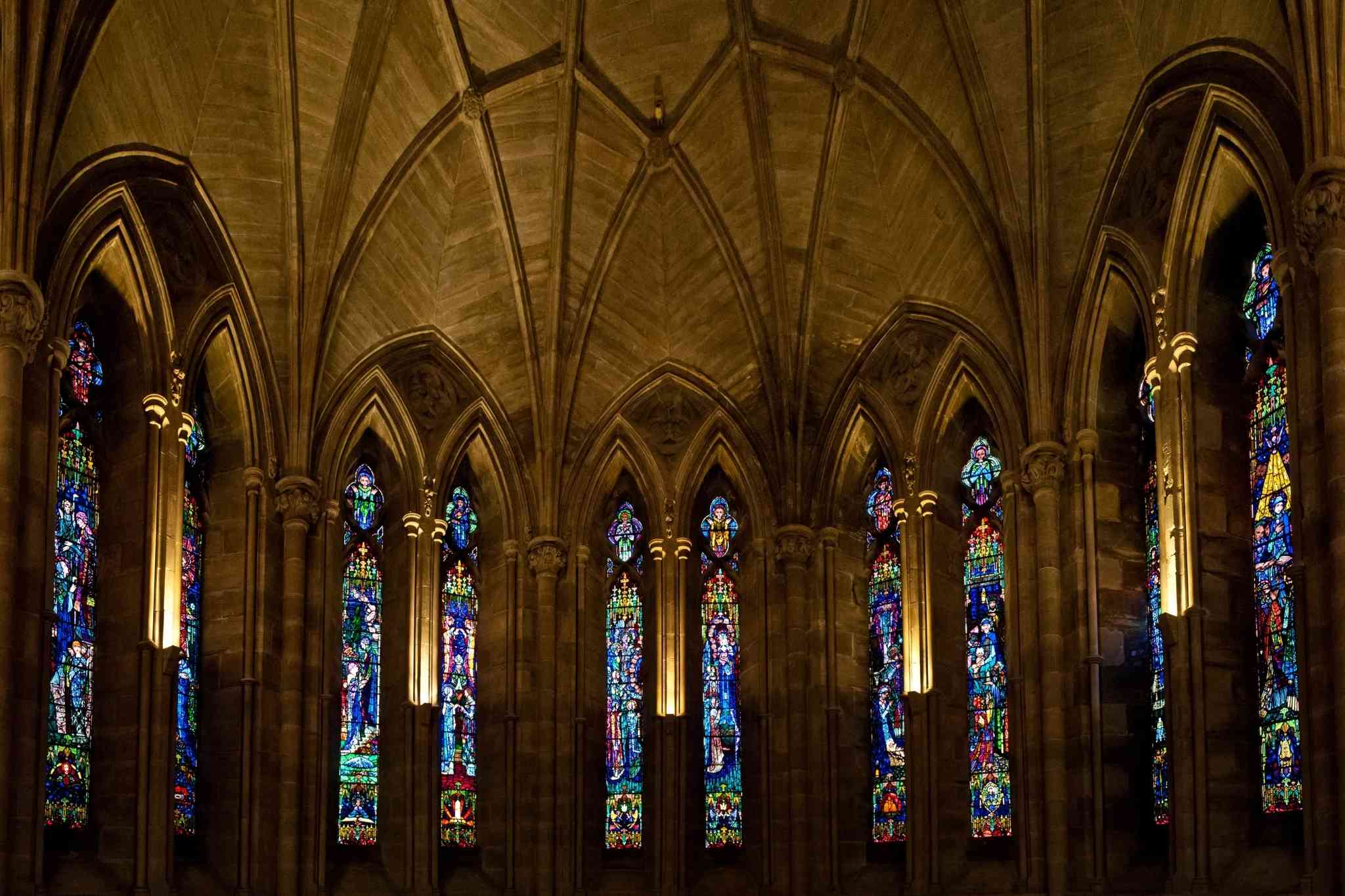
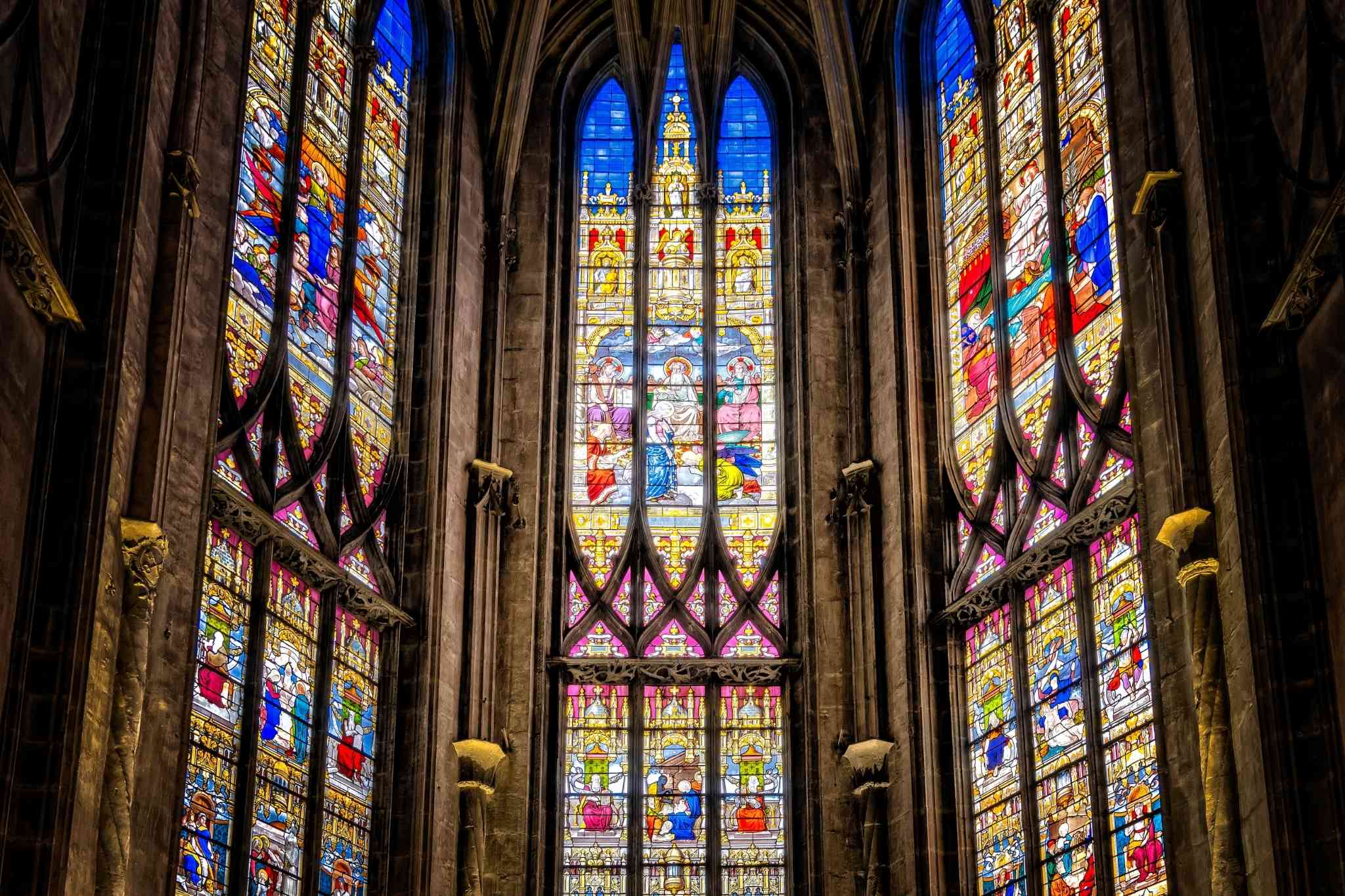
When people ask, “what are the colorful windows in churches called,” the answer is stained glass windows. Stained glass windows are the colorful windows often seen in churches, cathedrals, and other religious buildings. They are made by combining small pieces of colored glass to create decorative or pictorial designs.
Common Associations With Stained Glass Windows
Stained glass in churches is often linked with religion, art, and history. These connections help explain why stained glass became such an important part of church architecture.
- Christianity: Stained glass windows were used to show scenes from the Bible. This helped people understand religious stories even if they couldn’t read.
- Gothic Architecture: Many large cathedrals built during the Gothic period used stained glass as a major design feature. The windows were tall, pointed, and filled with detailed images, often called cathedral stained glass windows.
- Art and Education: Beyond churches, stained glass became a form of public art. It taught moral lessons and showed important events from both history and religion.
- Light and Symbolism: Light passing through colored glass creates a spiritual feel inside the space. The use of light symbolized divine presence in many religious traditions.
Types of Stained Glass Windows
When looking at different churches, one might notice that not all stained glass windows look the same. There are several types, each with its own style and purpose.
- Figurative Windows: These show detailed images of people, usually saints, biblical figures, or religious events.
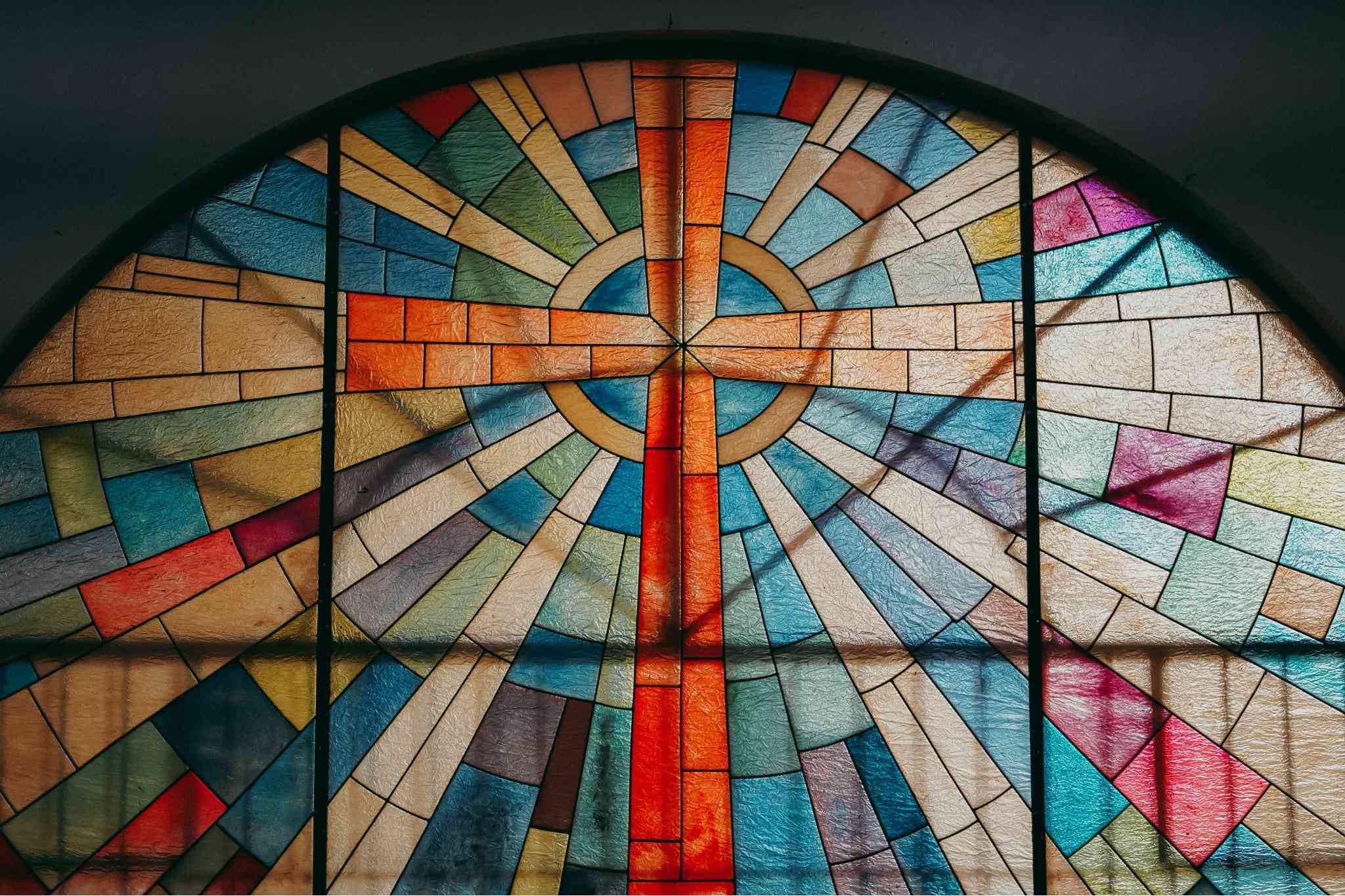
- Geometric Windows: These use patterns and shapes instead of images. They are common in older churches or in areas of a building with less focus on storytelling.
- Rose Windows: Large, circular windows often found at the front or back of cathedrals. They are filled with detailed scenes arranged in a radial pattern.
- Lancet Windows: Tall, narrow windows with a pointed arch at the top. These are a key feature of Gothic-style churches.
A Short History of Stained Glass
Stained glass windows aren’t just beautiful decorations—they tell stories, reflect faith, and add light in the most striking ways. While they’re often seen in cathedrals and chapels, stained glass can be used in many types of buildings, both sacred and modern. The art of stained glass—especially colored glass in churches—has a rich history that spans thousands of years, and each period brought its own techniques, themes, and style.
Early Days
The first known use of stained glass dates back to the time of the Romans and Egyptians. Back then, it wasn’t found in buildings but in small objects. The early stages of what would become cathedral stained glass windows were just starting to take form.
In Britain, some of the earliest examples of stained glass in churches date back to the late 7th century. At the site of the Abbey of Monkwearmouth in Sunderland, England, fragments of colored window glass—green, blue, amber, and red—were discovered. Several of these pieces showed grozed edges, meaning they had been carefully trimmed to fit into window frames, suggesting early use in decorative church windows.
- Roman and Egyptian Origins: Colored glass was used in decorative items like cups and tiles, not windows yet, but the idea had begun.
- First British Examples: In the 600s, early churches in England used small, simple pieces of stained glass, often fitted into stone walls.
Medieval Glass
This was the golden era for stained glass. By the 12th century, it had become a true craft. The metal outlines, usually made of lead, framed beautifully colored glass that told biblical stories and celebrated saints.
- Chartres as a Glass Hub: Chartres, France, became the top place for stained glass creation. The glass made here was rich in color and carefully designed.
- Rose Windows: One of the most famous types of stained glass windows, these circular designs featured complex patterns and deep reds and blues. Chartres Cathedral still has one of the oldest examples.
- Used in Churches and Cathedrals: These windows weren’t just decorative—they educated the public about faith through visual storytelling. Anyone wondering what are the windows in a church called would learn that they were both art and lesson.
Renaissance
In the Renaissance, stained glass shifted in style, becoming more classical and detailed. While still widely used, this period also saw many church windows damaged or destroyed.
- Stylistic Change: Designs became softer and more influenced by paintings, with more human-like figures and balanced scenes.
- The Reformation’s Impact: Many religious images, including stained glass, were removed or smashed during this time. Plain glass replaced the once-colorful displays.
- Loss of Techniques: Due to destruction, many traditional methods of making stained glass were forgotten.
19th Century Revival
This era brought stained glass back in a big way. As people became interested in medieval architecture again, new churches were built with tall windows filled with religious images. Restoration projects also began, and stained glass became a valued art once more.
- Neo-Gothic Movement: Churches returned to Gothic styles, with tall arches and stained glass windows that echoed the past.
- Copied Artwork: When wondering what are the windows in a church called, it’s important to consider that some windows were based on famous paintings, combining fine art with traditional stained glass form.
- Religious Focus: These windows often showed scenes from the Bible, saints, or moral stories, echoing those from the Middle Ages.
Modern Glass
The 20th century introduced new materials, techniques, and ideas. Artists began to explore beyond religious themes, and stained glass appeared in all kinds of buildings.
- Gemmail Technique: Developed in the 1930s by artist Jean Crotti, this method used overlapping shards of colored glass illuminated from behind, creating a glowing, layered effect without the traditional lead framework.
- Abstract Designs: Windows in newer churches, like the Cathedral of Brasília in Brazil, used stained glass in bold, abstract forms with blue, green, and brown tones.
- Beyond Religion: Modern stained glass is found in schools, homes, offices, and museums—not just churches. While people still ask what are the windows in a church called, they now appear far beyond religious spaces.
How to Fix Plaster Walls: Step-by-Step Guide
Now that you’re equipped with the right tools and materials, it’s time to dive into how to fix plaster walls properly. These techniques apply to both residential spaces and historic properties, such as churches, where authenticity, durability, and visual continuity are key. Whether you’re restoring an antique hallway or preserving original church wall finishes, following these steps ensures your repair stands the test of time.
1. Repairing Hairline Cracks
Hairline cracks are among the most common issues in plaster walls. They often result from temperature changes, building settlement, or age-related wear. These cracks are typically cosmetic but still require proper treatment to prevent expansion or moisture intrusion.
Steps to Repair
- Score the Crack: Use a utility knife to widen and clean the crack slightly. This helps the new plaster adhere better.
- Remove Dust and Debris: Brush out any loose particles with a dry brush or vacuum.
- Apply Bonding Agent: Use a liquid bonding agent or plaster conditioner to prime the crack.
- Patch with Plaster: Apply a thin coat of patching plaster or joint compound using a putty knife. Feather the edges to blend into the existing wall.
- Dry and Sand: Allow the compound to dry completely. Sand smooth using fine-grit sandpaper.
- Prime and Paint: Use a quality primer before painting the wall to prevent flashing.
For heritage buildings, always choose compatible plaster materials for restoration. This is especially important when working in structures that require preserving original church wall finishes.
2. Patching Small Holes or Medium Cracks
Cracks or holes under six inches in diameter are fairly straightforward to repair, but the right technique and materials are key for a long-lasting result.
Materials You’ll Need
- Fiberglass mesh tape
- Patching plaster or lime-based plaster
- Sandpaper
- Primer and paint
Repair Process
- Clean the Area: Remove any loose plaster, paint, or dust.
- Apply Mesh Tape: Place fiberglass mesh tape over the crack or hole. This adds strength and prevents future cracking.
- First Coat of Plaster: Apply a thin coat of plaster over the tape, feathering the edges.
- Second Coat: Once dry, apply a second coat for additional coverage.
- Sand, Prime, and Paint: Sand smooth, apply primer, and paint to match the rest of the wall.
When working on ecclesiastical properties, use materials used in church wall plaster to maintain authenticity. Using the wrong compound, such as gypsum on lime walls, can lead to cracking or incompatibility.
How Stained Glass Windows Are Made
Stained glass windows are one of the most striking features found in many churches and cathedrals. For those wondering what are the colorful windows in churches called, the answer is simple—they’re called stained glass windows. These artworks are made using pieces of colored glass and are often seen in places of worship, telling stories through their vivid designs.
Basic Materials Used in Stained Glass
Creating colored glass in churches starts with gathering the right materials. Each piece is carefully selected to build the final design.
- Colored Glass Sheets: These are the main materials used to form the design in a stained glass window. Each sheet is selected for its color, opacity, and texture, allowing artists to create light, shadow, and fine detail in the overall image.
- Lead Came: These are long, narrow strips of lead shaped into channels that fit around the edges of the glass pieces. They are flexible enough to follow intricate curves and strong enough to hold the glass securely in place.
- Solder and Flux: Solder is a metal alloy that melts easily and is used to join the intersecting points of lead came. Flux is applied beforehand to clean and prepare the metal, ensuring the solder bonds properly and the joints are strong.
- Glass Paints or Stains: Special paints or metallic stains are applied to the surface of the glass to add fine details, such as facial expressions, folds in clothing, or background elements. These are usually fired in a kiln to become permanent.
- Support Frame: This is the rigid frame, often made of steel or wood, that supports the entire assembled stained glass panel. It ensures the window stays in place during and after installation.
- Putty or Cement: A waterproofing compound is pushed between the lead and glass to seal the window. This adds strength, keeps moisture out, and prevents the glass from rattling.
- Reinforcing Bars: For larger stained glass windows, horizontal or vertical metal bars are used to give extra structural support. These bars are fixed into the window frame and help the panel withstand stress from weight or movement.
Step-By-Step Process
Making cathedral stained glass windows is a detailed craft, but even beginners can understand the general steps. Each stage is essential in creating strong, long-lasting windows.
- Designing the Pattern: Artists draw a full-sized sketch called a cartoon, which maps out the exact shape and color of every piece.
- Cutting the Glass: Colored sheets are cut to match each shape in the design. Artists use glass cutters and smooth edges for safety.
- Assembling with Lead: Lead came is shaped around each piece of cut glass and carefully fitted together to match the cartoon.
- Soldering the Joints: The lead joints are soldered where they meet, giving the window strength and holding the glass securely.
- Adding Detail: Paint or stain is sometimes applied to the glass surface to add lines, shading, or highlights.
- Cementing and Cleaning: Cement is pushed under the lead strips to waterproof the window. Once dry, the window is cleaned and polished.
- Framing and Installing: The finished panel is fitted into a metal or wood frame and placed into the church wall, where it can catch the light beautifully.
Modern Use and Preservation
Stained glass isn’t just something found in centuries-old cathedrals. Today, it still plays an important role in both sacred and secular buildings. While many people ask “what are the colorful windows in churches called?”—the answer is stained glass—its purpose and style have expanded over time.
From modern places of worship to schools, homes, and museums, stained glass continues to inspire and tell stories through light and color.
Stained Glass in Contemporary Churches and Non-Religious Spaces
Today’s stained glass windows can be found in many different places, not just in cathedrals. While cathedral stained glass windows are famous for their grand size and detail, smaller or more abstract versions appear in places people might not expect.
- Modern Churches and Chapels: Many newer churches use stained glass in creative ways. Instead of traditional saints or biblical scenes, some windows feature abstract patterns or symbolic shapes to reflect themes like peace, unity, or nature.
- Community Buildings and Libraries: Public spaces often use colored glass to bring natural light indoors while also adding beauty. These designs are often inspired by the community’s history or culture.
- Private Homes and Studios: In custom homes or art studios, stained glass may be added as a decorative feature. Even a small stained glass panel can turn ordinary sunlight into colorful art.
- Museums and Art Installations: Some artists use stained glass techniques in galleries and public art projects, blending old craftsmanship with modern ideas.
Restoration of Historic Windows
Historic stained glass windows are fragile. Over time, wind, moisture, and pollution can cause cracks or fading. Restoration is important to preserve these treasures and protect their stories.
- Cleaning and Repairing Panels: Old stained glass windows are carefully removed and cleaned by hand. Any broken or missing pieces are replaced with glass that matches the original as closely as possible.
- Replacing Lead Cames: The strips of lead that hold the glass together (called cames) can become weak over time. Skilled restorers replace them to make the window stable again.
- Adding Protective Glazing: To guard against weather and vandalism, restored windows are often covered with clear protective glass on the outside.
Role of Stained Glass Artists Today
Today’s stained glass artists blend tradition with modern design. Whether restoring ancient works or designing new ones, they play a key role in keeping the craft alive.
- Creating New Works for Modern Buildings: Artists design new windows for schools, hospitals, and homes using both classic and digital techniques. These may include unique types of stained glass windows like faceted glass or fused glass styles.
- Preserving Traditional Techniques: Many artists still use the same hand-cutting and soldering methods from hundreds of years ago. This ensures that the art form remains authentic and valued.
- Teaching and Inspiring New Artists: Some experienced artists teach workshops or open studios to help others learn. This helps keep interest in stained glass strong and supports the next generation of creators
Frequently Asked Questions
Do stained glass windows tell a story?
Yes, many stained glass windows are designed to tell stories, especially in churches. They often show scenes from the Bible, lives of saints, or important events in religious history. Each section or panel may represent a different part of the story. These windows were especially useful in the past when most people couldn’t read.
What is the difference between colored glass and stained glass?
Colored glass is any glass that has been tinted during production. Stained glass, on the other hand, often includes colored glass pieces that are cut, arranged, and held together by lead strips to form an image. Staining can also refer to techniques used to add detail or shading. Not all colored glass is stained glass.
How expensive is stained glass?
The cost of stained glass can vary widely depending on size, design complexity, materials, and labor. Custom pieces and restorations tend to be more expensive. Even small repairs can become costly if the damage is extensive. It’s best to get an estimate from a professional.
How to tell if stained glass is valuable?
Value can depend on the age, condition, craftsmanship, and origin of the window. Signature or studio-made pieces may be worth more. Materials and the presence of hand-painted details also matter. Expert appraisal is usually needed for an accurate evaluation.
Can stained glass be repaired or replaced?
Yes, stained glass can often be repaired or fully replaced by skilled professionals. Repairs might involve fixing cracked panels, replacing missing sections, or re-leading the entire window. In some cases, matching the original design is possible. Full replacement is also an option when restoration isn’t feasible.
Restore or Design Church Windows with Expert Craftsmanship in NYC!
Preserving the beauty of stained glass or creating something new starts with the right team. Artech Church Interiors, Inc. offers trusted services in NYC for stained glass window restoration, custom design, and complete replacement. Whether maintaining historic cathedral stained glass windows or installing new colored glass in churches, every project is handled with skill and care. Based in NYC, the team brings decades of experience to sacred spaces across the region.
Connect with Artech Church Interiors, Inc. in NYC today to schedule a consultation or request a detailed project quote!