
Key Takeaways
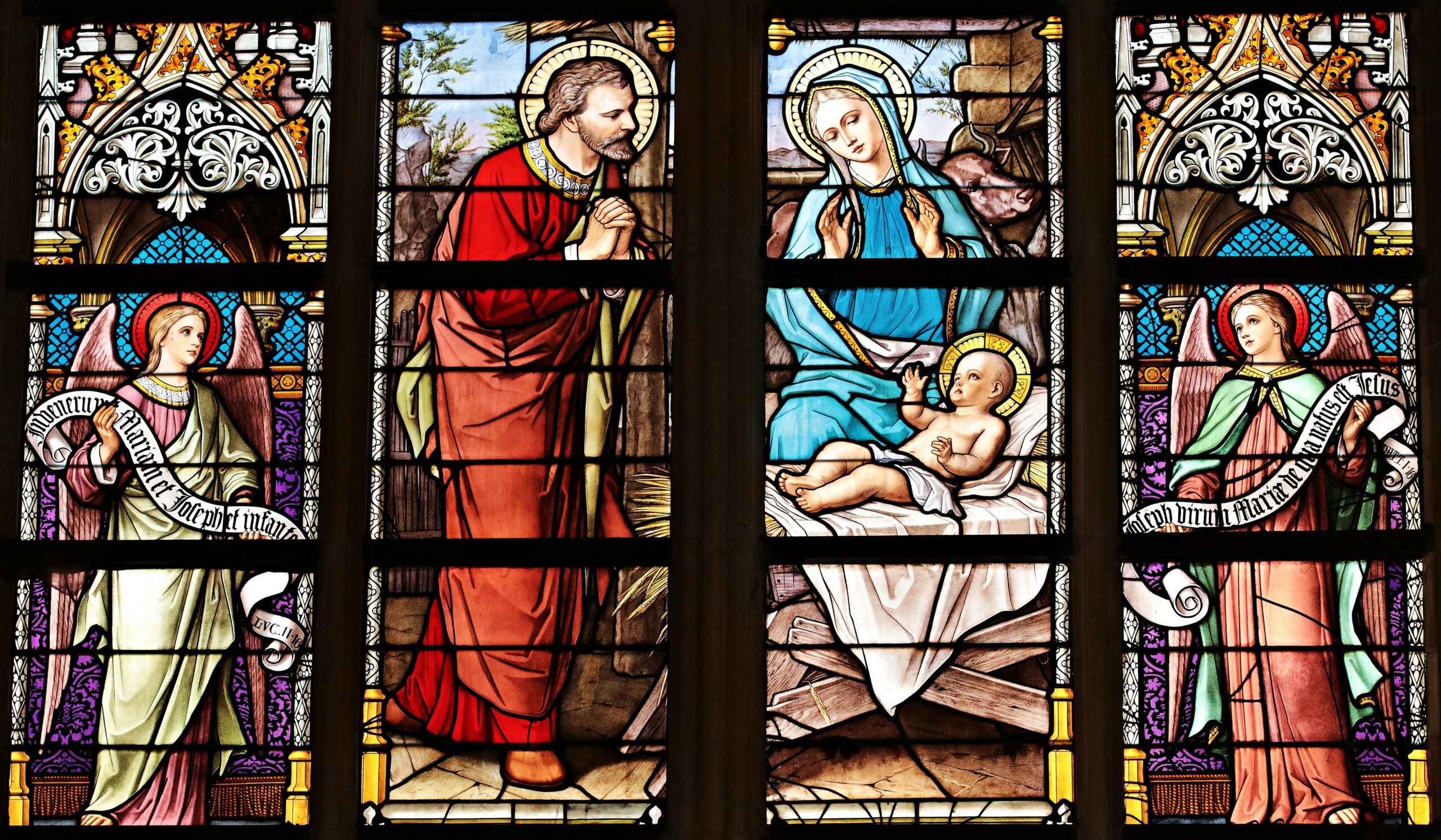
✔ Churches use stained glass windows to teach Scripture and core beliefs through visual storytelling.
✔ Colored light in stained glass supports Christian symbolism by representing divine presence and spiritual illumination.
✔ Stained glass also solves practical design needs by diffusing sunlight and enhancing the worship environment.
✔ Church stained glass combines colored glass, painted details, and lead or copper framing to form durable panels.
✔ Proper care and qualified restoration help protect stained glass windows and preserve a church’s historic character.
Table of Contents
Churches feature stained glass windows to teach faith, shape spiritual atmosphere, and use light as a powerful symbol of God’s presence. Historically, these windows communicated biblical stories to congregations who could not read, while architecturally they softened sunlight and transformed church interiors into spaces set apart for worship.
Over time, stained glass became both a theological and functional element that continues to define how churches look and feel. Here are the key reasons churches feature stained glass windows.
Reasons Why Churches Have Stained Glass Windows
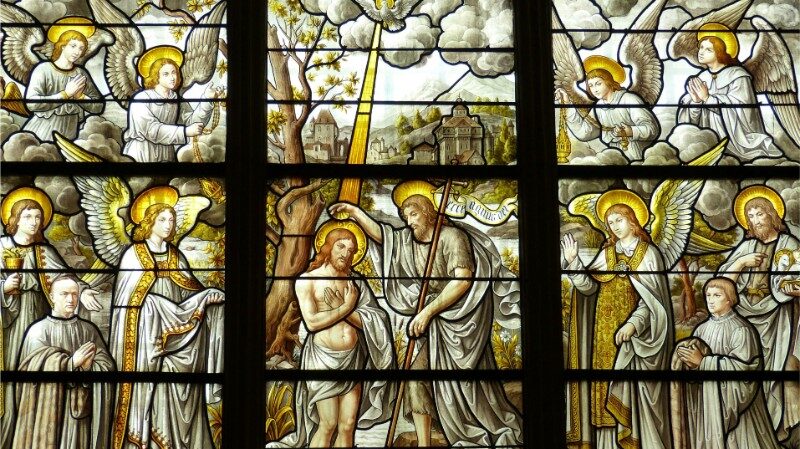
Churches have stained glass windows for reasons that go far beyond decoration. Long before written texts were widely accessible, these windows served as teaching tools, spiritual symbols, and architectural solutions that shaped how people understood faith, light, and worship itself.
✔ Teaching Scripture and Spiritual Truths Visually
Stained glass windows developed into a powerful teaching tool, especially in eras when many worshippers could not read. Churches used them to depict key Bible stories and core doctrines so congregations could learn through images.
✔ Symbolizing Divine Light and Christ’s Presence
Light is a central theme in Christian theology, so church windows were designed to channel sunlight in a way that reinforced spiritual meaning. The movement from shadow to colored light inside the sanctuary served as a visual reminder of God’s goodness and illumination. This symbolism connects naturally to Christian teaching about Christ as the “light of the world,” making stained glass a theological feature as much as an artistic one.
✔ Inspiring Worship Through Beauty, Awe, and Contemplation
Beyond instruction, stained glass windows were intended to lift the heart and mind toward reverence. Their color, detail, and symbolism created an atmosphere that encouraged prayer and reflection. As craftsmanship advanced, windows became larger and more intricate, increasing their emotional and spiritual impact.
✔ Honoring Saints and Strengthening Christian Identity
Many stained glass programs included saints as familiar examples of faith and perseverance. Seeing saints depicted in the same visual space as biblical scenes connected church history to scripture and reinforced Christian identity. For everyday worshippers, these images served as steady reminders of virtue, endurance, and hope.
✔ Supporting Church Building Goals and Community Patronage
Stained glass also served practical needs by bringing light into large church interiors while maintaining a sacred feel. Because the work was expensive and technically demanding, it was often installed late in construction and could take years to complete. Churches frequently recognized donors by inscribing names or including patrons in the imagery to encourage funding and sustain the project.
How Are Stained Glass Windows Made?
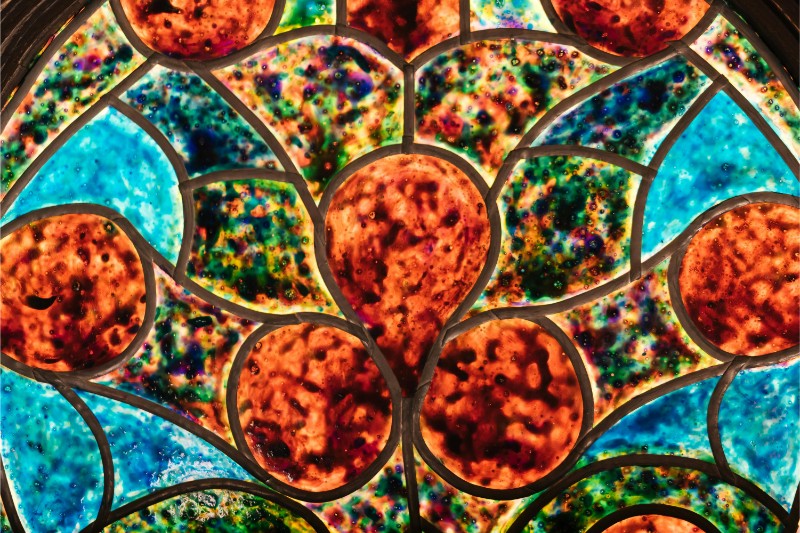
Stained glass is created by adding metallic compounds to molten glass during manufacturing, which permanently colors the glass rather than coating its surface. The base materials include sand, sodium carbonate, and limestone, melted at temperatures around 1,000°C, with specific chemicals added to produce different colors.
- Selenium compounds: Create red tones.
- Cobalt oxides: Produce blue glass.
- Cadmium sulphide: Results in yellow hues.
- Iron and chromium compounds: Create green and brown shades.
Glass manufacturers carefully measure these compounds to produce consistent colors, whether the glass is machine-made or mouth-blown.
Stained Glass Vs. Painted Glass
True stained glass is colored throughout, while painted glass starts as clear glass and gains color from surface treatments. Painted glass uses materials such as vitreous paint, which contains fine glass particles, or silver stain, a historic material that produces yellow to brown tones. After painting, the glass is fired in a kiln so the paint fuses permanently to the surface.
How Stained Glass Windows Are Assembled
Stained glass windows are made by joining individual pieces of colored glass into a unified design using lead or copper frameworks.
- The process begins with artwork, first sketched small and then developed into a full-size drawing called a cartoon that guides the entire layout.
- A cutline template is created from the cartoon to map exactly where each glass piece will sit and where the lead lines will connect everything.
- Glass is selected by color and texture, then cut to shape using diamond or steel tools so each piece fits the pattern closely.
- Lead or copper strips are fitted around each piece, the joints are soldered, and the finished panel is checked for strength and alignment before installation.
Some modern stained glass is produced using CNC machines that etch and paint designs onto clear glass, but traditional hand-crafted methods remain the standard for church stained glass windows.
How Much Do Stained Glass Windows Cost for Churches?
Stained glass windows for churches can range from about $310 to $889 for smaller services, but total pricing may differ.
Restoration costs vary widely based on lead condition, paint loss, and structural damage. Churches planning budgets often assess stained glass alongside other capital projects, including roofing and interior seating.
When evaluating the cost of stained glass windows for churches, long-term preservation is usually more economical than full replacement.
Where to Buy Stained Glass Windows for Churches
Choosing the right source matters because stained glass windows for churches require specialized design, craftsmanship, and installation that protects long-term durability.
- Specialized church stained glass studios: A primary source when churches want to buy stained glass windows for churches that reflect traditional symbolism, proper scale, and liturgical design.
- Historic restoration and conservation firms: A trusted source when the goal is to preserve original stained glass through repair, replication, releading, or stabilization rather than starting over.
- Church interior renovation contractors: A practical source for churches that want stained glass planned and installed as part of a larger renovation scope, including masonry coordination, lighting, and church pew refurbishing.
- Custom art glass workshops: A flexible source for new stained glass that leans modern in style while still meeting the functional needs of large church window openings.
- Regional specialists: A helpful source for stained glass projects in areas with specific weather and building conditions, since they often understand local factors that affect long-term performance.
How to Clean Stained Glass Windows Safely
Improper cleaning is one of the most common causes of damage to stained glass, and using the right care methods helps preserve delicate glass, paint, and lead components.
Step 1: Inspect the Window First
Check for cracks, bulging, loose lead, or flaking paint before you clean, and look closely at joints and edges where problems often start. If the panel seems bowed, rattles, or shifts when lightly touched, stop and plan for professional help.
Step 2: Dry Dust With a Soft Cloth or Brush
Use a clean microfiber cloth or very soft brush to lift dust from top to bottom, working in small sections. Keep pressure light, especially over painted details and along lead lines.
Step 3: Wipe With Distilled Water Only
To clean stained glass windows safely, lightly dampen a microfiber cloth with distilled water and wipe gently, keeping moisture away from seams and corners. Do not spray directly on the glass, and avoid ammonia, vinegar, alcohol-based cleaners, or abrasive tools.
Step 4: Spot-Clean With Mild Soap if Needed
For stuck-on grime, use a tiny amount of mild, non-ionic soap diluted in distilled water and apply it to the cloth, not the window. Use minimal moisture, then follow with a separate distilled-water cloth to remove any soap residue.
Step 5: Dry Completely
Dry right away with a clean microfiber cloth so moisture does not sit in seams or under lead. As you dry, watch for new rattling, powdery residue, or movement that could signal deterioration.
Step 6: Call a Professional When There’s Damage
Bring in a conservator for bowing, cracked pieces, failing putty, or paint loss. Many churches schedule stained glass work alongside projects like church pew refurbishing to protect the whole interior at once.
Frequently Asked Questions
Is stained glass a Catholic thing?
Stained glass is strongly associated with Catholic churches due to medieval church history, but it has also been widely used in Protestant, Orthodox, and non-denominational churches to teach faith, honor saints or biblical themes, and shape a sacred atmosphere.
What is the rarest color of stained glass?
Red is often considered the rarest color of stained glass because it can require gold or copper compounds and careful temperature control, which makes it harder to produce consistently for stained glass windows.
Are old stained glass windows worth anything?
Old stained glass windows can be valuable for their history, craftsmanship, and artistic quality, especially if they are original to a church, made by a known studio, or remain in good condition with intact lead and paint.
When did stained glass in churches start?
Stained glass in churches began appearing in large-scale window form around the 10th and 11th centuries, then expanded rapidly in the medieval period as Gothic architecture allowed larger windows and more detailed storytelling.
Why is red-stained glass more expensive?
Red-stained glass is more expensive because the colorants can be costly and the production process is less forgiving, leading to more waste and higher pricing compared with many other stained glass colors.
Preserve Boston’s Sacred Beauty With Artech Church Interiors, Inc.
Stained glass windows do more than brighten a sanctuary; they carry tradition, teach through imagery, and create a worship space shaped by light and meaning. If your Boston-area church is planning stained glass repair or restoration as part of a larger interior update, Artech Church Interiors, Inc. can help you evaluate next steps with craftsmanship that respects historic details.
Reach out to discuss practical options for protecting your windows and keeping your church’s character strong for years ahead.