

Most wood roof trusses can last 50 years or more with proper installation and routine care, and in some buildings, they can last for the life of the structure. Churches in particular often rely on long-span trusses, which means small issues like chronic moisture or an unapproved modification can have outsized consequences over time.
Here, we’ll cover ways to recognize signs of truss damage and know when to involve church restoration companies for church roof structural repair.
What's Inside
Key Insights
- Wood roof trusses often last 50+ years with proper care.
- Long-span church trusses are less forgiving of moisture or alterations.
- Roof truss lifespan depends on design, moisture control, loads, and upkeep.
- Signs of truss damage include sagging, cracks, staining, and loose plates.
- Early inspections and fast leak fixes reduce major church roof structural repair.
What Is a Roof Truss and Why Does It Matter for Church Buildings?
A roof truss is a triangulated framework designed to distribute roof loads efficiently across a span.
In church buildings, trusses are common because sanctuaries often need wide, open spans without columns. That makes them efficient, but it also means damage at one truss or connection can have outsized consequences for the whole roof system.
Common Truss Types Used in Churches
For churches, understanding the basic truss type helps set realistic expectations for roof truss lifespan and informs the right approach to church roof structural repair when issues arise.
- Wood roof trusses: Common in many mid-century and modern church roofs because they are economical and strong for long spans.
- Heavy timber trusses: Often found in older and historic churches; they can perform exceptionally well when kept dry and properly supported.
- Metal trusses: Sometimes used in additions or retrofits; they can last decades but require corrosion control and connection monitoring.
How Long Will a Truss Last?
A useful way to think about roof truss lifespan is “potential life” versus “actual life.” With proper design, installation, and maintenance, wood trusses commonly reach 50+ years, and in some buildings they last far longer, sometimes matching the building’s life cycle.
Lifespan also depends on the type of truss:
- Wood trusses: Long service life when kept dry, well-ventilated, and not overloaded. Their weak spot is prolonged moisture exposure, which can invite decay and reduce capacity over time.
Metal trusses: Can also last decades, but corrosion, condensation, and connection fatigue become the long-term risks, especially near roof leaks or in humid zones.
6 Factors That Affect How Long Roof Trusses Last
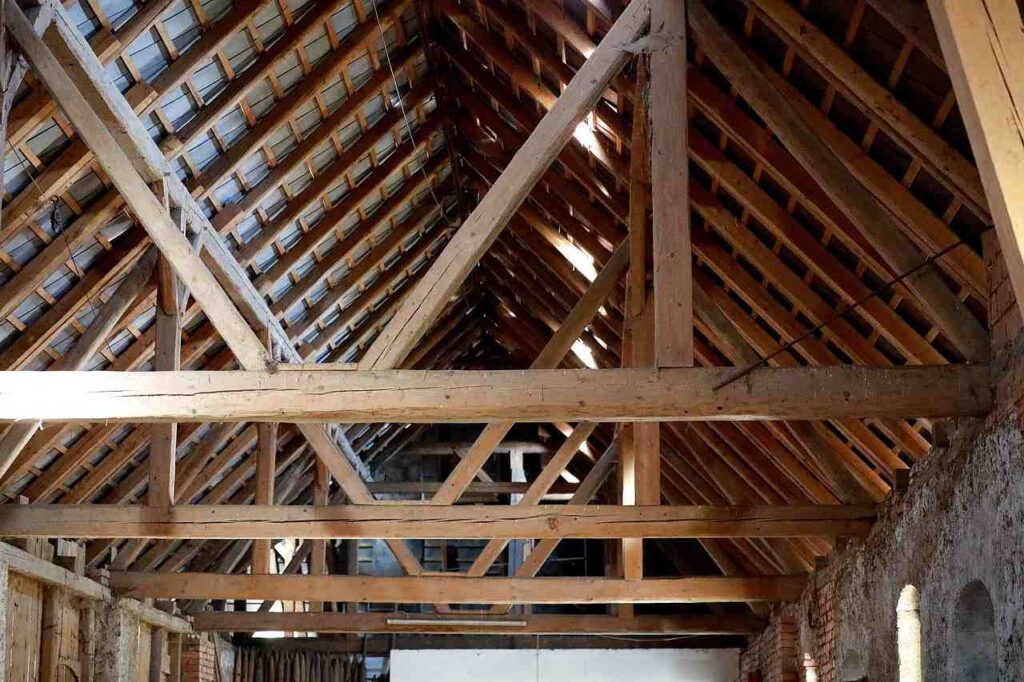
Roof truss lifespan is not based on age alone. In church buildings, how long trusses last depends on real-world conditions like moisture exposure, installation quality, added loads over time, and how quickly problems are addressed.
1. Quality of Original Design and Installation
Trusses are engineered systems. If the original design properly accounted for span, loads, and bracing, the truss system is more likely to reach its expected roof truss lifespan. Installation quality matters just as much: missing bracing, altered members, or improper fastening can create stress paths the truss was not designed to carry.
2. Moisture Exposure and Ventilation Issues
Moisture is the primary lifespan variable for wood trusses. Roof leaks, condensation, and poor ventilation can keep wood wet long enough for biological decay to progress. Decay fungi need suitable temperature, oxygen, and sustained moisture near fiber saturation (around 30% moisture content).
3. Pest Activity and Wood Damage
Termites and carpenter ants can weaken wood members, sometimes in hidden areas near exterior walls, soffits, or where water has softened fibers. Pest damage does not always mean a truss is failing, but it can reduce cross-section and accelerate other issues, which can shorten roof truss lifespan if combined with moisture.
4. Settlement, Structural Movement, and Age-Related Shifting
Even sound trusses can be stressed by building movement. Over decades, small shifts in supports, walls, or foundations can change load paths. In churches, large open spaces and tall walls can translate movement into roof geometry changes, which can show up as cracks, joint movement, or subtle deflection.
5. Weather and Regional Climate Stress
Heavy snow loads, high winds, and repeated freeze-thaw cycles can stress roof systems. The more important point for lifespan is not a single storm, but repeated exposure plus deferred repairs. If a minor leak is left unaddressed through multiple seasons, church roof structural repair becomes more complex and expensive.
6. Repairs, Modifications, and Added Loads Over Time
Church upgrades can unintentionally shorten roof truss lifespan:
- Hanging AV, lighting grids, or decorative features from members not designed for that load.
- Adding new mechanical equipment without verifying structural capacity.
- Altering webs, drilling holes, or cutting members during renovations.
This is one reason churches often involve experienced church restoration companies before major upgrades.
Signs of Truss Damage Churches Should Never Ignore
Because churches often have wide, open sanctuary spans, even minor structural changes can become major concerns if they’re ignored.
- Visible Changes in the Roofline or Ceiling: Roof sagging outside or new dips inside are classic signs of truss damage. Because trusses carry long spans, even small shape changes can signal structural stress.
- Cracks, Splits, or Warping in Truss Members: In attic or roof spaces, watch for cracked, split, or warped wood. Cracking near joints is especially concerning since forces concentrate at connections.
- Moisture Staining, Soft Wood, or Mold Growth: Stains, dampness, soft spots, or mold usually point to ongoing moisture. That can shorten roof truss lifespan and often means church roof structural repair may extend beyond one truss.
- Loose or Shifted Connector Plates and Fasteners: If metal plates look lifted, shifted, or the wood around them is crushed, the joint may be moving or weakening. Connection failures can affect the whole truss system.
- Unusual Sounds or New Interior Movement: New popping, creaking, or ceiling movement is another key sign. If it’s new or getting worse, it’s worth a prompt evaluation, especially over large sanctuary spans.
Truss Repair vs. Replacement: How Churches Decide the Right Approach
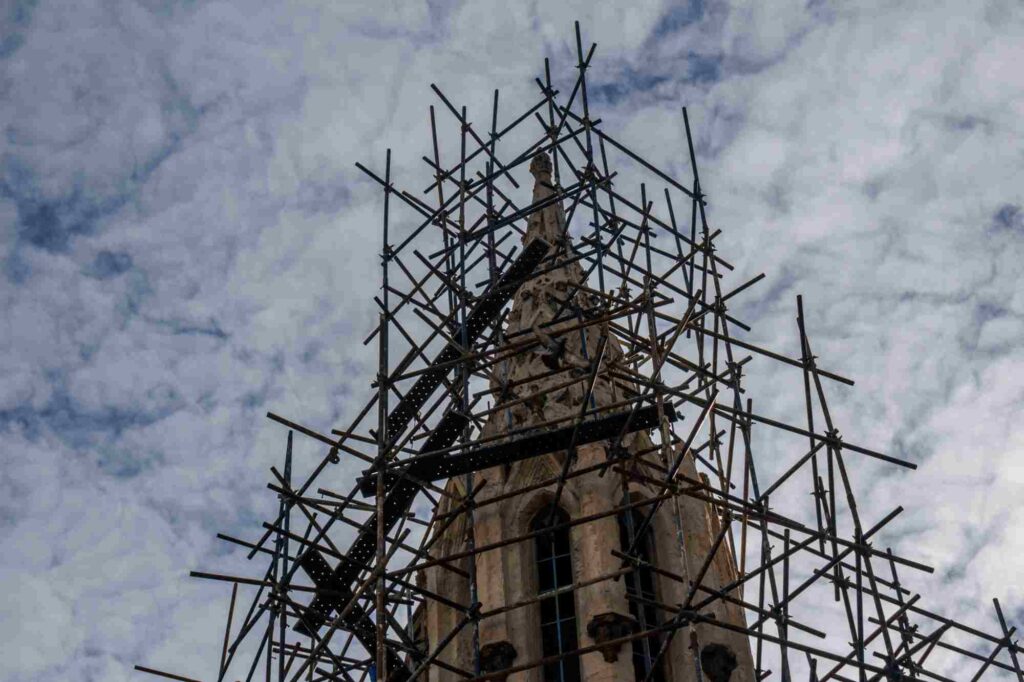
For churches, the goal is to protect safety and preserve the building while making cost-effective decisions that support long-term roof truss lifespan. A proper evaluation looks at whether damage is isolated to a single area or part of a broader pattern that will continue without deeper church roof structural repair.
When Truss Repair May Be Enough
Repairs may be appropriate when damage is localized and the overall system remains stable, for example:
- Minor cracking that can be reinforced under professional direction.
- Connection issues where plates or fasteners need correction.
- Bracing deficiencies that can be upgraded without altering truss geometry.
The key is confirming whether the issue is isolated or systemic. If it’s systemic, the expected roof truss lifespan may already be compromised.
When Replacement or Major Structural Restoration Is More Likely
Replacement or major intervention becomes more likely when:
- Multiple trusses show advanced moisture-related deterioration.
- There is significant, measurable sagging affecting roof geometry.
- Fire, long-term leaks, or repeated wetting has degraded large areas.
Because decay progression is tied to sustained moisture conditions, widespread staining and softness can point to a larger problem than a single repair can solve.
How to Extend the Lifespan of Church Roof Trusses Step by Step
A longer roof truss lifespan usually comes down to simple, consistent prevention. These steps help churches limit moisture exposure, avoid accidental overloading, and catch small issues early, before they turn into major church roof structural repair needs.
- Step 1: Fix Roof Leaks Quickly: Address leaks at flashing, valleys, and penetrations before moisture spreads into the framing.
- Step 2: Control Ventilation and Humidity: Improve attic airflow to reduce condensation that can dampen trusses even without visible leaks.
- Step 3: Maintain Gutters and Drainage: Keep water moving off the roof so it doesn’t back up into edges, soffits, or roof assemblies.
- Step 4: Avoid Structural Modifications: Do not cut, drill, or alter trusses, and don’t add hanging loads without professional guidance.
- Step 5: Schedule Routine Inspections: Inspect regularly and get an evaluation before reroofing, adding rooftop equipment, or renovating.
Special Considerations for Historic Churches in New York City
New York City churches often include older roof assemblies, past reroofing layers, and renovations spanning decades. Hidden moisture pathways can exist around parapets, towers, and roof transitions. In dense urban settings, roof access and staging constraints can also affect how quickly problems get identified and repaired, which can influence roof truss lifespan.
Preservation-Minded Structural Solutions
For landmarked or architecturally significant properties, solutions often aim to:
- Preserve existing members where feasible.
- Use reinforcement methods that respect original geometry.
- Document conditions carefully for stewardship and planning.
This is where historic church restoration contractors add value, because the scope is not just structural integrity; it’s also preserving architectural intent.
Working Around Active Worship Schedules and Community Events
Planning matters in NYC. Phasing, safe access routes, and noise control can be the difference between a manageable repair and a disruptive project. In many cases, the most effective church roof structural repair plan is the one that sequences work around the church calendar.
Frequently Asked Questions (FAQs)
Do trusses sag over time?
Yes. Trusses can sag over time from settling, moisture damage, or added loads. Any visible deflection is one of the key signs of truss damage and should be evaluated to protect roof truss lifespan.
Can roof trusses rot?
Yes. Wood trusses can rot when exposed to persistent moisture from leaks or condensation. Rot is a major reason churches need church roof structural repair and it can shorten overall roof truss lifespan.
Are roof trusses load bearing?
Yes. Roof trusses are load-bearing structural components that support the roof system and transfer weight to the building’s walls or supports. Damage can affect overall roof stability.
What are the warning signs of ceiling collapse?
Common warning signs include sudden sagging, cracking sounds, new ceiling cracks or bulges, falling debris, and visible roofline changes. These can be serious signs of truss damage and need urgent inspection.
Do trusses need purlins?
Not always. Many modern roof trusses don’t require purlins, but some church roofs use purlins to support long spans or improve load distribution. A structural review helps confirm what’s appropriate.
Work With a Team That Understands Worship Spaces
If you want trusses to reach their full roof truss lifespan, prioritize fast leak response, moisture control, and periodic evaluations.
If your church is seeing early signs of truss damage, planning a renovation, or trying to avoid costly surprises, Artech Church Interiors, Inc. can help you think through options, documentation, and next steps in New York City.