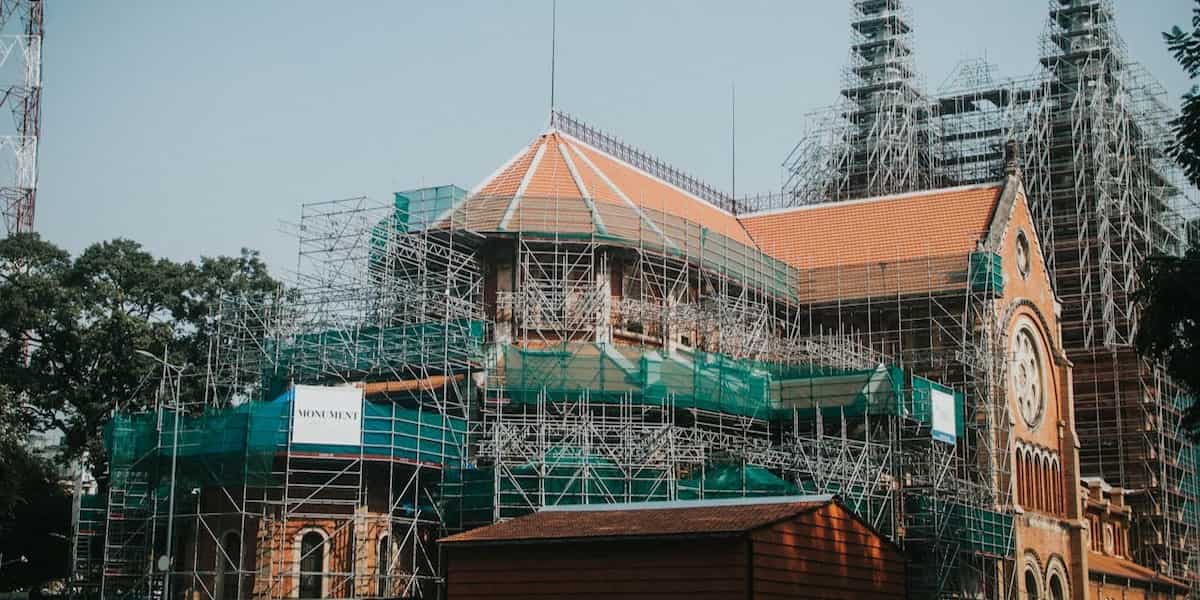

1. Cracks in Brick, Stone, or Stucco
Cracks are often the first visible sign that a church exterior needs attention. Some may look minor at first, but even small openings can let in water and lead to larger issues over time. That is why facade repairs should start with careful evaluation, not guesswork.
What To Look For
- Hairline cracks in stucco or mortar
- Stair-step cracks in brick walls
- Vertical or diagonal cracks near windows and doors
- Cracks that seem longer or wider than before
What It Could Mean
Cracks can happen for several reasons, including natural settling, thermal expansion, moisture infiltration, or mortar breakdown. In older churches, they may also point to long-term wear in exterior masonry systems.
Why It Matters
Cracks make it easier for water to enter the facade. Once moisture gets inside, it can weaken mortar, damage adjacent materials, and create interior leaks. A crack may look small on the surface while hiding a much bigger issue behind the wall.
2. Loose or Falling Masonry
Loose brick, stone, or trim is one of the clearest warning signs that exterior damage has moved beyond cosmetic wear. When parts of the facade begin separating from the building, immediate action is usually needed.
What To Look For
- Bricks or stones that look out of place
- Decorative trim pulling away from the wall
- Small pieces of masonry on the ground
- Crumbling sections near entries, towers, or parapets
What It Could Mean
This can be caused by moisture damage, deteriorated mortar joints, rusting anchors, or structural movement over time. Churches often have heavy exterior details that place additional stress on the wall assembly.
Why It Matters
Loose materials create a safety risk for anyone entering or walking near the building. They also suggest that the surrounding area may be unstable. In many cases, building facade repairs are needed not just where material has fallen, but in the sections around it as well.

3. White Stains or Efflorescence
White, powdery staining on masonry is easy to dismiss as surface discoloration, but it usually points to a moisture problem. The residue forms when water moves through brick, stone, or mortar and leaves salts behind as it evaporates.
What To Look For
- Chalky white buildup on brick or stone
- Streaks below windows, ledges, or roof edges
- Repeated staining after wet weather
What It Could Mean
Efflorescence usually means water is entering the wall and moving back out through the surface. The source may be cracked joints, faulty flashing, roof runoff, or poor drainage.
Why It Matters
The stain itself is not the main concern. The real issue is the moisture behind it. If left alone, that moisture can lead to material breakdown, freeze-thaw damage, and more extensive facade repairs later.
4. Water Stains Inside the Church
Not every facade problem announces itself outside. Sometimes the first clue appears indoors. If you see stains, damp spots, or peeling finishes near exterior walls, the facade may already be letting water in.
What To Look For
- Brown or yellow water stains on walls or ceilings
- Bubbling paint or plaster
- Damp or musty odors
- Mold or mildew near windows or corners
What It Could Mean
Water may be getting through cracked mortar, failing sealant, damaged flashing, or gaps around windows and doors. In some cases, moisture travels before it becomes visible, so the indoor stain may not line up exactly with the exterior entry point.
Why It Matters
Interior stains often mean the problem has gone beyond the outer wall surface. Once moisture reaches interior materials, repair costs usually rise because the damage is no longer limited to the facade alone.
5. Bulging or Bowing Walls
A wall that appears to lean, swell, or shift out of line should never be ignored. This is one of the more serious signs of exterior failure and may indicate structural instability.
What To Look For
- Walls that seem to push outward
- Uneven or wavy masonry lines
- Distorted wall surfaces
- Gaps forming between materials
What It Could Mean
Bulging can result from trapped moisture, deteriorated internal supports, failed anchors, or long-term structural movement. In masonry churches, it may also mean the outer layer of the wall is separating from the backing behind it.
Why It Matters
This kind of movement is not a surface problem. It points to deeper deterioration that can worsen if ignored. At this stage, the building may need more than patchwork. A full assessment is often necessary.
6. Spalling Brick or Flaking Stone
Spalling happens when the surface of brick or stone begins to chip, peel, or break apart. It is especially common in buildings exposed to long-term moisture and seasonal temperature swings.
What To Look For
- Brick faces popping off
- Stone flaking or scaling
- Broken fragments below wall sections
- Pitted or rough masonry surfaces
What It Could Mean
Spalling is often caused by trapped water. When water enters masonry and freezes, it expands and stresses the material from the inside. In some cases, incompatible older repairs also contribute by trapping moisture where it should be able to escape.
Why It Matters
Once the outer surface breaks down, the rest of the material becomes more exposed to weather and decay. What starts as minor surface damage can quickly turn into broader material failure.
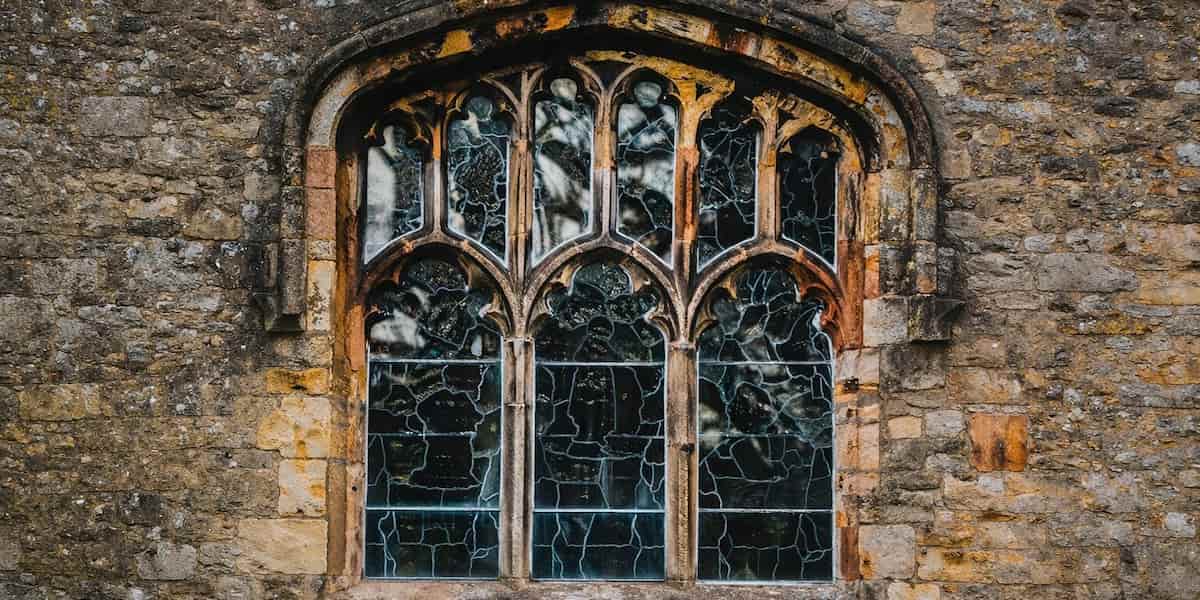
7. Rust Stains Around Windows, Doors, or Metal Elements
Rust stains on masonry often signal hidden corrosion inside the wall. Many church buildings rely on metal lintels, anchors, or supports around openings and decorative features.
What To Look For
- Brown or orange streaks on brick or stone
- Cracks above windows or doors
- Discoloration near metal supports
- Masonry shifting around openings
What It Could Mean
Steel expands as it rusts. That expansion puts pressure on surrounding masonry and can lead to cracks, displacement, or separation of exterior materials.
Why It Matters
What looks like a stain may actually be evidence of a support issue developing behind the facade. If corrosion progresses, it can affect both the stability and appearance of the church exterior.
8. Repairs That Keep Failing
If the same crack, leak, or damaged section keeps coming back, that is a sign the real problem has not been fixed. Repeated patching may buy time, but it rarely solves the underlying issue.
What To Look For
- Cracks reopening after repair
- Water leaks returning in the same area
- Fresh patchwork failing too soon
- Repeated deterioration along one section of wall
What It Could Mean
Recurring problems often point to unresolved moisture entry, structural movement, poor drainage, or incorrect repair materials. This is where building facade maintenance, repair, and inspection becomes especially important.
Why It Matters
A recurring issue usually means the church needs a more thorough diagnosis. That may involve reviewing drainage patterns, wall movement, material compatibility, and past repair history.
Church leaders comparing service providers, including church restoration contractors in NY, should look for teams that understand masonry behavior, moisture problems, and the repair needs of older religious buildings.