
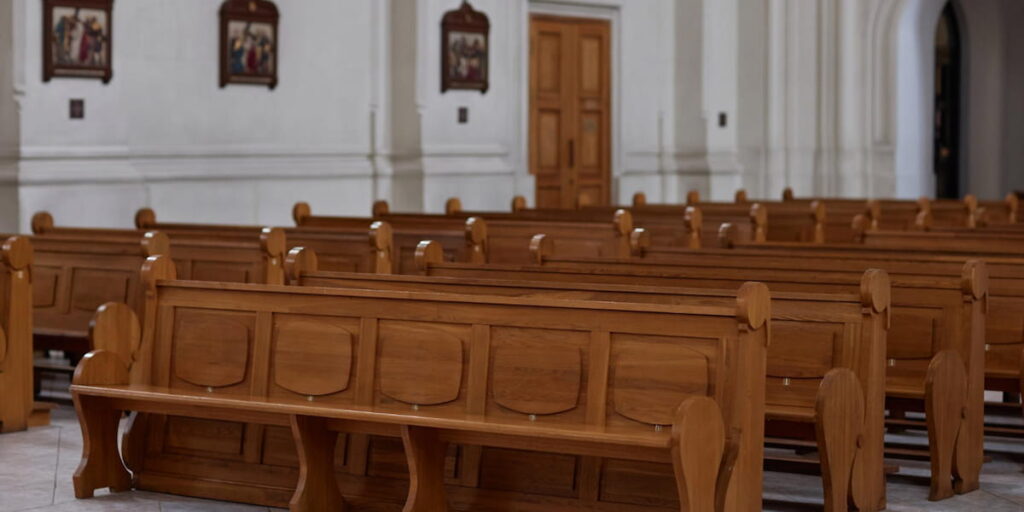
Church seating decisions are shifting. Rising material costs, increased focus on accessibility, and renewed interest in preserving historic interiors are pushing churches to rethink how they invest in their sanctuaries. What used to be a simple choice between buying new or sourcing used now includes a third, often more strategic option: church pew refurbishing.
While many churches focus on the cost of church pews, the better question is which option delivers the most value over time.
WHAT'S IN THIS GUIDE
QUICK FACTS
✔️ The average cost of church pews varies by project.
✔️ New pews offer the most flexibility but cost more.
✔️ Used pews cost less upfront but may add repair and freight costs.
✔️ Church pew refurbishing is often the best middle option.
✔️ The right choice depends on more than price alone.
What Is the Average Cost of Church Pews?
The average cost of church pews varies significantly depending on whether you choose new, used, or refurbished seating. Because every sanctuary differs in size, layout, materials, and condition, there is no universal price point that applies to every project.
Instead of relying on rough estimates alone, churches should view pricing as a range influenced by scope and customization. For the most accurate numbers, it is best to consult experienced contractors like Artech Church Interiors, Inc. who can assess your space, materials, and goals.
Average Cost of Church Pews
| Pew Option | Typical Cost Range (Per Linear Foot) | What Influences Cost | Value Insight |
|---|---|---|---|
| New Pews | $300 – $1,000+ (Per linear foot) |
| Highest upfront investment, best for full redesigns |
| Used Pews | $90 – $600 |
| Lower upfront cost but less predictable long-term value |
| Refurbished Pews | $100 – $230 for restoration $33 – $40 for reupholstery |
| Balanced cost and value when frames are still sound |
Rather than focusing on a single “average,” churches should evaluate total project cost and long-term value. A lower upfront price does not always translate to better stewardship if additional work is required later.
The most reliable way to determine the right investment is to compare options based on your sanctuary’s condition, layout, and goals, then request a detailed estimate tailored to your project.
New Church Pews
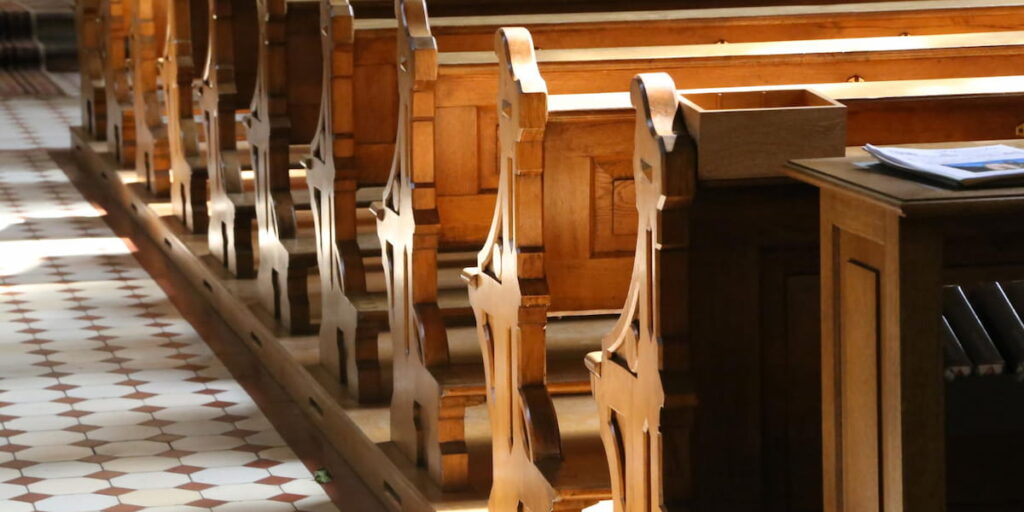
New pews are built from scratch with custom sizing, finishes, and upholstery. They are typically chosen for:
- New construction
- Major sanctuary redesigns
- Custom architectural matching
- Capacity changes
They offer the most control over layout and design, but they also come with the highest upfront investment.
Benefits of New Church Pews
New pews provide full control over design and performance, which can be critical in large renovation projects.
- Custom sizing and layout flexibility
- Consistent materials and finish
- Improved comfort and durability
- Easier alignment with accessibility requirements
Limitations of New Church Pews
The main drawbacks are the higher cost, longer lead times, and added coordination.
- Highest upfront cost of church pews
- Longer production and delivery timelines
- Less suitable for preserving historic interiors
Considerations for New Church Pews
Before choosing new pews, churches should confirm that full replacement is necessary.
- Is a layout redesign required?
- Are existing pews beyond repair?
- Does the budget support total project costs?
If the structure is still sound, church pew refurbishing may be a more efficient alternative.
Used Church Pews
Used pews are typically removed from other churches and resold for reuse. They are often selected for budget-conscious projects where flexibility is possible.
- Lower upfront purchase price
- Limited availability and style matching
- May require repairs or adjustments
Used pews can work well for smaller projects, but they often involve trade-offs in fit, condition, and long-term value.
Benefits of Used Church Pews
Used pews offer a lower entry point for churches with limited budgets.
- Lower purchase price
- Faster availability in some cases
- Opportunity to reuse existing materials
Limitations of Used Church Pews
Used pews may seem economical at first, but the savings can shrink once transport, repairs, and installation are added.
- Limited size and style options
- Potential wear or hidden damage
- Added costs for transport and repairs
Considerations for Used Church Pews
Used pews require a more detailed evaluation before purchase.
- Do dimensions match your layout?
- What repairs will be needed?
- Will freight and installation offset savings?
While they can reduce upfront costs, they may not provide the best long-term value.
Refurbished Church Pews
Refurbishment focuses on improving existing pews rather than replacing them. This includes:
- Wood refinishing
- Upholstery replacement
- Foam upgrades
- Structural repairs
- Kneeler and accessory restoration
Church pew refurbishing allows churches to improve comfort and appearance without replacing structurally sound seating.
Benefits of Refurbished Church Pews
Refurbishment focuses on improving the seating the church already owns.
- Lower cost than full replacement
- Preserves original design and character
- Improves comfort and appearance
- Extends the lifespan of existing pews
Limitations of Refurbished Church Pews
Refurbishment is not the right solution in every situation.
- Limited ability to change layout
- Not ideal for severely damaged structures
- Design changes are constrained by existing dimensions
Considerations for Refurbished Church Pews
Refurbishment works best when the existing pew frames are still strong.
- Are the frames structurally sound?
- Is the layout already functional?
- Is the goal to improve comfort and appearance?
When these conditions are met, church pew refurbishing is often the most cost-effective and practical choice.
How To Decide Between New, Used, and Refurbished Pews
Step 1: Evaluate Structural Integrity
Start by inspecting the pew frames:
- Are joints stable?
- Is there cracking, warping, or pest damage?
- Are pew ends secure?
If the structure is sound, church pew refurbishing is often a viable and cost-effective solution.
Step 2: Identify Comfort and Aesthetic Issues
Common concerns include:
- Worn or outdated fabric
- Flattened cushioning
- Scratched or faded wood finishes
If these are the primary issues, refurbishment can address them without full replacement.
Step 3: Assess Layout and Seating Needs
Church seating typically requires about 22 to 24 inches per person for comfort, though some occupancy estimates allow less.
Consider:
- Current and future congregation size
- Aisle spacing
- Accessibility requirements
If major layout changes are needed, new pews may be more practical.
Step 4: Compare Total Project Cost
Do not evaluate only the purchase price. Include:
- Shipping and handling
- Installation labor
- Repairs or modifications
- Removal of existing pews
The true cost of church pews is the total project investment, not just the base product.
Step 5: Consider Historic Value
If the sanctuary has historic features, preserving original elements can be important. Interior preservation must maintain character-defining features whenever possible.
Step 6: Think Long-Term
Evaluate which option provides:
- Durability
- Ease of maintenance
- Consistent appearance
- Best use of funds over 10 to 20 years
Why Refurbished Church Pews Are Often the Best Option
It Improves the Parts That Need Attention
Refurbishment makes sense when the existing pews still have a strong foundation. Instead of replacing everything, churches can update the elements that affect comfort and appearance most.
Common improvements include:
- Refinishing worn wood
- Replacing outdated upholstery
- Upgrading seat cushioning
- Repairing minor structural issues
- Restoring a cleaner, more polished look
It Often Delivers Better Value
The lowest upfront cost does not always produce the best outcome. Refurbishment often offers a stronger middle-ground solution because it can help churches:
- Avoid paying for full replacement when it is not necessary
- Improve seating at a lower cost than buying new
- Get more predictable results than buying used
- Make visible upgrades without overextending the budget
It Helps Preserve the Sanctuary’s Character
In many sanctuaries, the pews are part of the room’s identity. Their wood tone, profile, and placement contribute to the overall feel of the space. Replacing them can change that look more than expected.
Refurbishment helps preserve what already fits the sanctuary while still allowing churches to modernize key details. This is especially useful when the church wants to:
- Maintain a traditional interior look
- Preserve original craftsmanship
- Improve comfort without changing the room’s character
- Update worn materials without losing visual continuity
It Supports Better Stewardship
Many churches want their spending decisions to reflect both practicality and care for existing resources. Refurbishment supports that approach by extending the life of usable seating rather than replacing it before it is necessary.
This approach can help churches:
- Reduce waste
- Make better use of existing assets
- Invest in targeted improvements
- Stretch the budget further
What To Look for in a Church Pew Refurbishing Company
Choosing the right partner for church pew refurbishing is just as important as choosing the right option. The quality of workmanship and project planning will directly impact both results and long-term value.
When evaluating a company, focus on these key factors:
- Experience with church interiors: Look for a company that understands sanctuary layouts, materials, and the importance of preserving design integrity.
- Scope of services offered: Ensure they handle refinishing, upholstery, repairs, and installation, not just one aspect of the process.
- Portfolio of past projects: Review before-and-after work to assess craftsmanship and attention to detail.
- Material and upholstery options: Ask about fabric durability, foam quality, and finish choices.
- Clear project estimates and timelines: Transparent pricing helps you better understand the true cost of church pews in a refurbishment project.
Knowledge of accessibility and code considerations: The provider should understand spacing, seating, and accessibility requirements to ensure your updated pews meet current standards.
Frequently Asked Questions (FAQs)
How long does church pew refurbishing usually take?
Project timelines vary based on pew count, repair needs, and whether the work is done on-site or off-site. In general, refurbishment takes less time than ordering fully new pews, especially when the existing frames are in good condition.
Can churches refurbish only some pews instead of the entire sanctuary?
Yes. Some churches refurbish only high-use pews first or phase the work over time. This can make church pew refurbishing more manageable for churches working within a tighter budget.
Does reupholstering church pews change how the sanctuary looks?
It can, depending on the fabric, foam, and finish selections. Reupholstery can either preserve the existing style or help refresh the sanctuary’s appearance without requiring full replacement.
Are refurbished pews durable enough for long-term use?
They can be, provided the underlying frames are structurally sound and the work is completed with quality materials. A well-executed refurbishment can extend the life of pews for many years.
Is it better to refurbish pews before or after other sanctuary updates?
That depends on the project scope. If flooring, layout changes, or platform work are planned, churches often benefit from coordinating pew refurbishment with those updates to avoid duplicate labor and scheduling issues.
Ready To Upgrade Your Church Pews? Start With the Right Guidance
If your church in NYC is planning a seating update, working with experienced professionals can make the process more efficient and easier to navigate.
Artech Church Interiors, Inc. brings industry knowledge and hands-on expertise to help churches assess their sanctuary, compare options, and choose the solution that delivers the best long-term value.
Contact us today.