
What’s In This Guide
- What Are the Most Common Signs That a Church Needs Plaster Repair?
- What Do Cracks in Church Walls and Ceilings Reveal About Plaster Condition?
- Why Does Plaster Begin Separating From Church Walls and Ceilings?
- Why Are Water Stains on Sanctuary Ceilings a Warning Sign?
- What Does Sagging Plaster Mean for a Church Building?
- How Can Decorative and Ornamental Plaster Show Signs of Deterioration?
- Why Are Historic Connecticut Churches Especially Vulnerable to Plaster Damage?
- How Does Connecticut’s Climate Affect Historic Church Plaster?
- How Do Aging Materials Contribute to Plaster Failure?
- Why Can Deferred Maintenance Accelerate Church Plaster Deterioration?
- How Can Church Leaders Determine Whether Plaster Damage Is Cosmetic or Structural?
- How Should Churches Respond When Plaster Damage Is Discovered?
- How Should Church Staff Document Plaster Damage?
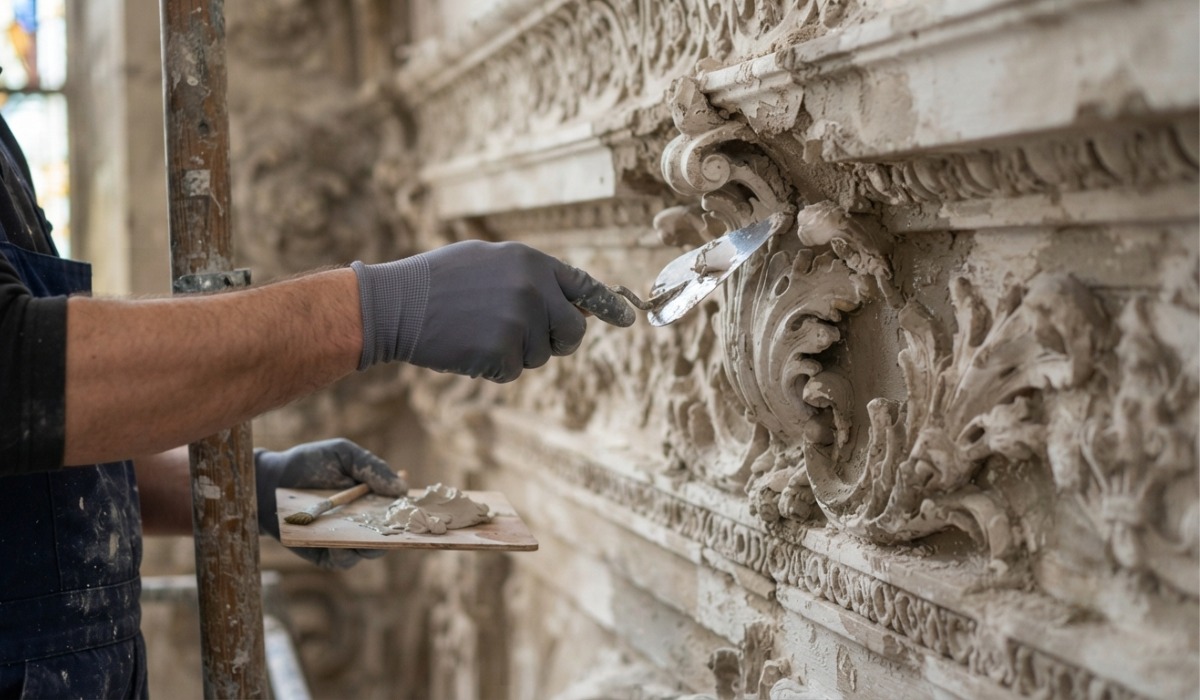
- How Do Restoration Specialists Repair Ornamental Plaster Features?
- How Can Churches Prevent Future Plaster Damage?
- What Routine Inspections Should Churches Perform?
- Frequently Asked Questions (FAQs)
- Schedule a Church Plaster Assessment Before Damage Spreads
Church plaster serves both structural and aesthetic functions in many Connecticut sanctuaries. Historic churches often feature traditional plaster walls, decorative moldings, and ornamental ceilings that contribute to architectural character and congregational heritage.
Over time, moisture, building movement, aging materials, and environmental conditions can cause plaster deterioration. Recognizing early warning signs helps church leaders address issues before restoration needs become more extensive and costly.
Quick Facts
Church plaster repair in CT is needed when sanctuary walls or ceilings show signs of cracking, water stains, sagging, bulging, or loose decorative plaster. Churches should:
- Document visible damage
- Check for moisture sources
- Schedule a professional assessment
- Repair issues early to preserve historic interiors
What Are the Most Common Signs That a Church Needs Plaster Repair?
Visible cracks, water stains, sagging surfaces, loose plaster, and damaged decorative features are among the most common indicators that church plaster repair in CT may be necessary.
Many church buildings display warning signs months or years before severe deterioration occurs. Early identification helps preserve historic materials and prevents damage from spreading.
Common warning signs include:
|
Sign |
What It May Indicate |
|
Cracks |
Structural movement or aging plaster |
|
Water stains |
Moisture intrusion |
|
Sagging ceilings |
Plaster key failure |
|
Bulging surfaces |
Delamination |
|
Decorative damage |
Deteriorating ornamental plaster |
|
Falling debris |
Advanced deterioration |
Church committees should document changes as soon as they appear. Photographs and maintenance records help track progression over time.
What Do Cracks in Church Walls and Ceilings Reveal About Plaster Condition?
Crack patterns often reveal whether damage is cosmetic, moisture-related, or associated with building movement.
Not every crack indicates a serious structural concern. However, recurring or widening cracks deserve attention.
Common crack types include:
|
Crack Type |
Typical Cause |
|
Hairline cracks |
Normal aging |
|
Stair-step cracks |
Settlement movement |
|
Ceiling cracks in churches |
Structural stress or plaster fatigue |
|
Recurring cracks |
Ongoing movement |
|
Wide cracks |
Significant deterioration |
Historic plaster naturally develops minor cracking over time. Large or expanding cracks require further investigation.
Church leaders should monitor:
- Crack width
- Crack length
- Frequency of reappearance
- Location near structural elements
- Associated moisture signs
Why Does Plaster Begin Separating From Church Walls and Ceilings?
Plaster separation occurs when plaster loses its bond with the supporting lath or substrate.
Historic plaster systems depend on mechanical attachment through plaster keys. Age, vibration, moisture, and structural movement can weaken these connections.
Common causes include:
- Moisture infiltration
- Building settlement
- Roof leaks
- Temperature fluctuations
- Aging materials
- Repeated vibration from mechanical systems
Signs of separation include:
- Hollow sounds when tapped
- Bulging wall surfaces
- Loose ceiling sections
- Visible gaps behind plaster
Specialists experienced in historic plaster restoration often stabilize separated areas before complete detachment occurs.
Why Are Water Stains on Sanctuary Ceilings a Warning Sign?

Water stains often indicate active moisture problems that can accelerate plaster deterioration.
Moisture remains one of the most damaging threats to traditional plaster systems. Water weakens plaster bonds and promotes ongoing deterioration.
Common moisture sources include:
|
Moisture Source |
Potential Impact |
|
Roof leaks |
Ceiling damage |
|
Failed flashing |
Wall staining |
|
Gutter overflow |
Exterior infiltration |
|
Window leaks |
Localized deterioration |
|
Condensation |
Surface damage |
Moisture management is a critical building preservation practice because prolonged exposure can damage finishes and structural components.
Warning signs include:
- Yellow or brown stains
- Soft plaster
- Bubbling paint
- Mold growth
- Peeling finishes
Church maintenance teams should address moisture sources before beginning plaster repairs.
MORE ON THIS TOPIC: How to Fix Plaster Walls and When to Call the Pros for the Job
What Does Sagging Plaster Mean for a Church Building?
Sagging plaster often signals advanced deterioration and may present safety concerns.
Ceiling sagging occurs when support systems weaken or plaster separates from the substrate. In severe cases, sections may detach and fall.
Warning indicators include:
- Visible ceiling dips
- Surface bulges
- Cracking around sagging areas
- Falling plaster fragments
Risk levels vary depending on the extent of deterioration.
|
Condition |
Recommended Action |
|
Minor sagging |
Inspection |
|
Moderate sagging |
Professional assessment |
|
Severe sagging |
Immediate evaluation |
Churches should not ignore ceiling movement. Early stabilization may preserve historic materials that would otherwise require replacement.
How Can Decorative and Ornamental Plaster Show Signs of Deterioration?
Decorative plaster often displays damage earlier than flat wall surfaces because intricate features contain more vulnerable details.
Historic sanctuaries frequently include:
- Cornices
- Medallions
- Moldings
- Decorative ceiling panels
- Architectural trim
Common ornamental plaster repair issues seen in historic churches include:
- Missing decorative pieces
- Surface cracking
- Chipping
- Water damage
- Loss of detail definition
Because ornamental features contribute significantly to architectural character, restoration typically focuses on preservation rather than replacement.
Why Are Historic Connecticut Churches Especially Vulnerable to Plaster Damage?
Historic Connecticut church buildings face unique challenges due to age, traditional construction methods, and seasonal environmental exposure.
Many Connecticut churches were constructed decades or centuries ago using materials and techniques different from modern buildings. Historic plaster restoration often requires specialized preservation approaches.
Factors contributing to vulnerability include:
- Aging materials
- Original construction methods
- Long-term environmental exposure
- Deferred maintenance
- Historic preservation requirements
Older churches often contain lime-based plaster systems that require compatible restoration methods.
How Does Connecticut’s Climate Affect Historic Church Plaster?
Connecticut’s seasonal climate contributes to expansion, contraction, and moisture-related plaster deterioration.
Temperature fluctuations place stress on historic materials. Freeze-thaw cycles can worsen existing cracks and openings.
Climate-related challenges include:
|
Environmental Factor |
Potential Effect |
|
Winter freezing |
Material movement |
|
Humid summers |
Moisture absorption |
|
Seasonal shifts |
Expansion and contraction |
|
Heavy precipitation |
Water infiltration |
Northeastern states experience significant seasonal weather variation that can affect historic structures over time.
Church maintenance programs should account for seasonal inspection schedules.
How Do Aging Materials Contribute to Plaster Failure?
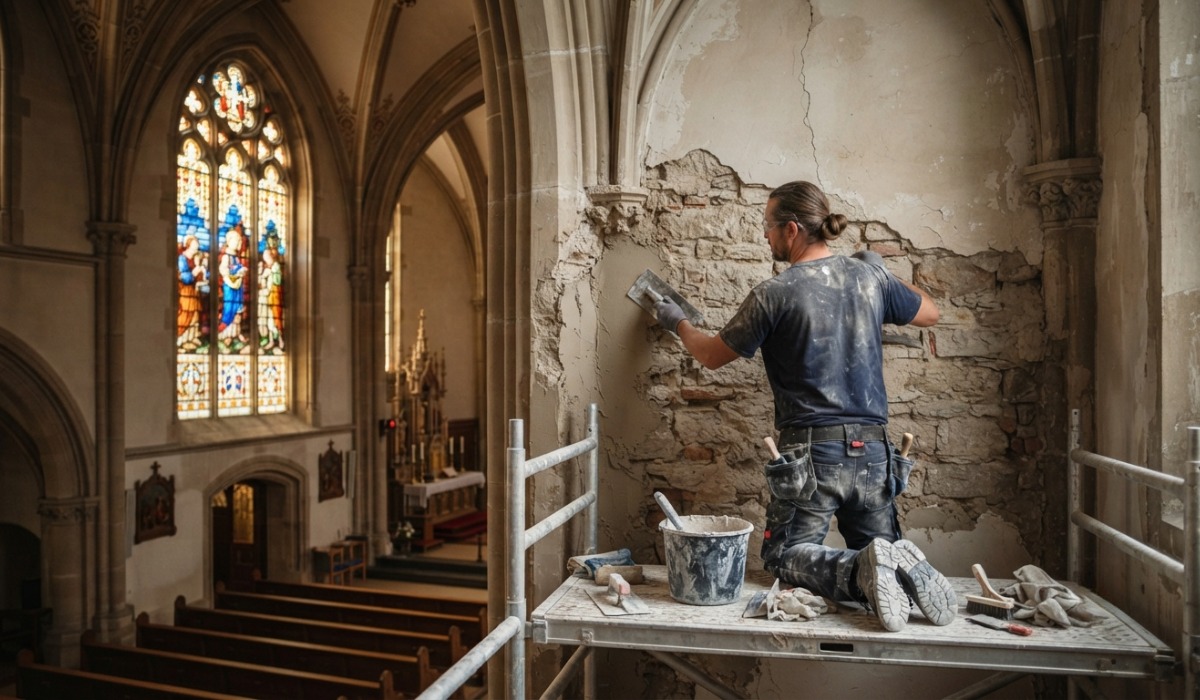
Aging plaster systems gradually lose strength, flexibility, and adhesion.
Traditional plaster materials can last for generations when maintained properly. However, age eventually affects performance.
Common aging-related issues include:
- Weakened plaster keys
- Material brittleness
- Surface erosion
- Reduced adhesion
- Structural movement impacts
Historic plaster often remains repairable even after decades of deterioration.
Material lifespan varies considerably:
|
Material Component |
Typical Longevity |
|
Lime plaster |
Multiple generations |
|
Wood lath |
Long-term with maintenance |
|
Decorative moldings |
Dependent on environmental conditions |
Preservation professionals typically evaluate repair potential before recommending replacement.
Why Can Deferred Maintenance Accelerate Church Plaster Deterioration?
Small maintenance issues often become larger restoration projects when left unresolved.
Many plaster failures begin with manageable problems. Minor roof leaks, drainage issues, or ventilation concerns can gradually damage large sections of plaster.
Common deferred maintenance examples include:
- Unrepaired roof leaks
- Blocked gutters
- Flashing deterioration
- Window seal failures
- Ventilation deficiencies
How Can Church Leaders Determine Whether Plaster Damage Is Cosmetic or Structural?
Location, severity, recurrence, and associated symptoms help distinguish cosmetic concerns from more serious conditions.
Some plaster imperfections are expected in older buildings. Other signs require prompt professional evaluation.
Church leaders should consider:
- Crack size
- Damage location
- Presence of moisture
- Ceiling movement
- Frequency of recurrence
A simple assessment framework includes:
|
Sign |
Cosmetic |
Requires Evaluation |
|
Hairline crack |
Yes |
Rarely |
|
Wide crack |
No |
Yes |
|
Water staining |
No |
Yes |
|
Falling plaster |
No |
Yes |
|
Sagging ceiling |
No |
Yes |
When uncertainty exists, a qualified restoration specialist should perform an assessment.
How Should Churches Respond When Plaster Damage Is Discovered?
Churches should document damage, investigate potential moisture sources, secure affected areas, and obtain a professional assessment before deterioration worsens.
Working with experienced church restoration companies in CT can help churches evaluate damage safely and plan repairs around preservation needs.
Church leaders should focus on:
- Safety concerns
- Moisture control
- Documentation
- Professional evaluation
- Long-term preservation planning
Ignoring visible deterioration rarely resolves underlying causes.
How Should Church Staff Document Plaster Damage?
Thorough documentation creates a baseline for monitoring deterioration and planning repairs.
Church staff should record:
- Photographs of affected areas
- Crack measurements
- Locations of damage
- Dates of discovery
- Signs of moisture
A simple documentation checklist includes:
|
Item |
Purpose |
|
Photos |
Visual record |
|
Measurements |
Track progression |
|
Maintenance logs |
Historical reference |
|
Inspection reports |
Restoration planning |
How Do Restoration Specialists Repair Ornamental Plaster Features?

Ornamental plaster repair often involves stabilization, replication, and restoration of decorative elements.
Decorative features may include:
- Cornices
- Medallions
- Moldings
- Decorative ceiling panels
- Relief work
Typical restoration methods include:
- Damage assessment
- Stabilization
- Mold creation
- Casting replication
- Detail restoration
- Surface finishing
The goal is visual consistency while preserving as much original material as possible.
How Can Churches Prevent Future Plaster Damage?
Preventive maintenance remains the most effective strategy for preserving sanctuary plaster.
Most major restoration projects begin with small maintenance issues that went unnoticed.
A proactive approach includes:
- Routine inspections
- Moisture management
- Prompt repairs
- Environmental monitoring
- Long-term preservation planning
Preventive maintenance often costs significantly less than large-scale restoration.
What Routine Inspections Should Churches Perform?
Seasonal inspections help identify problems before visible deterioration spreads.
Recommended inspection areas include:
- Ceilings
- Roof systems
- Decorative features
- Exterior walls
- Drainage systems
- Windows
Annual inspection checklist:
- Check for new cracks
- Monitor water stains
- Inspect decorative details
- Review roof condition
- Evaluate drainage performance
Many preservation professionals recommend inspections at least twice per year.
Frequently Asked Questions (FAQs)
How long does church plaster restoration usually take?
Small, localized plaster repairs may take a few days. Larger sanctuary repairs or ornamental plaster restoration can take several weeks, especially when custom molds, ceiling access, or moisture correction are needed.
Can church services continue during plaster repair?
Yes, many church plaster repair projects can be phased around worship schedules. The contractor should plan for safe access, dust control, equipment placement, and temporary protection of pews, flooring, and sacred features.
Does insurance cover church plaster damage?
Coverage depends on the cause of damage and the church’s policy. Sudden water damage from a covered roof leak may qualify, while long-term deterioration or deferred maintenance may be excluded.
Should churches repair plaster before repainting?
Yes. Cracked, loose, or water-damaged plaster should be repaired before repainting. Paint may hide surface damage temporarily, but unresolved plaster issues can cause peeling, cracking, and repeated finish failure.
Can plaster damage affect stained glass or woodwork?
Yes. Moisture or building movement that damages plaster can also affect nearby stained glass, trim, pews, and decorative woodwork. A professional inspection can help identify related damage before repairs begin.
Schedule a Church Plaster Assessment Before Damage Spreads
Church plaster damage rarely improves without professional attention. Early assessment can help preserve historic materials, support sanctuary safety, and prevent minor cracking, staining, or sagging from turning into a larger restoration project.
Artech Church Interiors, Inc. provides church restoration and preservation services for sanctuaries with traditional plaster systems, decorative architectural features, and historic interior details.
Contact Artech Church Interiors, Inc. to schedule a professional plaster assessment for your church sanctuary.