
What’s in This Guide
- What Does Church Pew Refurbishing Include?
- When Should Connecticut Churches Refurbish Pews Instead of Replacing Them?
- What Does the Pew Refurbishing Process Look Like Step by Step?
- How Does Church Pew Restoration in Connecticut Protect Historic Woodwork?
- How Can Church Committees Prepare Before the Project Starts?
- How Should Churches Care for Refurbished Pews?
- Frequently Asked Questions
- Plan Your Church Pew Refurbishing Project
Church pew refurbishing gives Connecticut congregations a way to renew worn seating without discarding the craftsmanship built into the original woodwork.
Before a committee approves a project, leaders need to understand what refurbishing covers, when it makes more sense than replacement, and how the process protects historic pews.
Quick Facts
- Church pew refurbishing covers refinishing, reupholstery, cushion replacement, and structural repair, often for less than new pews.
- Refurbishing fits when frames are sound, and problems are cosmetic or comfort-related.
- Church pew restoration in Connecticut calls for gentle, preservation-minded methods on historic woodwork.
- Projects move through six stages, from assessment to final inspection.
- Committees should document pew conditions before approving budgets.
What Does Church Pew Refurbishing Include?
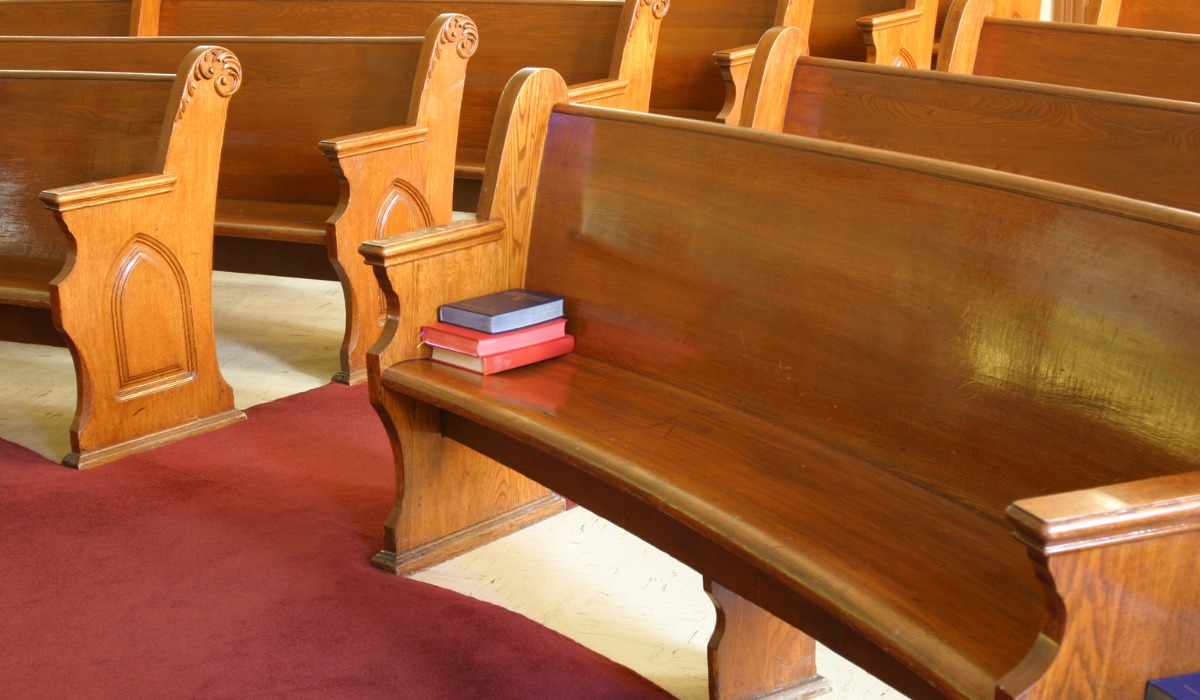
Pew refurbishing is the process of restoring existing pews through refinishing, reupholstery, cushion replacement, and structural repair. Rather than removing and replacing the seating, refurbishing renews the wood, fabric, and hardware your congregation already owns.
Most projects combine several services based on the condition of the pews:
- Pew refinishing: Sanding, staining, and sealing wood surfaces to remove scratches, fading, and dull finishes.
- Reupholstery: Replacing torn, stained, or outdated fabric on seats and backs.
- Cushion replacement: Installing new foam and padding where seating has compressed or become uneven.
- Structural repair: Tightening loose joints, reinforcing wobbly pew ends, and repairing cracks or splits.
- Hardware updates: Replacing broken book racks, kneelers, or fasteners.
Because each pew set wears differently, a professional assessment usually determines which combination of services makes sense for a specific sanctuary.
When Should Connecticut Churches Refurbish Pews Instead of Replacing Them?
Refurbishing makes sense when the pew frames are structurally sound and the problems are cosmetic or comfort-related. Replacement becomes the better path when pews suffer from widespread rot, repeated structural failures, or when the sanctuary needs a new seating layout.
Use this comparison to frame the discussion with your building committee:
|
Factor |
Refurbishing Fits When… |
Replacement Fits When… |
|
Frame condition |
Frames are stable and solid |
Frames crack, rot, or repeatedly fail |
|
Main complaints |
Worn fabric, flat cushions, dull wood |
Safety concerns or instability |
|
Layout needs |
The current arrangement still works |
Accessibility or layout changes are required |
|
Historic value |
Pews carry architectural or sentimental value |
Pews are newer with no preservation significance |
|
Budget approach |
Lower upfront investment preferred |
Long-term repair costs exceed new seating |
Many Connecticut sanctuaries hold pews that were handmade decades or even a century ago. When that original craftsmanship is still structurally sound, church seating restoration preserves materials that would be difficult and expensive to reproduce today.
READ MORE: Church Pew Repair vs. Replacement: What to Consider Before You Decide
What Does the Pew Refurbishing Process Look Like Step by Step?
A professional church pew refurbishing project follows a structured sequence, moving from assessment through final inspection. Understanding each stage helps committees set realistic expectations for scheduling and worship continuity.
Step 1: Assess the Condition of Every Pew
A specialist inspects frames, joints, upholstery, cushions, and finishes across the full pew set. The assessment identifies which pews need structural work, which only need cosmetic attention, and whether any sections require special care.
Step 2: Plan Scope, Materials, and Scheduling
The church and contractor agree on fabrics, stain colors, foam density, and finish types, along with a schedule that works around services, weddings, and seasonal events. Many projects can be phased so the sanctuary stays usable.
Step 3: Complete Structural Repairs First
Craftsmen repair cracks and splits, tighten loose joints, and reinforce weak pew ends before any cosmetic work begins. Solid structure protects the investment in new finishes and fabric.
Step 4: Refinish the Woodwork
Pew refinishing involves careful surface preparation, sanding out scratches and wear, applying stain matched to the sanctuary’s existing tones, and sealing with a protective topcoat built for decades of use.
Step 5: Reupholster Seats and Replace Cushions
New padding and durable fabric restore comfort for long service. Churches typically select materials that coordinate with flooring, wall colors, and other interior elements for a cohesive look.
Step 6: Inspect, Reinstall, and Review
The final stage covers quality checks, reinstallation or repositioning, and a walkthrough with church leadership to confirm the work meets expectations.
How Does Church Pew Restoration in Connecticut Protect Historic Woodwork?
Restoring pews in Connecticut sanctuaries frequently involves seating that qualifies as a character-defining feature of a historic interior, so preservation-minded methods matter as much as the finished appearance.
Use Gentle Refinishing Techniques Instead of Aggressive Stripping
Preservation-minded refinishing relies on hand sanding or controlled mechanical sanding rather than harsh removal methods. The National Park Service cautions against destructive finish removal methods such as torches or sandblasting, along with harsh cleaning agents that can permanently alter historic wood. Gentler techniques protect the surfaces that give older pews their character.
Match Stains and Finishes to the Original Wood
New finishes should complement the existing tones and grain of the pews rather than change their appearance. Careful color matching helps restored seating blend with the rest of the sanctuary’s woodwork and keeps the interior visually consistent.
Reinforce Original Components Rather Than Replacing Them
Retention and repair come first whenever possible. Strengthening existing joints, frames, and pew ends preserves the original craftsmanship and avoids removing material that would be difficult to reproduce today.
Handle Carvings and Decorative Details with Extra Care
Carvings, end panels, and other decorative elements are often the most vulnerable parts of a historic pew. These details call for slower, more deliberate restoration work so their definition and character remain intact.
Coordinate Early with the Connecticut State Historic Preservation Office
Churches listed on a historic register, or located within a historic district, may want to check with the Connecticut State Historic Preservation Office, which administers the state and federal programs that protect Connecticut’s historic buildings. Early coordination can clarify whether any approvals or documentation apply to the project.
How Can Church Committees Prepare Before the Project Starts?
Preparation shortens the approval process and prevents surprises once work begins. A committee that documents conditions and sets priorities early gives contractors what they need for an accurate proposal.
Use this checklist before requesting quotes:
- Photograph representative damage, including worn fabric, flattened cushions, scratched wood, and loose joints.
- Count the pews and note approximate lengths.
- Flag structural concerns, such as wobbly pew ends or pews that shift when used.
- List design goals, including preferred fabric tones and whether finishes should match other sanctuary woodwork.
- Identify scheduling constraints, such as holidays, weddings, and weekly service times.
- Clarify decision-making, so the contractor knows who approves materials and budgets.
How Should Churches Care for Refurbished Pews?
Proper care protects the investment a congregation makes in church pew refurbishing and helps new finishes and fabrics last for decades. A few simple habits keep restored seating in strong condition between professional services.
Dust and Clean Wood Surfaces Gently
Regular dusting with a soft, dry cloth keeps refinished wood looking its best. Avoid abrasive pads, harsh chemicals, and all-purpose sprays that can wear down protective topcoats over time.
Vacuum Upholstery and Address Spills Quickly
Light vacuuming keeps new fabric and cushions free of dust and debris. Blotting spills right away, rather than scrubbing, helps prevent stains from setting into the upholstery.
Control Humidity in the Sanctuary
Wood responds to seasonal swings in moisture, which can affect joints and finishes. Keeping indoor humidity reasonably stable throughout the year helps refurbished pews stay solid and prevents unnecessary movement in the wood.
Inspect Pews on a Regular Schedule
A quick visual check at least once a year helps catch loose joints, finish wear, or fabric damage early. Spotting small issues before they spread keeps maintenance simple and repair costs low.
Avoid Practices That Damage New Finishes
Dragging pews across the floor, taping decorations directly to the wood, and placing items on freshly finished surfaces can all shorten the life of a refurbishment. Establishing a few handling guidelines for staff and volunteers goes a long way.
Frequently Asked Questions
How long does a church pew refurbishing project take?
Timelines depend on the number of pews, the scope of work, and material availability. Smaller refinishing projects may take days, while full church seating restoration with reupholstery and structural repair can run several weeks. Phased scheduling allows many churches to continue holding services throughout the project.
Can pews be refurbished without closing the sanctuary?
Yes, in many cases. Contractors can work in sections, refurbish pews off-site in rotating batches, or schedule work between services. Discuss worship schedules during the planning phase so the contractor can build the timeline around congregation life.
Is pew refinishing safe for antique or handmade pews?
Yes, when handled by specialists using preservation-appropriate methods. Antique pews call for gentle cleaning, careful sanding, and finishes that respect the original wood. Aggressive stripping or harsh chemicals can damage historic material permanently, which is why experience with sacred spaces matters.
Should all pews be refurbished at once?
Not necessarily. Some churches phase the work by section based on budget or condition. A phased approach spreads costs over multiple budget cycles while still delivering visible improvement, though completing the full set at once ensures consistent color matching across the sanctuary.
How do churches choose fabric for reupholstered pews?
Most churches select fabrics based on durability, cleanability, and coordination with the sanctuary’s flooring, wall colors, and stained glass. Commercial-grade upholstery fabrics hold up well under weekly use, and a restoration specialist can provide samples to review under the sanctuary’s actual lighting.
Plan Your Church Pew Refurbishing Project
Restoring church pews starts with understanding the condition of the seating, the needs of the worship space, and the best path forward. Artech Church Interiors, Inc. helps congregations throughout Connecticut and the Northeast evaluate whether refurbishing, refinishing, reupholstery, repair, or replacement makes the most sense.
Our team provides church-focused craftsmanship for wood refinishing, upholstery, cushion replacement, and structural reinforcement, with options that can be planned around service schedules.
Contact us to schedule a no-cost assessment and get clear guidance for your pew project.