
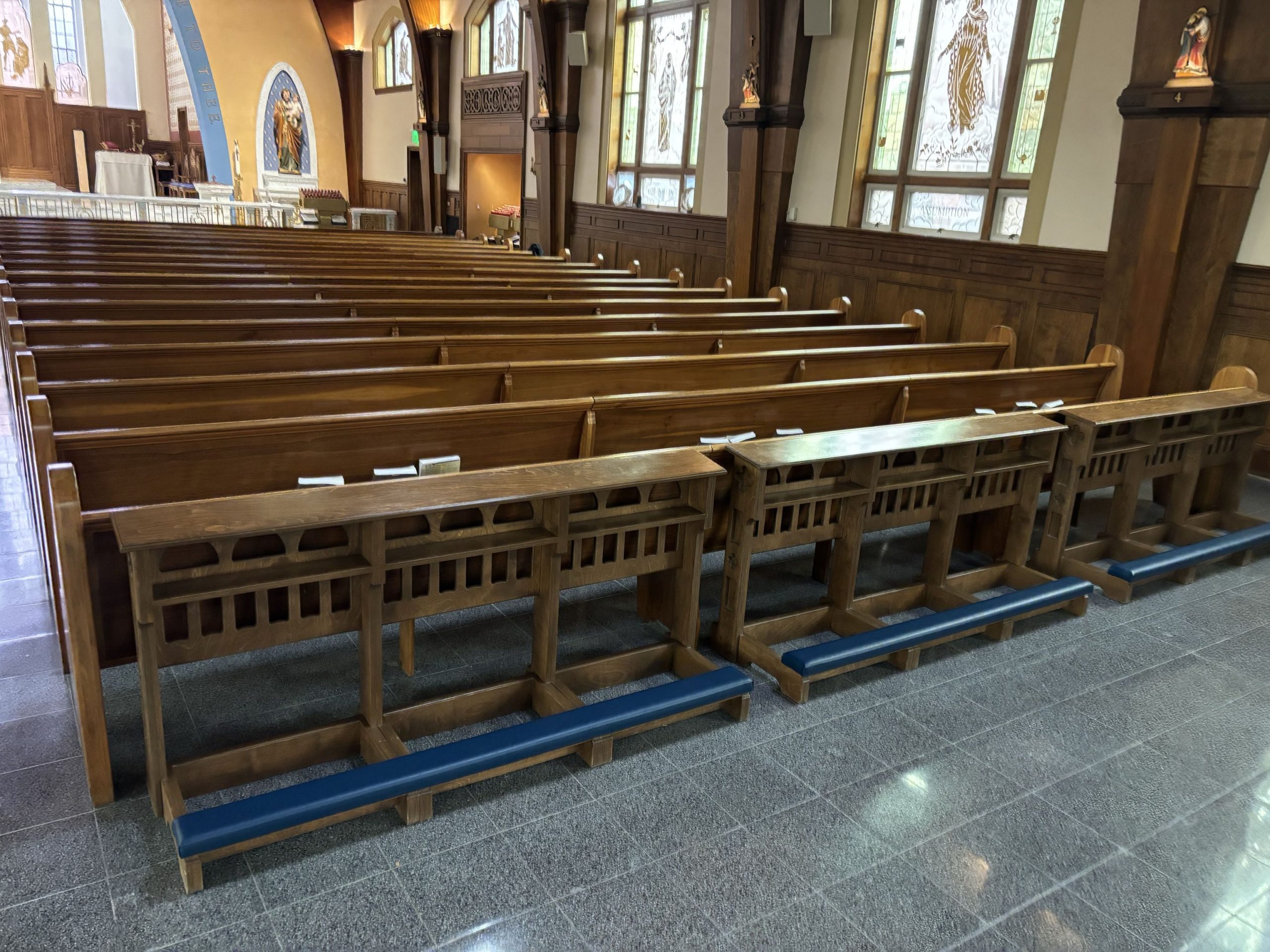
If your congregation is shifting, wincing, or avoiding kneeling altogether, the issue may not be the length of the service or the hardness of the pew, it might be the kneelers. A well-built kneeler supports the body so worshippers can focus on prayer, not discomfort.
And when kneelers operate silently and match the sanctuary’s design, they help preserve the calm, reverent rhythm of worship.
Table of Contents
Key Takeaways✔ Church kneelers shape worship comfort and reverence more than most churches realize. ✔ Quiet pew kneelers reduce distractions and help preserve the peaceful atmosphere of prayer. ✔ Supportive padding and ergonomic design make kneeling easier for every generation. ✔ Durable replacement kneelers often save money by reducing ongoing repairs and upkeep. ✔ Routine maintenance and timely church kneeler repair can significantly extend kneeler lifespan. |
Why Kneelers Matter
Church kneelers might seem like a small detail, but they have a big impact on how worship feels. When kneelers are comfortable, quiet, and built to last, they support the congregation through prayer.
Since kneeling places sustained pressure on the kneecap area, comfort support matters more than people realize. Without proper cushioning, that pressure can irritate the tissues around the knee, especially for congregants with arthritis or sensitive joints.
Supports Prayer Comfortably
A well-built kneeler reduces strain so worshippers can focus on prayer, not their knees. Look for:
- Supportive padding that doesn’t flatten quickly
- Proper height and angle for natural posture
- Even comfort across rows for a consistent experience
Protects the Quiet of Worship
Old kneelers often create the sounds you don’t want in a sanctuary: squeaks, thuds, and sudden drops. Quiet replacement kneelers typically include:
- Smooth hinges/bearings
- Rubber stops or foot pads
- Shock absorption to prevent slamming
Built to Handle Weekly Use
Kneelers are one of the most-used moving parts in church seating. Durable church kneeler systems are designed with:
- Reinforced frames (often heavy-gauge metal)
- Strong bases and hardware that stay secure
- Wear-resistant upholstery for long-term performance
Blending Beauty and Function
Kneelers shouldn’t look like an add-on. The best designs match your church interior by coordinating:
- Pew finish and wood tone
- Fabric or vinyl upholstery color
- Traditional or modern sanctuary style
A Small Upgrade That Makes a Big Difference
Updating kneelers, whether through repair or new installation, can quickly improve:
- Congregational comfort
- Sanctuary quiet
- Visual unity in church seating
- Long-term maintenance needs
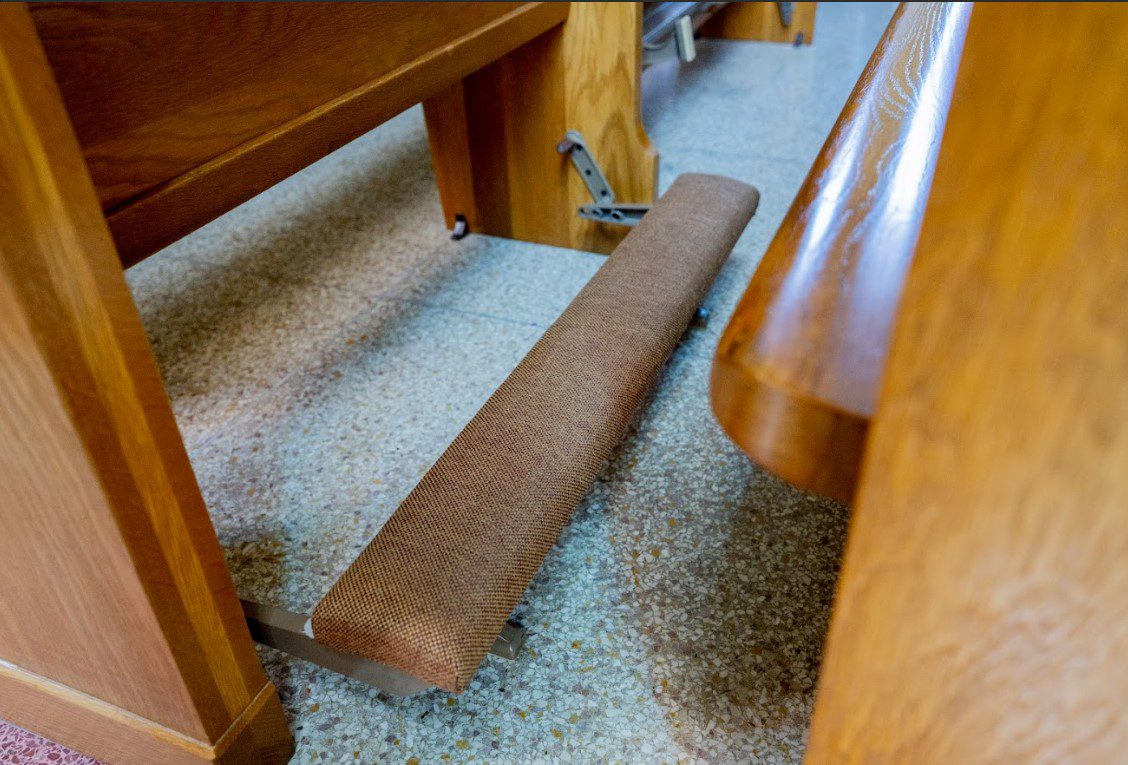
Tips for Choosing the Right Kneelers
Choosing the right church kneelers is not just a practical decision. It shapes comfort, quiet, and the overall worship experience. The best pew kneelers support prayer without distraction, hold up to weekly use, and blend naturally into the sanctuary.
Comfort & Support
Working in awkward body postures and similar risk factors increases the risk of musculoskeletal disorders affecting muscles, tendons, ligaments, and related structures. Supportive church kneelers help reduce that strain during prayer.
Look for:
- Supportive padding: Choose dense, high-quality foam. It should cushion the knees without collapsing into a hard surface over time.
- Ergonomic design: Look for a height and angle that support natural posture. This reduces pressure on knees, hips, and the lower back.
- Consistent feel: Aim for uniform comfort across every row. Congregants should not notice “good kneelers” in one section and worn kneelers in another.
Durability
Kneelers are one of the most-used moving parts in church seating. Strong construction limits repairs. It also protects your investment.
Look for:
- Reinforced frames: Choose frames built for frequent folding and heavy weekly use. They should stay stable and not loosen easily.
- Solid bases: Look for materials that resist cracking or sagging. A strong base keeps the kneeling surface level and reliable.
- Wear-resistant upholstery: Select fabric or vinyl made for high-contact use. It should resist tearing, peeling, and thinning from repeated kneeling and cleaning.
Quiet Operation
Quiet kneelers protect the atmosphere of worship. Loud thuds and squeaks pull attention away from prayer. They can also make transitions feel rushed or disruptive.
Look for:
- Smooth folding action: The kneeler should lower and lift in a controlled way. It should not drop suddenly or slam into place.
- Noise-reducing features: Look for soft contact points like pads or stops. These reduce banging and vibration through the pew row.
- Stable hardware: Hinges should stay aligned. Loose parts create squeaks from friction and shifting over time.
Aesthetic Integration
A kneeler should look like it belongs in your sanctuary. If the finish or upholstery clashes, people notice. The seating can start to look pieced together.
Look for:
- Matching upholstery: Choose colors that coordinate with pew cushions and interior accents. This keeps the sanctuary visually consistent.
- Coordinated wood tones: Match stain and finish to pew ends, trim, and nearby woodwork. This helps kneelers blend instead of standing out.
- Design consistency: Select a style that fits your church interior. Traditional spaces often need warmth and classic lines. Modern spaces often need cleaner profiles and simpler finishes.
Ease of Maintenance
Kneelers should be simple to care for. If upkeep is difficult, they show wear faster. Stains linger. Repairs get delayed.
Look for:
- Easy-to-clean upholstery: Choose materials that can handle routine cleaning. They should not break down from standard cleaners used by staff or volunteers.
- Stain resistance: Look for finishes that hold up to weekly use and special events. This helps kneelers stay presentable year-round.
- Serviceable components: Prefer designs that allow tightening and small fixes. This makes church kneeler repair easier and less disruptive.
Space Considerations
Even great kneelers feel wrong if spacing is tight. Fit affects comfort. It also affects movement and accessibility in the sanctuary.
Look for:
- Kneeling clearance: Make sure there is enough space between pews. Knees should not press into the pew ahead during prayer.
- Seated legroom: Check how the kneeler sits when it is raised. It should not crowd feet or force awkward posture while seated.
- Accessibility support: Protect clear movement in aisles and rows. This matters during full services, weddings, and funerals. It also helps reduce trip risks.
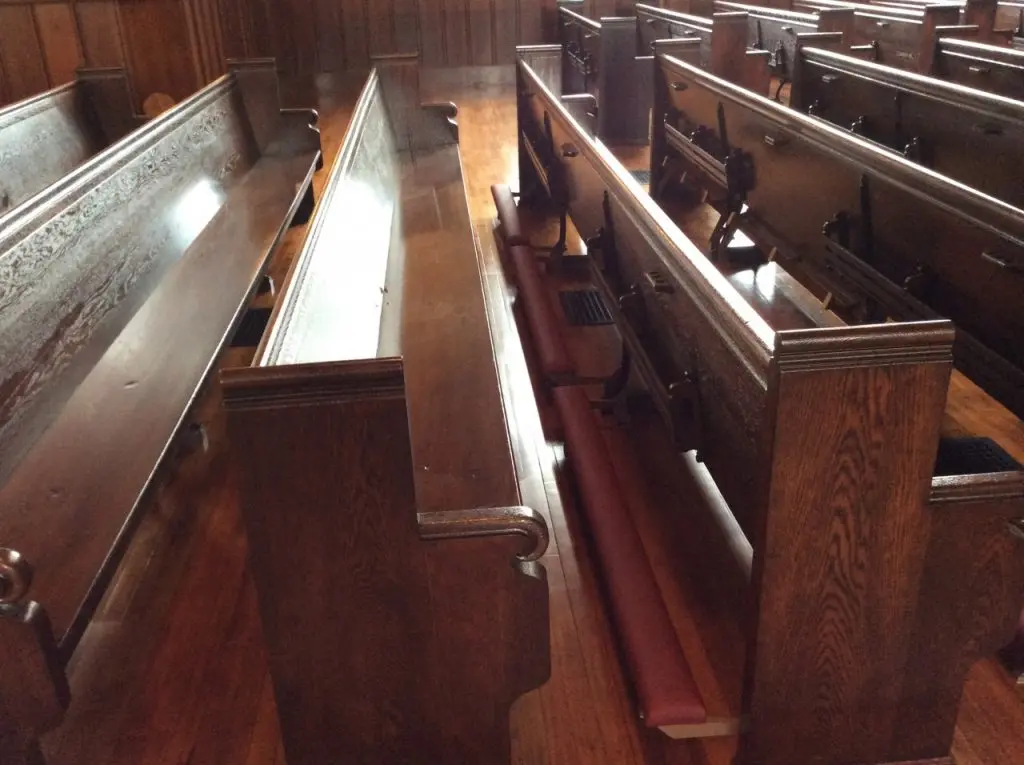
Maintenance Tips for Kneelers
Regular care keeps church kneelers comfortable, quiet, and presentable. It also helps you avoid premature pew kneeler replacement by catching small issues before they turn into bigger repairs. A simple maintenance routine can extend the life of your kneelers for years.
Inspect Regularly
Walk the sanctuary and test a few kneelers in each section. Listen for squeaks and feel for wobble. Check for loose screws, shifting brackets, worn padding, or kneelers that drop too fast. Early fixes are usually quick and inexpensive. They also prevent damage to frames, hardware, and flooring.
Clean Gently
Use a soft cloth and mild cleaner on wood and finished surfaces. Avoid harsh chemicals and abrasive pads. They can dull finishes, weaken protective coatings, and shorten the lifespan of church seating components. For kneeler pads, stick with gentle, upholstery-safe cleaning methods that do not saturate the material.
Protect Upholstery
Vacuum kneeler padding periodically to remove dust and grit that can wear down fabric or vinyl. Spot-clean stains promptly with fabric-safe or vinyl-safe solutions. If your kneelers are heavily used, consider scheduling a light deep clean occasionally. Clean upholstery helps your church kneelers look cared for and prevents permanent discoloration.
Lubricate Moving Parts
A small amount of lubricant on hinges or folding mechanisms can reduce squeaks and keep movement smooth. Apply sparingly and wipe away excess to avoid attracting dust. If noise returns quickly, it may be a sign of worn hardware or misalignment. That is often when church kneeler repair becomes more effective than repeated quick fixes.
Rotate Usage
If your chapel or prayer areas allow it, rotate kneelers in high-traffic zones. This helps distribute wear more evenly across the space. Even in fixed pew rows, you can reduce uneven wear by encouraging balanced seating during smaller services or weekday gatherings.
Schedule Professional Touch-Ups
When kneelers start to look tired or feel less supportive, professional touch-ups can refresh them without full replacement. Reupholstery, padding replacement, refinishing, and hardware adjustments can restore comfort and quiet operation. This is often a smart middle step before committing to full replacement kneelers, especially if the frames are still in good shape.
Repairing vs. Installing New Kneelers
When church kneelers start to squeak, wobble, or feel uncomfortable, most churches face the same question: Do we repair what we have, or invest in new kneelers? The right answer depends on the condition of your current kneeler system, how widespread the issues are, and what your congregation needs long-term.
When Kneeler Repair Makes Sense
Repair is a smart option when your church kneelers are still structurally sound and the issues are mostly cosmetic or minor.
Repair is usually the best choice when:
- Frames and bases are stable: No cracking, sagging, or major wobble
- Problems are limited: Only a few kneelers squeak, loosen, or feel worn
- Padding or upholstery is the main issue: Kneeler pads can be replaced or reupholstered
- You want to preserve existing pews: Repairs maintain the current look and layout
When Installing New Kneelers Is the Better Investment
New replacement kneelers make more sense when problems are widespread, recurring, or affecting worship comfort and quiet.
Replace is usually the better choice when:
- Comfort is inconsistent: Foam is thin or broken down across most rows
- Noise is everywhere: Thuds, squeaks, and slamming disrupt prayer
- The system is fatigued: Cracked bases, loose hardware, or frequent fixes
- You are updating your sanctuary: New kneelers can match refreshed church interiors and seating
Frequently Asked Questions (FAQs)
Can we upgrade our church kneelers without replacing the entire pew system?
Yes. Many churches can improve comfort and quiet operation by updating kneeler pads, hardware, or components as part of a targeted church kneeler repair rather than a full seating replacement.
How do we choose between fabric and vinyl for pew kneelers?
Vinyl is easier to clean and often preferred for high-traffic sanctuaries. Fabric can provide a softer look and feel. The best choice depends on your maintenance routine and overall church interior design goals.
Are replacement kneelers custom-fit to existing pew spacing?
Often, yes. Replacement kneelers can be measured and fitted to match your current pew layout, helping maintain proper kneeling clearance and consistent comfort across rows.
What causes pew kneelers to feel “too low” or awkward to use?
This is usually caused by worn padding, shifting hardware, or older kneeler designs that no longer fit the congregation’s needs. In many cases, updated pads or a full pew kneeler replacement can improve comfort and posture.
Do church kneelers affect acoustics in the sanctuary?
They can. Noisy or loose kneelers create unwanted sound during services, especially during prayer moments. Quiet, well-fitted church kneelers help reduce distracting impact noise and preserve a more peaceful worship atmosphere.
Upgrade Your Kneelers for a More Comfortable Worship Experience
Kneelers may not be the first thing someone comments on when they visit your church, but they shape how worship feels. Artech Church Interiors can guide you through the process with experienced, measurement-based recommendations and professional installation.
Ready to restore comfort and quiet in your sanctuary? Reach out to Artech Church Interiors to request a quote.