

Signs of rafter problems include a sagging or wavy roofline, ceiling cracks, water stains or mold, warped or cracked wood, joint separation, new creaking noises, and bowing walls that can signal roof spread. In churches, these issues can be easy to miss because large spans, tall interiors, and older framing may hide structural movement until repairs become costly or unsafe.
The weather is also raising the stakes. The Northeast saw a 55% increase in precipitation falling in the heaviest 1% of storms (1958–2016), which increases the chance of repeat leak cycles and moisture-driven wood decay.
Here are warning signs to watch for before damage escalates.
Guide Overview
Key Insights
- Sagging or wavy roofline = possible rafter weakening.
- Recurring or widening ceiling cracks can signal framing movement.
- Repeated stains/mold/musty odors often mean ongoing moisture damage.
- Warped/soft wood or joint gaps suggest structural deterioration.
- New creaks or bowing walls may indicate roof spread; get evaluated ASAP.
What Are Rafters?
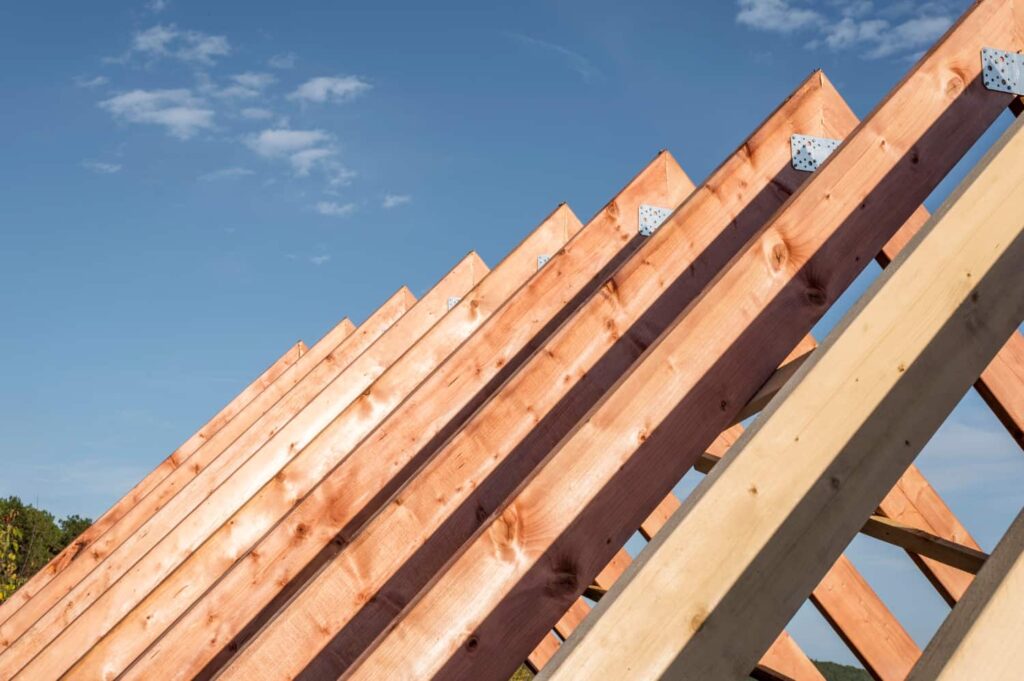
Rafters are sloped structural members that support the roof deck and transfer roof loads down to walls or other supports. In many churches, rafters work as part of a larger framing system that can include ridge boards, purlins, ceiling joists, and bracing.
When rafters weaken, the load path can shift, and that often shows up as visible deflection, cracking, or moisture-related damage.
Church buildings have unique stressors that can worsen church roof rafter damage:
- Long roof spans over sanctuaries and naves
- Complex roof geometry at transepts, towers, and dormers
- Heavier roof materials on historic structures
- Difficult-to-access attic areas that delay detection
Parts of a roof (high level):
- Roof covering (shingles, slate, membrane)
- Underlayment and flashing (valleys, chimneys, penetrations)
- Sheathing or decking
- Rafters or trusses (primary framing)
- Ventilation and drainage (vents, gutters, downspouts)
7 Most Common Signs Of Rafter Problems In Churches
1. Sagging, Bowing, Or Dips In The Roofline
A roofline that looks wavy, bowed, or dipped is a primary red flag. On churches, it might be easiest to see from the street, across the parking lot, or from a neighboring property. Persistent sagging can indicate loss of stiffness or strength from age, moisture exposure, or overloading. This is one of the most visible forms of church roof rafter damage.
2. Interior Ceiling Cracks Or Shifting Plaster
Cracks in plaster, drywall, or decorative finishes can indicate movement above. In churches, pay close attention to:
- Ceiling-to-wall transitions above the sanctuary
- Long, straight crack lines that widen over time
- Cracks that reappear after cosmetic patching
If cracks change after storms, snow events, or seasonal shifts, they may be tied to roof framing movement rather than settling alone.
3. Water Stains, Mold, Or Recurring Moisture Marks
Water stains on ceilings, upper walls, and near roof transitions often correlate with leaks that can eventually compromise rafters. Mold or musty odor in attic spaces, choir lofts, or upper classrooms can also signal chronic moisture.
The EPA notes that the key to mold control is moisture control and that it is important to dry water-damaged areas within 24–48 hours to prevent mold growth.
4. Warped, Cracked, Or Soft Wood In Attic Spaces
If safe access exists, visual indicators in the attic can include twisting, fresh-looking cracking, dark staining, or softened wood fibers. Chronic wetting is a major driver of timber rafter rot and decay.
In church roofs, repeated leaks can keep sections of framing in that risk range long enough for decay to progress.
5. Structural Separation At Joints Or Connections
Look for gaps or shifting where rafters meet ridge components, purlins, bearing points, or connectors. Indicators include:
- New gaps at joints
- Fasteners backing out
- Splits forming at connection points
Separation matters because it suggests the load path is changing. When connections loosen, structural roof repairs for churches may need to focus on both member reinforcement and connection performance.
6. Creaking, Popping, Or “New” Roof Noises
Buildings can make normal sounds, but a noticeable change in creaking or popping, especially after storms or snow events, can indicate movement. If the timing aligns with load changes, moisture intrusion, or temperature swings, document it. New noise paired with visible sagging can be consistent with progressing church roof rafter damage.
7. Bowing Walls Or Signs Of Roof Spread
Roof spread occurs when rafter thrust pushes outward on walls, often when ties or bracing are compromised. In a church, watch for:
- Bowing along long sanctuary walls
- Cracking near the tops of walls
- Doors or windows that begin sticking in adjacent areas
Bowing walls plus roofline changes can be urgent. It can indicate a structural condition that needs prompt professional evaluation to avoid larger failures.
What Causes Church Roof Rafter Damage?
Moisture Intrusion From Roofing Failures
Flashing failures at valleys, chimneys, dormers, and roof-to-tower transitions often create repeated wetting. Over time, this can drive timber rafter rot and decay, especially where water travels along members before showing up inside.
Long-Term Age And Material Fatigue
Historic rafters can be robust, but decades of service, minor deflection, and past alterations add up. Deferred maintenance increases the odds that small leaks become long-term saturation points.
Overloading From Snow, Rooftop Equipment, Or Reroofing Layers
Snow and ice can create unbalanced loads, drifting, and sliding snow concentrations. Snow accumulation in excess of design conditions can result in structural failure and highlight risks like unbalanced drift loading and roof geometry effects.
If a church has heavy roofing materials, multiple reroof layers, or added equipment, load assumptions may change, increasing the odds of church roof rafter damage.
Insects And Biological Decay (Where Applicable)
Wood-destroying insects and fungal decay are more likely when moisture persists. The most consistent prevention strategy is reducing wetting and improving drying potential, which directly reduces timber rafter rot and decay risk.
How Serious Are Rafter Problems?
Early-Stage Issues (Monitor And Evaluate)
Early signs can include a small, stable stain, minor cracking that does not change, or slight unevenness that appears longstanding. The key question is whether the condition is progressing. If it is, treat it as active church roof rafter damage rather than cosmetic aging.
Moderate Issues (Schedule Professional Inspection Soon)
Moderate concerns include recurring stains after storms, visible roofline dip, widening cracks, or localized warping. At this stage, churches often need a combined approach: leak tracing plus framing review, with potential planning for structural roof repairs for churches.
Severe Issues (Immediate Inspection Needed)
Severe indicators include pronounced sagging, significant joint separation, rapid changes after storms, widespread mold from ongoing wetting, or bowing walls that suggest roof spread. These conditions can require urgent evaluation to prevent larger failures and reduce safety risks.
How To Inspect For Rafter Problems Safely
Step 1: Walk The Exterior Perimeter And Check The Roofline
Stand far enough back to see long roof runs. Look for dips, waves, or ridge irregularities. Compare to older photos if available. This step often identifies early church roof rafter damage that is invisible from inside.
Step 2: Inspect Interior Ceilings And Upper Walls
Look for new cracks, expanding cracks, and cracked paint lines near transitions. Note exact locations and approximate lengths. If cracks appear near valleys, chimneys, or tower connections, prioritize those areas.
Step 3: Look For Water Stains And Moisture Patterns
Mark stains by date and location. Track whether they recur after rain, wind-driven storms, or thaw cycles. Recurrence is a strong signal that moisture is still active and may be feeding timber rafter rot and decay.
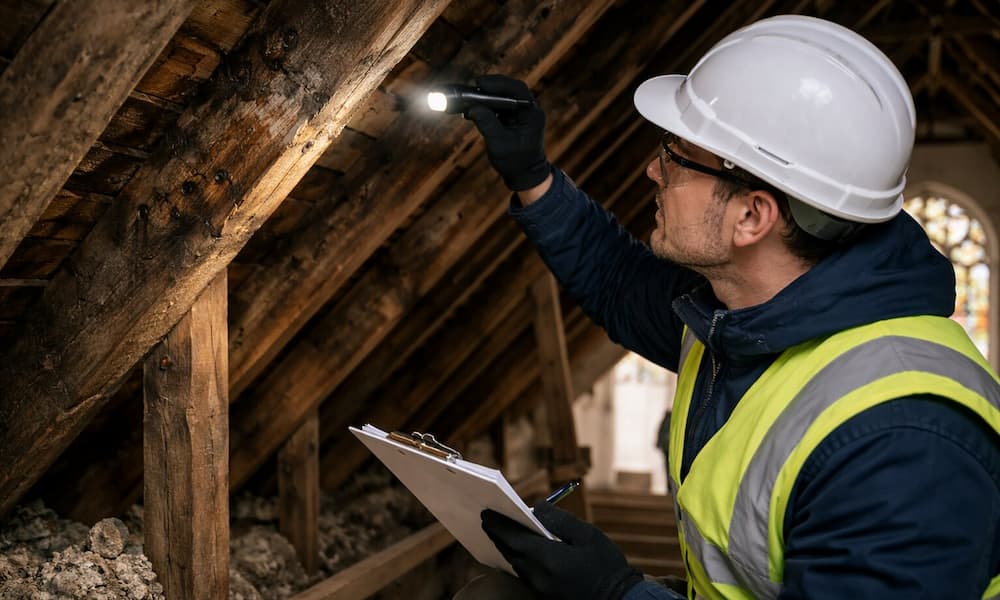
Step 4: Check The Attic (Only If Safe Access Exists)
Use a flashlight and stay on safe walking surfaces. Look for:
- Dark staining and damp-looking wood
- Mold growth
- Warping, cracking, or crushed fibers at bearing points
- Rusted fasteners near chronic wet areas
Avoid probing or disturbing structural members. Photograph and document conditions that suggest church roof rafter damage.
Step 5: Document Findings And Plan Next Steps
Create a simple log with photos, dates, and notes on change over time. Documentation helps church restoration companies or structural professionals evaluate conditions faster and propose appropriately scaled structural roof repairs for churches.
What Structural Roof Repairs For Churches May Involve
Sistering Rafters (Reinforcing Damaged Wood)
Sistering adds a new member alongside an existing rafter to restore stiffness and strength. It can be effective when decay is limited and connections and adjacent framing are stable. Sistering is a common method within structural roof repairs for churches when full replacement is not required.
Replacing Severely Damaged Rafters
Replacement may be needed when a member has lost significant section from decay, cracking, or deformation. Replacement planning should account for load paths and connection details, especially in complex church roof geometry. This is often necessary when timber rafter rot and decay are advanced.
Strengthening Roof Connections And Preventing Roof Spread
Connection reinforcement can be as important as member repair. When roof spread is a risk, bracing or tie reinforcement may be needed to keep thrust forces from pushing exterior walls outward. This is a critical element of structural roof repairs for churches to ensure long-term reinforcement.
Frequently Asked Questions (FAQs)
Are there signs before a roof collapses?
Yes. Common warnings in churches include roofline sagging, widening ceiling cracks, recurring stains or mold, warped or soft rafters, joint separation, new creaking, and bowing walls from roof spread. These can signal church roof rafter damage or timber rafter rot and decay and warrant evaluation by church restoration companies.
What is the cost to fix common rafters?
It depends on access, the extent of damage, and whether the work is part of structural roof repairs for churches. Minor repairs may only require materials that can cost around $50 to $200, while major repairs or replacements can range from $500 to $1,500 or more. For more accurate estimates, communicate with expert contractors like Artech Church Interiors, Inc.
Can you replace rafters without removing the roof?
Sometimes, for localized reinforcement from the attic. Full replacement often requires opening sections of the roof, especially in historic church roof restoration.
What are common rafter mistakes to avoid?
Ignoring the leak source, overlooking joint separation, using undersized reinforcement, skipping moisture control that prevents timber rafter rot and decay, and not confirming whether the system is rafters or trusses.
What would cause rafter spread?
Rafter spread usually happens when ties, bracing, or connections weaken or fail, allowing rafters to push outward on walls. In churches, it is often linked to long spans, aging framing, moisture-related weakening, or unbalanced loads.
Protect Your Roof Before Small Issues Grow
Boston-area churches face heavier downpours, freeze-thaw cycling, and snow loading that can accelerate leaks and framing stress over time.
Artech Church Interiors, Inc. supports churches and religious institutions in the Boston area with preservation-minded project planning, including coordination for structural roof repairs for churches and historic church roof restoration.
For more information, contact us today!