

Church roof framing is under more stress than it used to be, largely because weather volatility and wind-driven rain keep exposing weak spots over time. In 2023, the U.S. experienced 28 separate billion-dollar weather and climate disasters (inflation-adjusted). For churches, repeated storm cycles often show up as leaks first, then hidden moisture damage, and eventually structural issues.
In most cases, replacing roof rafters generally costs between $7 and $30 per square foot for labor and materials, with church complexity pushing costs higher when access, height, or preservation requirements are involved.
Overview
Quick Recap
- Typical rafter replacement runs $7–$30 per sq. ft. (labor + materials).
- Hidden moisture damage often makes the scope larger than stains suggest.
- Cost swings mainly come from access/height, roof type, and engineering or permits.
- Choose a replacement for severe rot or movement; reinforcement for localized, sound framing.
- A church-specific roof damage assessment is the fastest path to a reliable budget and scope.
What Drives the Cost Up or Down for Churches?
Extent of Damage
The difference between replacing one rafter end and replacing multiple bays is major. Moisture can travel, so visible staining is not always the boundary of structural decay. Guidance on building moisture control consistently emphasizes that unmanaged moisture can drive deterioration and broader indoor environmental issues over time.
Cause of Damage
Most church framing problems trace back to one of these triggers:
- Water intrusion: Leaks at flashing, valleys, penetrations, gutters, or aging roof coverings. A watertight roof is foundational to preserving a structure, including historic buildings.
- Wind-driven rain and storms: FEMA has documented how envelope damage can lead to extensive water intrusion during wind events.
- Insects or fungal rot: Often secondary to moisture exposure.
If you are planning historic church roof repair, identifying the moisture entry point is part of protecting the historic fabric and avoiding repeat damage.
Access, Height, and Complexity
Church roofs are often steep, high, and architecturally complex (dormers, towers, multiple ridges). That can require scaffolding, lifts, and controlled staging. Safety planning is not optional:
OSHA requires employers to provide fall protection in construction settings where applicable. These access demands affect labor time and the overall per-square-foot cost.
Materials and Roof System Above the Framing
The roofing material above the rafters changes how careful the removal and rebuild must be. Slate or tile systems typically demand more protection and reinstallation care than basic asphalt. Churches also may have uncommon lumber sizes in older framing, which affects sourcing and joinery.
Engineering and Permitting
If there is sagging, wall spread, or long-span concern, engineering review may be needed. In New Jersey, structural loads are addressed through code and state guidance, including design loads for snow and wind.
Engineering and permitting costs are a normal part of responsible church roof structural work, especially when the scope includes church roof structural reinforcement.
Historic Designation Considerations
Historic church roof repair often calls for careful examination and recording of existing conditions before replacement work proceeds, which can add labor and management time.
Rafter Replacement vs. Reinforcement: Which One Makes Sense?
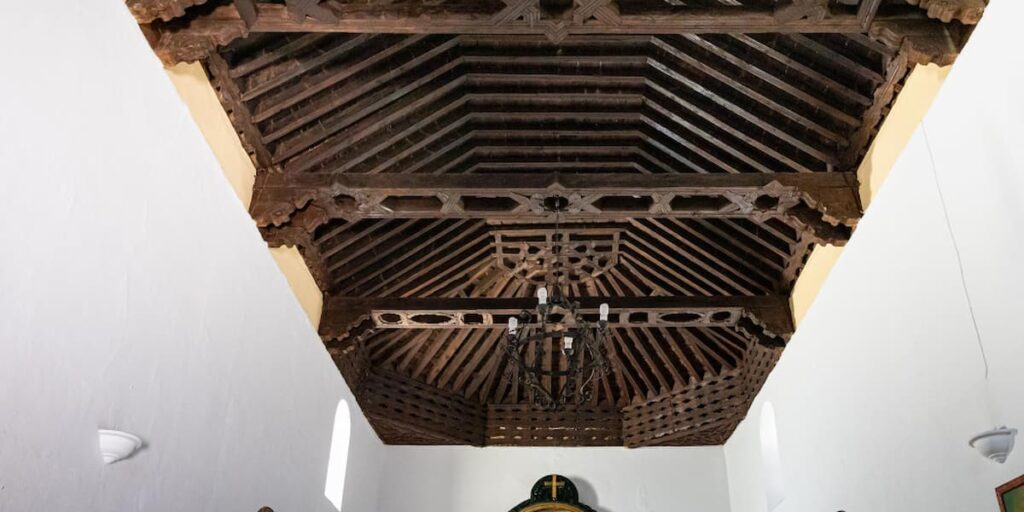
What “Replacement” Means for a Church Roof
Rafter replacement is exactly what it sounds like: removing a damaged rafter (or a portion of it) and installing a new structural member that restores the roof’s original load path.
In churches, this often involves temporary shoring, careful access planning, and coordination with roofing work above the framing. It is typically part of structural rafter replacement services when wood is too compromised to safely carry load.
Replacement is most common when a roof damage assessment for churches finds:
- Deep rot or soft wood fibers (especially at rafter ends and bearing points).
- Cracking, splitting, or crushing that affects structural capacity.
- Widespread moisture damage tied to chronic leaks.
- Connection failures where the rafter no longer bears properly on walls or plates.
When Replacement Is Usually the Better Fit
Replacement is usually the safer choice when:
- Rot is extensive, active, or present across multiple bays.
- The rafter is visibly deformed, split, or failing at a bearing point.
- Past “patches” have already been attempted, and the problem returned.
- There is evidence of broader structural movement (sagging ridge, uneven roof plane, wall spread).
- The church has recurring leaks and moisture exposure that have compromised multiple members.
This is also where experienced church restoration companies can help separate “what’s structurally necessary” from “what’s optional,” because replacing rafters may require coordinating roofing repairs so moisture does not immediately damage the new framing.
What “Reinforcement” Means and Why Churches Use It
Reinforcement strengthens existing rafters without fully removing them. The goal is to improve structural performance by adding support, correcting weak connections, or redistributing loads.
This approach is common in church roof structural reinforcement plans when damage is limited, the majority of the rafter remains sound, and reinforcement can be engineered or detailed to meet code.
Typical reinforcement methods in church projects include:
- Sistering: Installing a new member alongside the existing rafter to share the load.
- Scabbing or plating: Adding wood or steel plates at localized weak points.
- Improved connectors and straps: Upgrading how rafters tie into plates, ridges, or ties to resist uplift and movement.
- Added bracing or ties: Supporting long spans and reducing deflection where roof geometry allows.
When Reinforcement Is Usually the Better Fit
Reinforcement is often the smarter option when:
- Damage is localized (for example, minor deterioration near a prior leak that has been corrected).
- The rafter’s core strength is intact, and added support will restore safe performance.
- The project involves preserving original materials as part of historic church roof repair goals.
- The church wants a phased approach, using church roof structural reinforcement now while planning larger roof system upgrades later.
In practice, many licensed church restoration contractors propose reinforcement when it safely addresses the structural issue with less invasive work, especially in older churches where opening large roof sections could risk damaging interior finishes.
Step-by-Step: Roof Damage Assessment for Churches (How the Process Works)
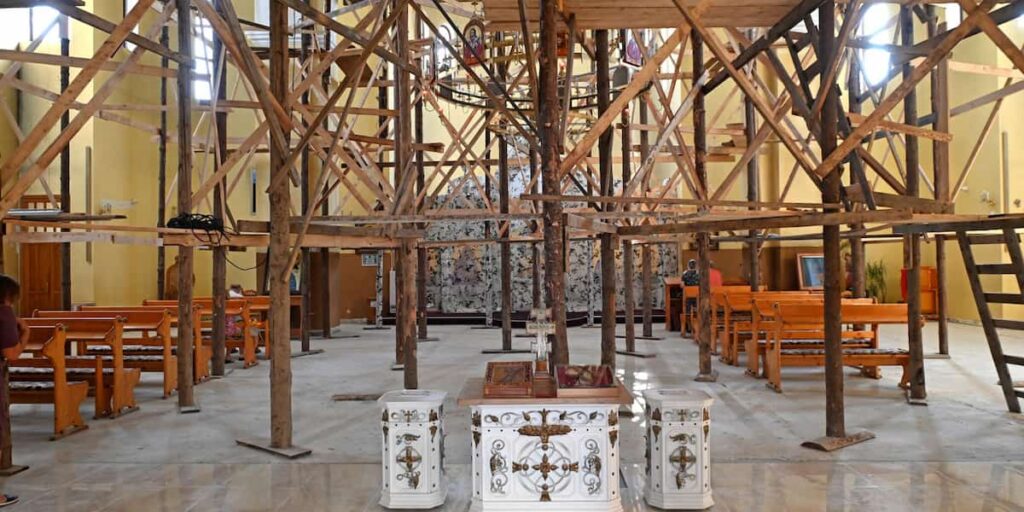
Step 1: Document Interior Symptoms
Start with what you can see inside the building: ceiling stains, plaster cracks, musty odor, or drips that appear during wind-driven rain. Note the exact rooms and dates. This simple log helps a roof damage assessment for churches trace where water is entering and how far it is traveling.
Step 2: Gather Roof History and Recent Weather Context
Pull any records of prior patching, reroofing, flashing repairs, or past historic church roof repair work. Add context like “first noticed after a storm” or “only leaks during heavy wind.” This narrows the search and reduces guesswork.
Step 3: Inspect Roof Surfaces and Drainage Details
A visual roof review focuses on the usual failure points: valleys, penetrations, flashing lines, and transitions near steeples or walls. Gutters and downspouts matter, too, because overflow can keep framing wet. Experienced church restoration companies also flag access and safety needs at this stage.
Step 4: Inspect Attic or Roof Cavity Framing
Inside the roof cavity, inspectors check rafter ends, bearing points, ridge areas, and any spots that feel soft or look darkened. The goal is to confirm whether the issue is cosmetic staining or structural deterioration that may require structural rafter replacement services.
Step 5: Check Moisture Conditions and Ventilation
Moisture drives decay, so the assessment should confirm whether wood is actively wet, was wet in the past, or is damp from condensation. Ventilation and insulation issues can trap moisture and accelerate damage. These findings affect whether church roof structural reinforcement is enough or replacement is safer.
Step 6: Look for Structural Red Flags
Inspectors watch for sagging ridgelines, uneven roof planes, bowed members, and connection problems that suggest movement or overload. If the building has trusses in any area, they should be identified clearly because truss repairs often require engineered details.
Step 7: Define the Scope: Repair, Reinforce, or Replace
A strong roof damage assessment for churches ends with a clear scope option: minor repair after the leak is fixed, church roof structural reinforcement where framing is still sound, or structural rafter replacement services where members are compromised. This is where the estimate becomes more predictable.
Step 8: Confirm Engineering and Permit Requirements
When there is visible movement, long spans, or significant framing replacement, engineering review may be appropriate, especially for public-assembly buildings. For historic church roof repair, documentation and approvals may also be part of the process. Licensed church restoration contractors should explain what’s required in plain language.
Step 9: Build a Phased Plan Around Worship and Budget
Many churches phase work: stop water intrusion first, then complete structural work, then restore finishes. A phased plan reduces disruption and helps leadership fund the project responsibly. This approach is common with licensed church restoration contractors who understand church schedules and safety planning.
Frequently Asked Questions (FAQs)
Can you replace rafters without removing the roof?
In some cases, yes. If there’s adequate attic access and the damage is localized, contractors may be able to replace or reinforce rafters from inside. However, many church roofs still require partial roof removal to safely remove compromised wood, install new members correctly, and address the leak source that caused the damage.
Is it cheaper to do rafters or trusses?
It depends on scope and complexity. Rafter work can be less expensive when only a small section needs attention and access is straightforward. Truss work can be more expensive when it requires engineered repair details, specialty hardware, fabrication lead time, or lift equipment, especially on larger spans.
Does roof replacement include rafters?
Usually, no. A typical roof replacement focuses on the roof covering system such as shingles or slate, underlayment, flashing, and sometimes decking repairs. If framing issues are discovered during inspection, rafter repair or replacement is usually priced as a separate structural scope.
Are roof joists and rafters the same thing?
No. Rafters support the sloped roof and run from the ridge area down to the exterior walls. Joists usually run horizontally and support a ceiling or floor. Mixing up the terms can lead to confusion in estimates, so it’s worth confirming what type of framing you have.
Are roof rafters load-bearing?
Yes. Roof rafters are load-bearing members that support the roof structure and transfer weight and forces, including roofing materials, snow loads, and wind forces, into the rest of the building. That’s why visible sagging, cracking, or rot should be assessed before repairs are planned.
Schedule a Roof Damage Assessment for Your New Jersey Church
Replacing roof rafters is a major structural investment for any church because it protects worship spaces, limits ongoing moisture damage, and helps preserve original building materials.
For churches that want a restoration partner experienced with sacred spaces, Artech Church Interiors works with houses of worship and offers restoration and renovation support. We’ll guide you every step of the way.