

QUICK FACTS
✔️ Seating layout affects visibility, comfort, and how connected a congregation feels during worship.
✔️ Straight pews support traditional sanctuary design with a formal and orderly layout.
✔️ Curved pews improve sightlines and create a more unified worship experience.
✔️ Box pews preserve historic character while offering a more enclosed seating style.
✔️ Thoughtful seating choices can improve both the function and atmosphere of a worship space.
WHAT'S IN THIS GUIDE
Church seating helps define the look, feel, and function of a sanctuary. It shapes the atmosphere of worship, supports the way congregations gather, and influences how attention is directed within the space.
Different seating styles can create very different experiences. Some emphasize tradition and structure, while others support a more open and connected feel. The type of pew a church chooses can also affect comfort, sightlines, and overall layout.
Here are three popular types of church pews and how they shape worship spaces.
Why Seating Layout Matters in Worship Spaces
Seating layout plays an important role in how a congregation experiences worship. The way seating is arranged affects visibility, engagement, comfort, and how people move throughout the sanctuary.
✔️ Visibility and Focus
A well-planned seating layout ensures that most members of the congregation can clearly see the altar, pulpit, or stage. Proper placement of church pew rows helps direct attention toward the central focus of worship.
✔️ Congregational Connection
Seating arrangements influence how connected people feel during services. When church seats are positioned thoughtfully, they help create a shared sense of participation rather than making individuals feel distant from the service.
✔️ Architectural Harmony
The seating layout should complement the overall design of the sanctuary. Traditional pews church arrangements often align with long nave structures, while modern layouts may use curved rows to support wider spaces.
✔️ Comfort and Accessibility
Spacing between rows, aisle placement, and seating structure affect how comfortable and accessible the sanctuary is for worshippers. Properly arranged seating also allows easier movement for congregants, ushers, and clergy.
✔️ Long-Term Functionality
Church seating is a long-term investment that must serve the congregation for many years. Many churches choose church pew refurbishing to maintain existing seating while improving durability and comfort.
3 Church Pew Styles for Worship Spaces
1. Straight Pews
Straight pews remain one of the most recognizable features of traditional American churches. For centuries, these long benches have helped define the structure and visual order of many sanctuaries.
What Straight Pews Are
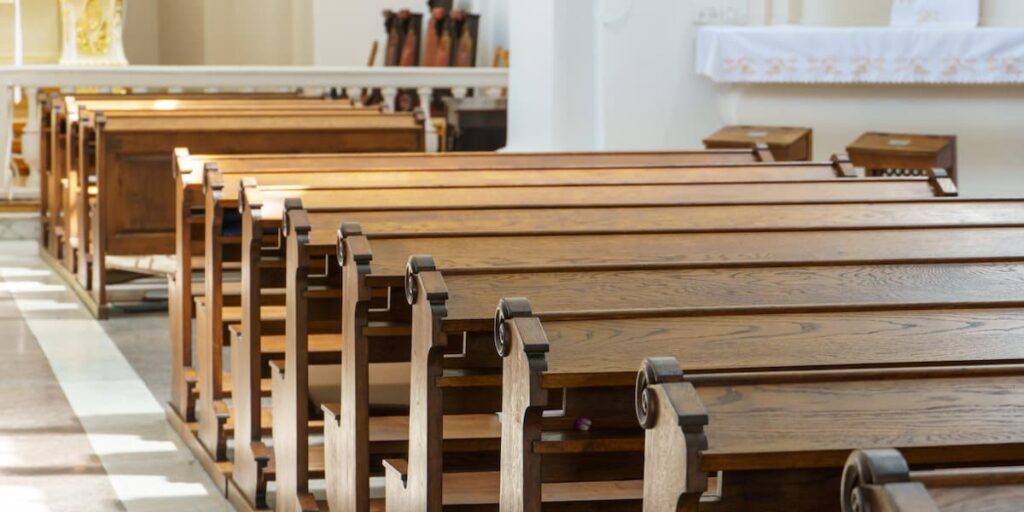
Straight pews are long benches arranged in linear rows facing the front of the sanctuary. They are typically crafted from hardwood and may include upholstered cushions for added comfort. A single church pew often seats multiple people, making this design efficient for congregational seating.
How Straight Pews Shape the Worship Space
Straight pews reinforce the traditional central aisle layout common in many historic churches. Their parallel rows guide attention toward the altar, pulpit, or chancel, supporting a structured and formal worship environment.
Benefits of Straight Pews
- Provide efficient seating capacity for larger congregations
- Simple layout makes installation and maintenance easier
- Solid wood construction offers long-term durability
Design Considerations
Straight pews can be customized with features such as seat cushions, kneelers, carved pew ends, and different wood finishes. These options allow churches to improve comfort while preserving traditional design elements.
Where Straight Pews Work Best
Straight pews fit best in traditional sanctuaries with long, linear layouts. They are especially well suited for churches that want to preserve a formal worship setting and support a classic center-aisle design.
2. Curved (Radial) Pews
Curved or radial pews offer a seating design that focuses on visibility and congregational connection. Instead of straight rows, these benches follow a gentle arc that directs attention toward a central focal point.
What Curved Pews Are
Curved pews are designed with a slight arc rather than a straight line. When arranged in multiple rows, they create a fan-like layout that allows more congregants to face the front of the sanctuary.
How Curved Pews Shape the Worship Space
Curved seating improves sightlines because the rows naturally angle toward the pulpit or altar. This arrangement helps reduce visual obstruction and allows more worshippers to see the focal point clearly.
Benefits of Curved Pews
- Improve visibility in larger sanctuaries
- Encourage a stronger sense of unity within the congregation
- Create a more inclusive atmosphere by directing focus toward the center of the service
Design Considerations
Installing curved seating requires careful measurement to maintain consistent arcs throughout the sanctuary. Designers must also consider aisle placement, spacing between rows, and accessibility when planning the layout.
Where Curved Pews Work Best
Curved pews are a strong choice for wider sanctuaries, fan-shaped layouts, and larger worship spaces. Their design helps improve sightlines and keeps more of the congregation oriented toward the main focal point.
3. Box Pews
Box pews represent one of the earliest forms of church seating in America. Though less common today, they remain an important architectural feature in many historic sanctuaries.
What Box Pews Are
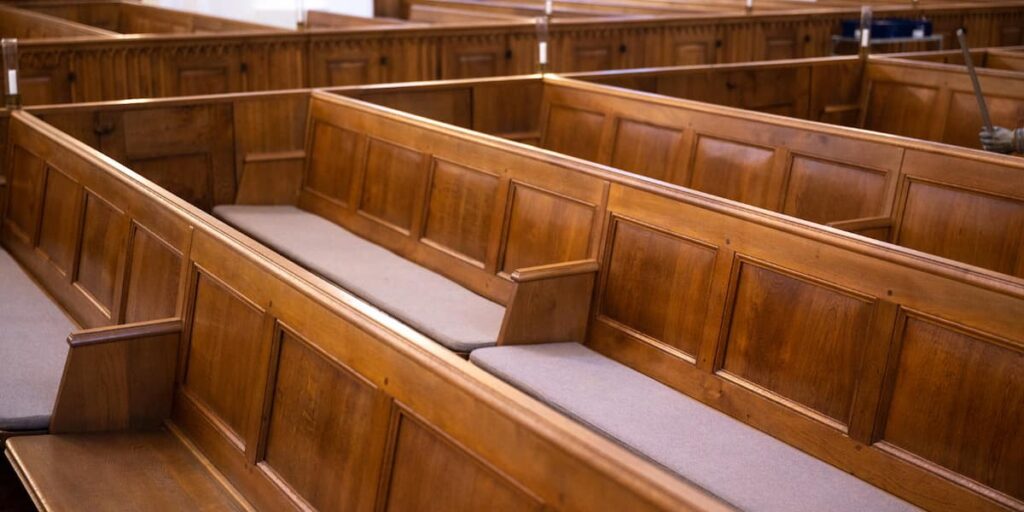
Box pews are enclosed seating compartments surrounded by high wooden panels. Each section typically includes an entry opening or small door, creating individual seating spaces rather than continuous benches.
How Box Pews Shape the Worship Space
Box pews divide the sanctuary into distinct seating sections. This layout reflects early church architecture and creates a more segmented seating arrangement compared to open pew rows.
Benefits of Box Pews
- Offer defined personal space for families or small groups
- Reflect historic church architecture
- Help preserve the original character of historic sanctuaries
Design Considerations
Box pews require more floor space than standard pew rows due to their enclosed structure. Restoration projects must also consider structural integrity and historical preservation guidelines when maintaining existing box pews.
Where Box Pews Work Best
Box pews are best suited for historic churches and spaces undergoing restoration. They support the preservation of older architectural styles and add to the distinct character of traditional sanctuaries.

How to Choose the Right Church Seating for Your Sanctuary
Selecting the right seating style requires balancing tradition, comfort, architecture, and the needs of the congregation. Church leaders and project managers can follow a few key steps when evaluating their options.
Step 1: Evaluate the Sanctuary Layout
Start by reviewing the shape, proportions, and architectural features of the sanctuary. Long rectangular spaces often work well with straight rows, while wider or fan-shaped layouts may be better suited to curved seating that follows the room’s natural flow.
Step 2: Consider Visibility and Engagement
Sightlines should be a practical priority when choosing a seating layout. If too many worshippers have limited views of the altar, pulpit, or platform, adjusting the seating arrangement can improve both visibility and overall engagement.
Step 3: Balance Tradition and Modern Needs
Historic buildings may retain traditional pews church designs that reflect the original architecture. At the same time, churches undergoing renovation may consider layouts that better serve growing congregations.
Step 4: Assess Comfort and Accessibility
Comfort and accessibility affect how well the space serves the congregation over time. Row spacing, aisle width, seat support, and clear access paths all play a role in making the sanctuary easier to use for a wider range of worshippers.
Step 5: Evaluate Budget and Renovation Options
A full seating replacement is not always the only solution. In some cases, church pew refurbishing can restore existing benches, improve appearance, and extend their lifespan while helping preserve original materials and manage project costs.
Step 6: Explore Flexible Seating Alternatives
Some modern sanctuaries incorporate church pew chairs. These seats resemble traditional pews but can be moved or rearranged when the space needs to accommodate different events or gatherings.
Frequently Asked Questions (FAQs)
Can existing pews be restored instead of replaced?
Yes. Many churches choose church pew refurbishing to update older seating instead of replacing it. The process can include refinishing wood, repairing structural damage, and adding new upholstery. It can also reduce waste, make use of existing materials, and help preserve the traditional character of the sanctuary.
How long do church pews typically last?
With proper care and maintenance, a well-built church pew can last for several decades. Many historic churches still use seating that is more than a century old.
What materials are commonly used to build church pews?
Church pews are most often made from hardwoods such as oak, maple, or birch. These materials provide durability and allow pews to remain structurally sound for many years. Wood finishes can also be customized to match the interior design of the sanctuary. Upholstered cushions may be added to improve comfort.
Can church seating be customized to match a sanctuary design?
Yes, church seating is often customized to match architectural details and interior finishes. Churches may choose specific wood stains, fabrics, carvings, or decorative pew ends. Custom sizing can also help seating fit unique sanctuary layouts. This approach allows seating to blend naturally with the overall design of the space.
When should churches consider updating their seating?
Churches may consider updating seating when pews show signs of wear or structural damage. Changes in congregation size or sanctuary layout may also require seating adjustments. Renovation projects often include seating updates to improve comfort or accessibility. In some cases, restoration may be sufficient instead of full replacement.
Create a Worship Space That Supports Your Congregation
Seating design shapes how people experience worship. Straight pews support traditional layouts, curved pews improve visibility and connection, and box pews preserve historic character with a more intimate feel.
Understanding these differences can make sanctuary planning more effective. Whether a church is restoring or upgrading church seats, or planning a new layout, thoughtful decisions can support the space for years to come. For expert guidance on seating upgrades and restoration, Artech Church Interiors, Inc. can help you create a worship space that fits your church’s needs.
Contact Artech Church Interiors, Inc. today to discuss your goals and find the right seating solution for your sanctuary.