
What’s In This Guide
- Why Does Moisture Matter So Much in a Historic Sanctuary?
- What Are the Early Warning Signs on Plaster?
- How Can a Church Spot Masonry Problems From the Outside?
- What Does Moisture Damage Look Like in Stained Glass?
- How Should a Church Building Committee Prioritize a Moisture Inspection?
- How Does Boston’s Landmark Status Affect a Church’s Response to Moisture Damage?
- How Artech Approaches Moisture-Related Restoration
- Frequently Asked Questions
- Ready to Have a Boston Sanctuary Assessed for Moisture Damage?
Boston churches can catch moisture problems early by watching for four warning signs: discolored plaster, spalling brick or stone, fogged or bulging stained glass, and musty odors in enclosed spaces. Catching these signs early gives building committees time to act before repairs become major capital expenses.
When the balance between roof, walls, windows, and breathable historic materials shifts, water finds a way in. Recognizing the early signs matters more than reacting after the damage is visible, and working with experienced church restoration contractors can help ensure these issues are addressed before they escalate.
Quick Facts
- Discolored or bubbling plaster near ceilings and window frames is often the first visible sign of trapped moisture.
- Spalling brick or flaking stone frequently traces back to a roof, gutter, or flashing failure rather than the masonry itself.
- Fogging, water beading, or bulging beyond 1.5 inches in stained glass windows signals moisture and structural strain.
- Boston’s Landmarks Commission oversees exterior changes to designated properties, a detail that shapes how quickly and how visibly a congregation can respond to water damage on a landmarked sanctuary.
- Seasonal freeze-thaw cycles common in New England accelerate masonry cracking once moisture has already penetrated, making fall and early spring inspections especially useful for Boston congregations.
Why Does Moisture Matter So Much in a Historic Sanctuary?
Moisture is one of the most common causes of deterioration in historic buildings, and sanctuaries are no exception. Once water gets past a roof, wall, or window, it rarely stays in one place.
Historic buildings were built with materials meant to breathe: lime plaster, lime mortar, and permeable brick or stone. Modern coatings, sealed additions, or deferred roof repairs can trap moisture that these materials were designed to release.
The National Park Service notes that diagnosing moisture problems in historic buildings often requires patient observation across multiple seasons because there is rarely one single cause. Diagnosis and treatment also vary depending on the building’s location, climate, soil conditions, groundwater effects, and local construction traditions.
For a Boston congregation, this means:
- A leak that shows up in January may have started with a clogged gutter in October.
- A stained glass window that looks fine from inside may already show corrosion in its frame from outside.
- A plaster stain in the fellowship hall may trace back to a roof valley two stories above.
What Are the Early Warning Signs on Plaster?
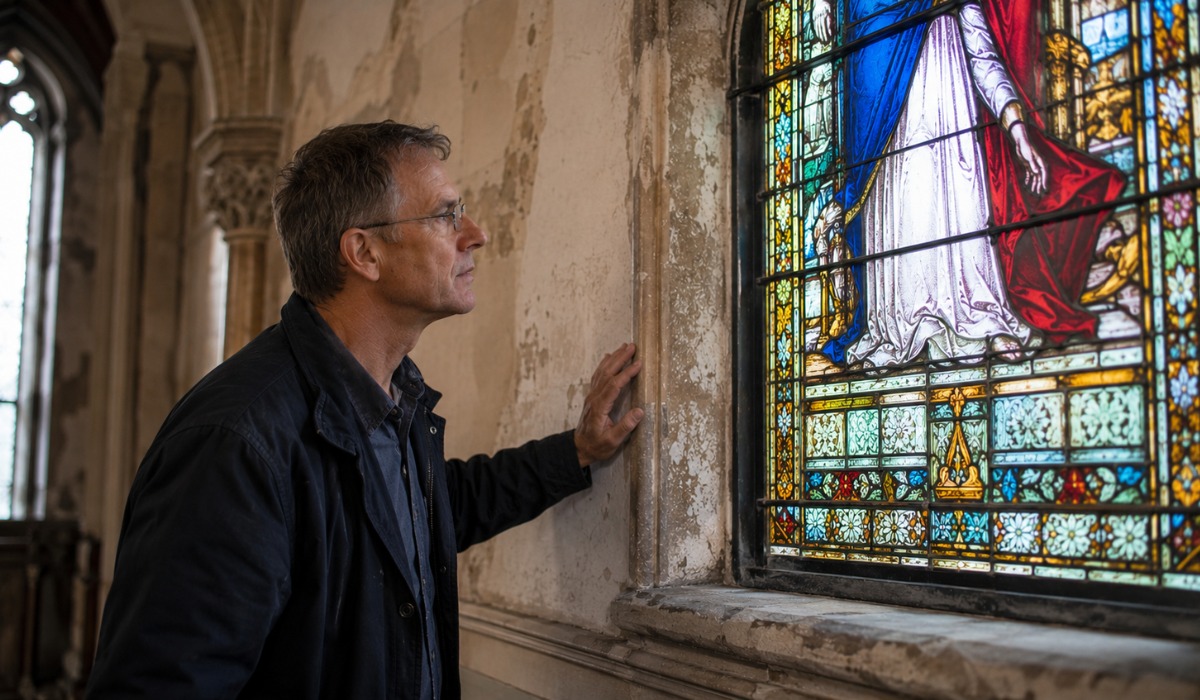
Historic lime and gypsum plaster is durable and breathable, but it is vulnerable to sustained water contact. Professional historic plaster repair is critical because, as the National Park Service explains, plaster walls and ceilings contribute to the historic character of an interior and should be left in place and repaired whenever possible. That makes early detection especially valuable.
Signs to Watch For in Plaster
- Yellow or brown staining, usually near ceiling corners, window headers, or where a roofline changes pitch.
- Bubbling or flaking paint over plaster, which often means moisture is pushing outward from behind the surface.
- A hollow or soft sound when gently tapped, suggesting the plaster has separated from its lath.
- Efflorescence, a white powdery residue that forms when water carries mineral salts to the surface and evaporates.
- A musty odor in choir lofts, sacristies, basements, or storage closets often points to moisture inside a wall cavity long before it reaches the visible surface.
How Can a Church Spot Masonry Problems From the Outside?
Spalling brick, crumbling mortar joints, and dark streaking on stone are clear exterior signs that water may be bypassing the building envelope, often requiring specialized masonry restoration. These issues tend to start small and accelerate once freeze-thaw cycles begin.
Boston’s climate, with cold winters and warm summers, puts real stress on historic masonry. Water that gets into a brick or mortar joint and then freezes expands and forces the material apart.
Leaking roofs, clogged or deteriorated gutters and downspouts, missing mortar, or cracks and open joints around door and window openings are often the cause of moisture-related problems in a historic masonry building.
Paint or other coatings on historic brick can also trap moisture behind the exterior surface, causing deterioration that may go undetected until the coating fails and reveals eroded brick units and mortar.
Exterior Masonry Checklist
- Check gutters and downspouts for clogs, rust, or misalignment after storms.
- Look at mortar joints for crumbling, gaps, or a chalky texture underfoot.
- Scan brick faces for spalling, where the outer layer flakes or pops off.
- Note dark streaking below window sills, cornices, or parapets, which often marks a water path.
- Watch for green or black staining, a sign of prolonged dampness supporting algae or mold growth.
- Inspect flashing around roof valleys, chimneys, and steeples, since gaps here are a frequent entry point.
Parapets deserve particular attention on Boston sanctuaries, since a failed cap or coating at the roofline can send water straight into the wall below.
READ MORE: How to Modernize a Church Without Losing Its History: 8 Tips From a Historic Renovation Contractor
What Does Moisture Damage Look Like in Stained Glass?
Stained glass windows in older sanctuaries rely on wood, steel, or stone frames to stay watertight. Each material fails differently when exposed to sustained moisture. The National Park Service explains that wood and glazing compounds decay over time from moisture and exposure to sunlight, allowing glass to fall out.
Steel frames and saddle bars can also corrode when they are not maintained, accelerating the deterioration of the glazing compound and loosening the glass.
Stained Glass Warning Signs
- Fogging or water droplets between glass layers. Water can etch and pit glass, erode metals in cames or window frames, and cause wooden frames to rot.
- Bulging panels, especially where a bulge exceeds 1.5 inches out of plane, are cause for concern and warrant a closer look from a qualified conservator.
- Rust streaks near the frame edges, pointing to corroding saddle bars or anchors.
- Loose or rattling panes, particularly during wind, which can indicate a compromised seal.
- Cracked or crumbling putty around the perimeter of the glass.
Masonry frames carry their own risk, since they must be kept well pointed and caulked to prevent moisture from corroding the steel armature and anchors within.
How Should a Church Building Committee Prioritize a Moisture Inspection?
A committee should start with the roofline, move to the walls, and finish with interior finishes because water often travels in that direction. Working from the top down helps avoid wasted effort chasing interior symptoms of an exterior cause.
Step-by-Step Inspection Approach
- Review the roof, gutters, and flashing first. Most interior moisture problems trace back to a failure at the top of the building.
- Walk the exterior masonry and note any staining, spalling, or vegetation growth at the base of walls.
- Check window frames and stained glass for fogging, corrosion, or movement.
- Document interior plaster with photos and dates, since a pattern over several months tells a clearer story than a single observation.
- Track humidity and temperature in enclosed spaces like sacristies, choir lofts, and storage rooms.
- Bring in a qualified assessor once multiple signs point to the same area, rather than waiting for visible failure.
How Does Boston’s Landmark Status Affect a Church’s Response to Moisture Damage?
Landmark designation can add a review step for church water damage repair in Boston. The Boston Landmarks Commission administers design review for individually designated Landmarks and Boston’s local historic districts, including proposed changes to exterior design, materials, or appearance.
For a congregation whose sanctuary carries landmark or historic district status, exterior repairs such as repointing, flashing replacement, or masonry patching may require application approval before work begins.
How Artech Approaches Moisture-Related Restoration
As experienced church restoration contractors, Artech Church Interiors, Inc. works with Boston congregations to assess plaster, masonry, and stained glass as connected parts of one moisture problem rather than isolated repairs. A sanctuary’s roofline, walls, and windows share the same building envelope, so a coordinated evaluation can catch issues a single-trade inspection may miss.
For churches noticing early signs of water intrusion, an on-site evaluation can clarify whether the issue is isolated or part of a broader pattern. It can also help identify what documentation a landmark review process may require before repairs move forward.
Frequently Asked Questions
How often should a historic church inspect its stained glass windows?
An annual visual check is a reasonable baseline, with closer attention after major storms or temperature swings. Watching for fogging, bulging, or loose panes between inspections can catch problems before they require off-site restoration.
Does moisture damage always require a specialist contractor?
For historic sanctuaries, a specialist contractor is highly recommended. General contractors may lack experience with breathable materials like lime plaster or the delicate leaded glass often found in historic buildings, which can lead to improper repairs and further damage.
How long does a typical moisture-related restoration project take?
The timeline varies significantly depending on the scope of the damage. A small, targeted patch may take a few days, while comprehensive restoration involving roof, masonry, and window work can take several months, especially when coordinated with historic review processes.
Are there financial grants available for historic church preservation in Boston?
Some historic preservation organizations and local groups may offer funding opportunities for religious properties. Consult the Boston Landmarks Commission or local historical societies early in the planning process to identify potential funding sources for preservation work.
Can interior humidity control prevent moisture damage in my church?
Yes, maintaining consistent interior humidity levels, particularly in enclosed spaces like sacristies and storage areas, is an important preventive measure. Proper ventilation and dehumidification can help stabilize the environment, but it does not replace the need to address exterior building envelope issues like roof or masonry leaks that allow moisture to enter in the first place.
Ready to Have a Boston Sanctuary Assessed for Moisture Damage?
Artech Church Interiors, Inc. has spent decades working on historic masonry, plaster, and stained glass restoration for churches, synagogues, and temples across the Northeast, including landmarked and historic-district sanctuaries in the Boston area.
Schedule an assessment to get a clear picture of what is happening behind your sanctuary’s plaster, brick, and stained glass before minor signs become major repairs.