
What’s In This Guide
- What Sheen Works Best for Church Pew Refinishing?
- Stain Color and Protective Finish Are Two Different Decisions
- Comparing Gloss, Satin, and Matte Finishes for Pews
- Factors That Should Guide Your Sheen Decision
- How to Choose the Right Protective Finish for Your Pews
- What Factors Affect the Cost of Pew Refinishing in CT?
- Why Work With a Church Pew Refinishing Specialist in CT
- Frequently Asked Questions
- Ready to Plan Your Church Pew Refinishing Project?
Choosing the right protective finish for church pew refinishing in Connecticut is a crucial decision that impacts both the aesthetic appeal and long-term durability of your sanctuary. Sanctuaries are sacred spaces designed for worship, gathering, and reflection, making it vital to safeguard their wooden furnishings against daily wear, accidental spills, and heavy foot traffic.
Selecting between gloss, satin, and matte sheens requires balancing light reflection, scratch visibility, historic character, and congregation traffic to ensure your pews remain beautiful and protected for years to come.
Quick Facts
- Gloss sheen reflects the most light and makes scuffs and scratches more visible in high-traffic center aisles.
- Satin is a common option for pew refinishing in CT, balancing moderate reflection with a softer visual profile.
- Matte finishes mute glare and hide surface wear, with maintenance needs depending on coating formulation and use.
- Stain color and protective topcoat sheen are two separate decisions, not one combined choice.
- Congregation size, wood species, and the condition of the existing coating all affect which finish will hold up longest.
What Sheen Works Best for Church Pew Refinishing?
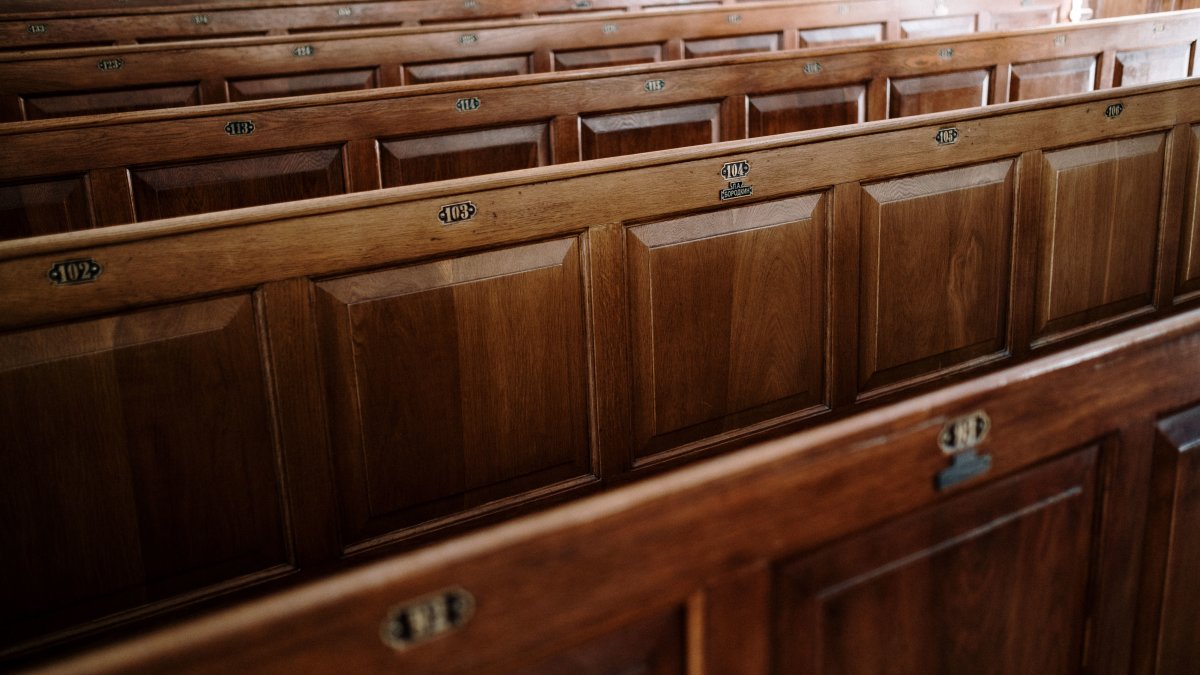
There is no single correct sheen for every sanctuary. The right choice depends on congregation traffic, existing wood condition, and how much reflection the space can handle without glare.
Satin is a common option for church pew finish work in Connecticut sanctuaries because it provides moderate reflection with a softer visual profile. Gloss offers high shine but shows scratches and imperfections more easily. Matte hides surface wear well, while maintenance requirements depend on the specific coating system used.
Choosing between these three options is less about personal preference and more about matching the finish to how the pews are actually used.
Stain Color and Protective Finish Are Two Different Decisions
Stain color changes the wood's tone. A protective topcoat is a separate layer applied over that color to guard against scuffs, spills, and daily wear. Confusing the two often leads to disappointment once refinishing is complete.
A committee might approve a rich walnut stain expecting a certain appearance, then be surprised that the same stain looks noticeably different under a high-gloss topcoat versus a matte one. The topcoat sheen affects how the stain color underneath is perceived under sanctuary lighting.
Pew refinishing in CT sanctuaries typically involves both decisions made together: first the stain, then the protective topcoat, which affects shine level and scratch visibility while providing protection against wear.
Comparing Gloss, Satin, and Matte Finishes for Pews
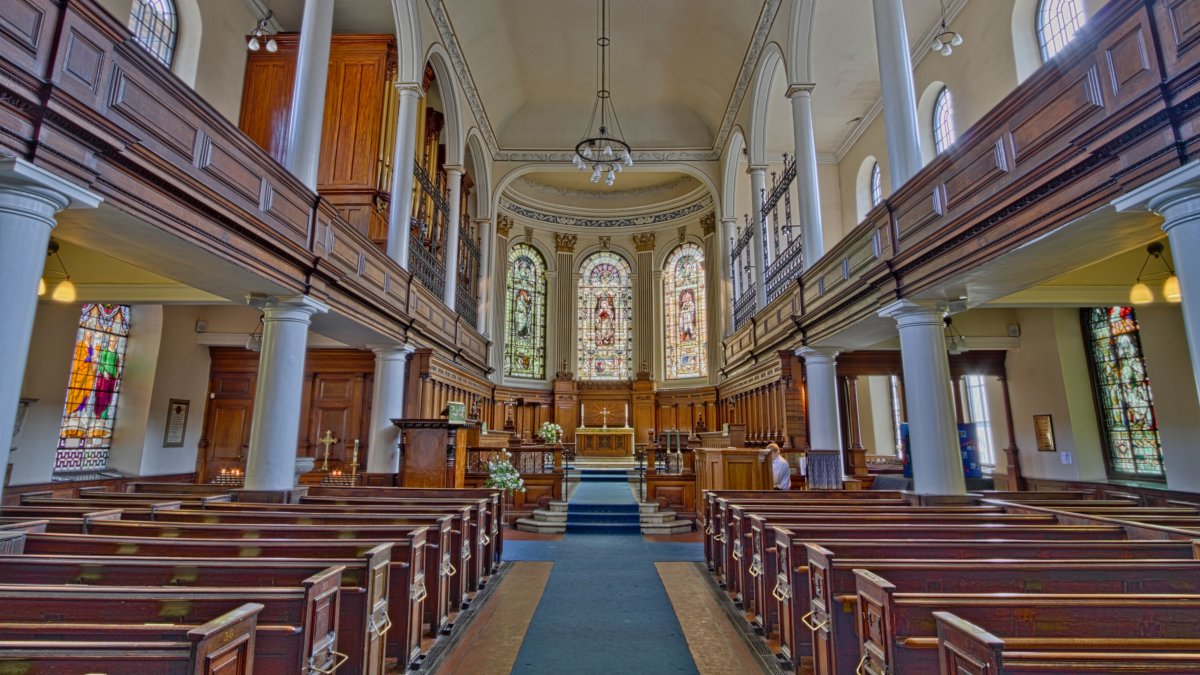
Each wood sheen level creates different tradeoffs in appearance, wear visibility, and upkeep. Reviewing how they perform side by side makes the decision easier for a building committee to discuss.
Gloss
Gloss finishes reflect the most light and create a deeper, richer look on solid oak or mahogany pews. While a clear topcoat guards against moisture and spills, durability and protection depend on topcoat selection and application rather than sheen alone.
The tradeoff is visibility. Every scratch, dust particle, and fingerprint shows more clearly under gloss because of how much light the surface reflects.
Satin
Satin sits between gloss and matte, offering moderate reflection with better scratch camouflage than gloss. With an appropriate topcoat formulation, it can provide durability for regular use while softening the glare that gloss can create under overhead or natural sanctuary lighting.
This balance makes satin a practical choice for church pew finish specifications in sanctuaries with steady weekly attendance.
Matte
Matte finishes minimize glare almost entirely and are the most forgiving sheen when it comes to hiding surface scratches and fine wear patterns. Matte may suit historic sanctuaries because its lower-sheen appearance can more closely resemble older hand-rubbed oil finishes.
Maintenance requirements and long-term performance depend on the coating formulation and heavy-traffic exposure rather than the sheen level alone.
Finish Comparison Table
|
Factor |
Gloss |
Satin |
Matte |
|
Light reflection |
Highest |
Moderate |
Lowest |
|
Scratch visibility |
Most visible |
Moderately visible |
Least visible |
|
Protective performance |
Depends on coating formulation |
Depends on coating formulation |
Depends on coating formulation |
|
Maintenance frequency |
Depends on formulation & traffic |
Depends on formulation & traffic |
Depends on formulation & traffic |
|
Historic appearance fit |
Higher-shine appearance |
Moderate-sheen appearance |
Lower-sheen appearance that may complement some historic interiors |
Factors That Should Guide Your Sheen Decision
The right sheen depends on more than appearance. Five practical factors typically drive the final decision for a sanctuary's pew refinishing project.
Historic Character of the Sanctuary
Landmarked and older churches often carry documented finish history that should inform any refinishing decision. The National Park Service notes that applied finishes can be individually or collectively important in defining a building's character, and retention of those features should be a priority in any preservation project, according to Preservation Brief 18. Congregations working within a landmark review process should document the existing sheen and stain before any refinishing begins.
Congregation Size and Service Frequency
A large congregation with multiple weekly services puts far more contact stress on pew arms, ends, and kneeler rails than a small parish with a single Sunday service. High-traffic sanctuaries should focus on choosing durable topcoat formulations designed to withstand frequent use.
Scratch and Wear Visibility
Sanctuaries lit heavily by natural light through stained glass windows, or by bright overhead fixtures, tend to show scratches more under gloss. Matte and satin sheens reduce this visibility, which matters most in center aisles and along armrests.
Wood Species
Oak, mahogany, and other hardwoods each accept and reflect finish differently. Oak's open grain can soften gloss reflection somewhat, while tighter-grained mahogany tends to show gloss more dramatically.
Condition of the Existing Coating
Stripping and refinishing a pew with a failing or yellowed old finish is a different project than lightly recoating a pew in good condition. Prolonged sun exposure can change the color of wood and contribute to finish deterioration over time, particularly when the finish provides limited UV protection. That existing condition often determines whether a full strip-and-refinish or a lighter maintenance coat is the more realistic option.
READ MORE: 6 Essential Maintenance Tips After Church Pew Refurbishing
How to Choose the Right Protective Finish for Your Pews
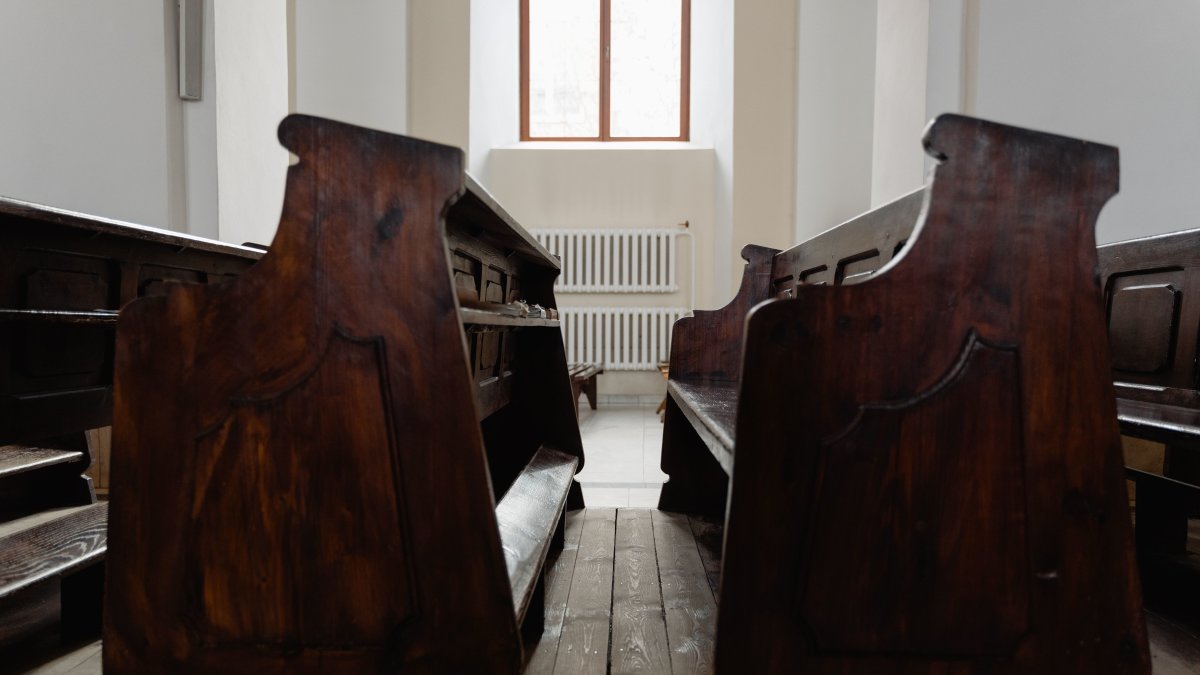
Working through the sheen decision in order helps a committee avoid backtracking after samples are approved.
Step 1: Assess the Current Finish Condition
Look for cracking, yellowing, sticky residue, or areas where the old topcoat has worn through to bare wood. These conditions can help indicate whether the project may require a full refinish or a lighter recoat.
Step 2: Confirm Wood Species and Stain Direction
Identify whether the pews are oak, mahogany, or another hardwood, and decide whether the stain color will stay the same or change. This decision happens before sheen is finalized.
Step 3: Walk the Sanctuary for Light and Traffic Patterns
Note which pews sit under direct sunlight, near heavily used aisles, or in lower-traffic side sections. Different zones can sometimes justify different maintenance schedules, even under the same sheen.
Step 4: Request Physical Finish Samples
Ask for small sample boards in gloss, satin, and matte under the sanctuary’s actual lighting, not a showroom. Sheen appearance can look different under stained glass light compared to fluorescent or LED fixtures.
Step 5: Confirm the Sheen Aligns With Historic or Denominational Guidelines
If the church is under landmark review or has a documented finish history, confirm the selected sheen fits within those requirements before work begins.
Step 6: Finalize the Protective Topcoat Type and Schedule the Work
Once sheen and stain are approved, confirm the topcoat product, drying and curing time, and how the work will be phased around the church’s service and event calendar.
What Factors Affect the Cost of Pew Refinishing in CT?
Pew refinishing costs vary based on the number of pews, the condition of the existing finish, wood species, stain and sheen selection, the amount of sanding required, and whether work happens on-site or off-site. Access to the sanctuary, scheduling around services, and any structural repairs needed alongside refinishing can also affect the total scope.
Because every sanctuary presents a different combination of these factors, a firm price per pew or per linear foot cannot be estimated without an in-person assessment.
Why Work With a Church Pew Refinishing Specialist in CT
Choosing sheen and stain is only part of a successful refinishing project. The finish also needs to be applied correctly for the wood species, the sanctuary’s environment, and how the pews will be used going forward.
Craftsmen will assess existing finish condition, wood species, and historic detailing before recommending a stain and sheen combination suited to each sanctuary.
For churches balancing historic preservation requirements with day-to-day durability needs, working with a team familiar with both wood restoration and worship-space scheduling can help avoid costly missteps during the sheen selection process.
Frequently Asked Questions
How often does a pew topcoat need to be reapplied?
There is no fixed schedule. Reapplication depends on congregation traffic, the type of topcoat, sun exposure, cleaning practices, and how quickly high-contact areas begin to show wear. Pew ends, arms, and center-aisle seating often need attention before lower-traffic sections.
Can different sheens be used in the same sanctuary?
Yes. Many churches use one consistent sheen throughout for visual continuity, while others may use different finish strategies in areas with heavier traffic or different restoration needs. The overall appearance should still feel intentional and cohesive.
Does gloss finish make pews slippery?
Not necessarily. Gloss describes how much light the finish reflects, not how slippery the seating surface will feel. Surface texture, coating formulation, upholstery, and the condition of the finished wood have a greater effect on comfort and traction.
Can church pews be refinished without removing them from the sanctuary?
Sometimes. Whether pews can be refinished on-site depends on the condition of the existing coating, ventilation needs, sanding requirements, curing time, access, and the extent of any repairs. More extensive restoration may require pews or components to be removed and refinished off-site.
How can a church tell whether its pews need refinishing or just recoating?
Minor dullness or light surface wear may only require maintenance or recoating. Peeling, cracking, yellowing, exposed wood, or widespread finish failure can indicate that more extensive stripping and refinishing is needed. A site assessment can help determine the appropriate scope.
Ready to Plan Your Church Pew Refinishing Project?
Partnering with experienced church restoration specialists can help your project achieve both long-lasting protection and beautiful results. For decades, Artech Church Interiors, Inc. has partnered with congregations across Connecticut, bringing expert craftsmanship to pew refinishing, historic wood refurbishing, and complete sanctuary restoration projects.
Contact Artech Church Interiors, Inc. to discuss the right stain and sheen combination for your pews.