

What’s In This Guide
- What Should Guide a Catholic Church Renovation Plan in New Jersey?
- Why Pews, Kneelers, and Furnishings Need a Different Renovation Approach
- How Do Liturgical Requirements Shape Sanctuary Furnishing Decisions?
- How Should Parishes Decide Between Repairing, Refinishing, or Replacing Pews and Kneelers?
- How Do Processional Routes and Accessibility Affect Renovation Planning?
- How Should Flooring and Finishes Be Coordinated With Furnishings?
- What Role Does Historic Designation Play in New Jersey Church Renovations?
- Step-by-Step: How to Plan a Pew, Kneeler, and Sanctuary Furnishings Renovation
- What Factors Influence Renovation Cost Estimates?
- Why Work With an Experienced Church Restoration Company?
- Frequently Asked Questions
- Ready to Plan Your Parish’s Pew, Kneeler, and Sanctuary Renovation?
Planning a Catholic church renovation in New Jersey involves more than choosing new finishes. Pews, kneelers, altars, and processional routes carry liturgical meaning, and changes can affect how the parish worships. Building committees need a plan that respects sacred function while addressing wear, accessibility, and long-term durability.
Quick Facts
- Prioritize liturgical function first. Pew layouts, aisles, kneelers, and sanctuary furnishings should support worship before aesthetic changes are finalized.
- Consider repair when the underlying structure is sound. Stable pews and kneelers may be candidates for repair or refinishing, while rot, cracked joints, or failing hardware may require component replacement or full replacement depending on the extent of the damage.
- Check diocesan requirements early. Changes to the altar, ambo, tabernacle, or seating layout may require parish and diocesan review.
- Factor in historic and accessibility needs. Historic designation can add review steps, while wider aisles and accessible seating can improve usability.
- Schedule around the parish calendar. Phase work around Sunday Masses, Holy Days of Obligation, weddings, funerals, and other scheduled liturgies or parish events.
What Should Guide a Catholic Church Renovation Plan in New Jersey?
A Catholic church renovation plan should be guided by liturgical function first, then structural condition, accessibility, and applicable diocesan requirements.
Every decision connects to how the assembly worships: where the congregation sits, how they process to Communion, and how the sanctuary area frames the altar, ambo, and tabernacle. Committees that start with liturgical requirements can reduce the risk of costly rework later, since furniture placement, aisle width, and material choices all follow from those requirements.
Early coordination also helps committees align pew spacing, kneeler design, aisle widths, and liturgical furnishings before installation decisions are finalized.
Why Pews, Kneelers, and Furnishings Need a Different Renovation Approach
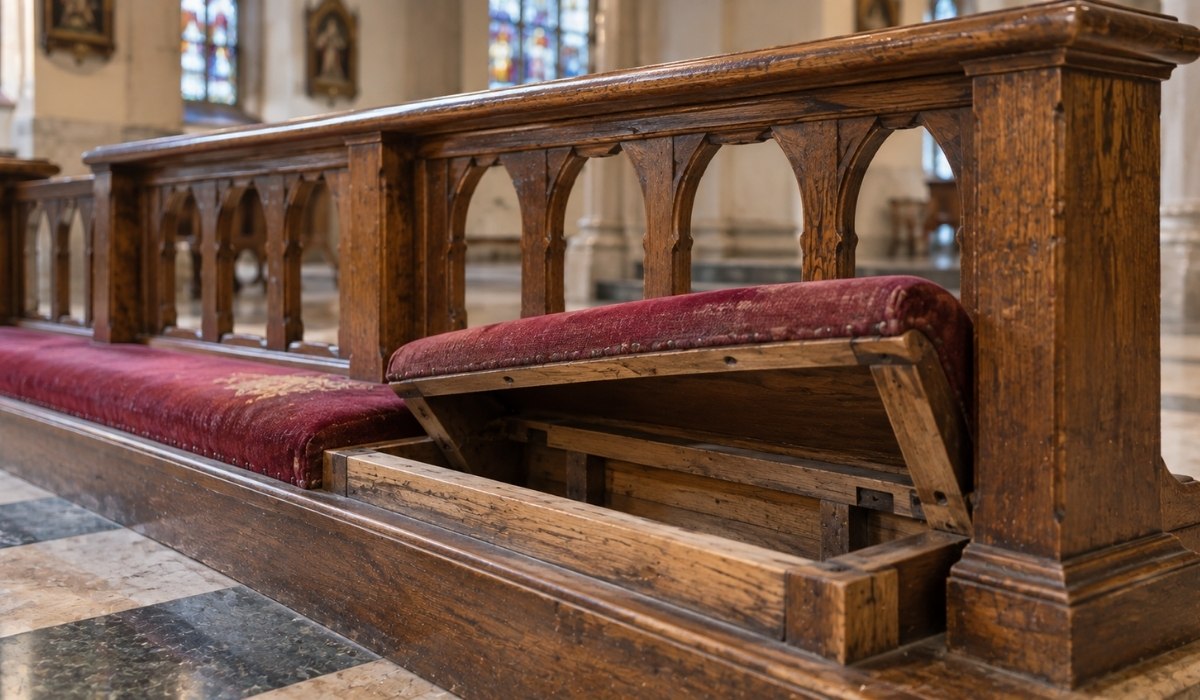
Catholic church furnishings require a renovation approach that accounts for liturgical use as well as appearance, condition, and comfort. Pews and kneelers are generally located in the body of the church rather than the sanctuary, but their condition and layout still affect how parishioners sit, kneel, stand, and move during Mass. Renovation planning should coordinate these congregational furnishings with sanctuary elements such as the altar, ambo, and priest’s chair.
Many Catholic church buildings in New Jersey are decades old, and some retain original or long-standing pews, kneelers, and altar-rail elements. These furnishings may carry historical or sentimental value tied to the parish’s history. Renovation planning should account for that significance alongside current condition, function, and maintenance needs.
How Do Liturgical Requirements Shape Sanctuary Furnishing Decisions?
Liturgical guidance informs the placement and function of church furnishings, while diocesan policies determine the review or approval process for proposed changes.
Core Furnishings That Require Careful Planning
- The altar: A central element of the Eucharistic celebration; proposed changes should be reviewed against applicable liturgical norms and diocesan requirements before work begins.
- The ambo: The stand for proclaiming Scripture, positioned for visibility and acoustics.
- The tabernacle: The place where the Blessed Sacrament is reserved, with its placement governed by applicable liturgical norms and diocesan guidance.
- The priest’s chair: Positioned to support the celebrant’s role during the liturgy.
- Pews and kneelers: Congregational furnishings that provide seating and kneeling support while allowing sufficient space for standing and movement during Mass.
Coordinating all furnishings as one plan, rather than tackling pews in isolation, keeps the worship space visually and functionally cohesive.
How Should Parishes Decide Between Repairing, Refinishing, or Replacing Pews and Kneelers?
Parishes should base pew and kneeler decisions on structural condition first, followed by function, comfort, and appearance. Solid frames with worn kneeler pads or faded finishes may be candidates for repair or refinishing. Cracked joints, rotted wood, or failing kneeler hinges should be assessed to determine whether localized repair, component replacement, or full replacement is appropriate.
Kneeler replacement may be appropriate when frames, supports, or hinges show widespread deterioration that cannot be reliably corrected through repair.
Signs That Point Toward More Than Routine Repair
- Loose or wobbling pew ends that shift under weight
- Kneelers that stick, drop suddenly, or no longer fold smoothly
- Visible wood rot, insect damage, or persistent moisture staining
- Cracked or split frame joints that recur after previous repairs
- Upholstery or padding that remains worn, compressed, or damaged after prior repairs
Comparison: Repair, Refinish, or Replace
|
Factor |
Repair or Refinish |
Full Replacement |
|---|---|---|
|
Best for |
Isolated wear, cosmetic damage, minor kneeler issues |
Structural failure, widespread damage, layout changes |
|
Structural condition |
Frame and kneeler hinges remain sound |
Frame or hinges are compromised |
|
Historic value |
Preserves original woodwork and craftsmanship |
Introduces new materials |
|
Layout flexibility |
Limited to existing configuration |
Allows aisle width or accessibility adjustments |
|
Diocesan review |
Depends on the scope of work and applicable diocesan requirements. |
Depends on the scope of work and applicable diocesan requirements. |
READ MORE: Connecticut Church Pew Refurbishing Guide
How Do Processional Routes and Accessibility Affect Renovation Planning?
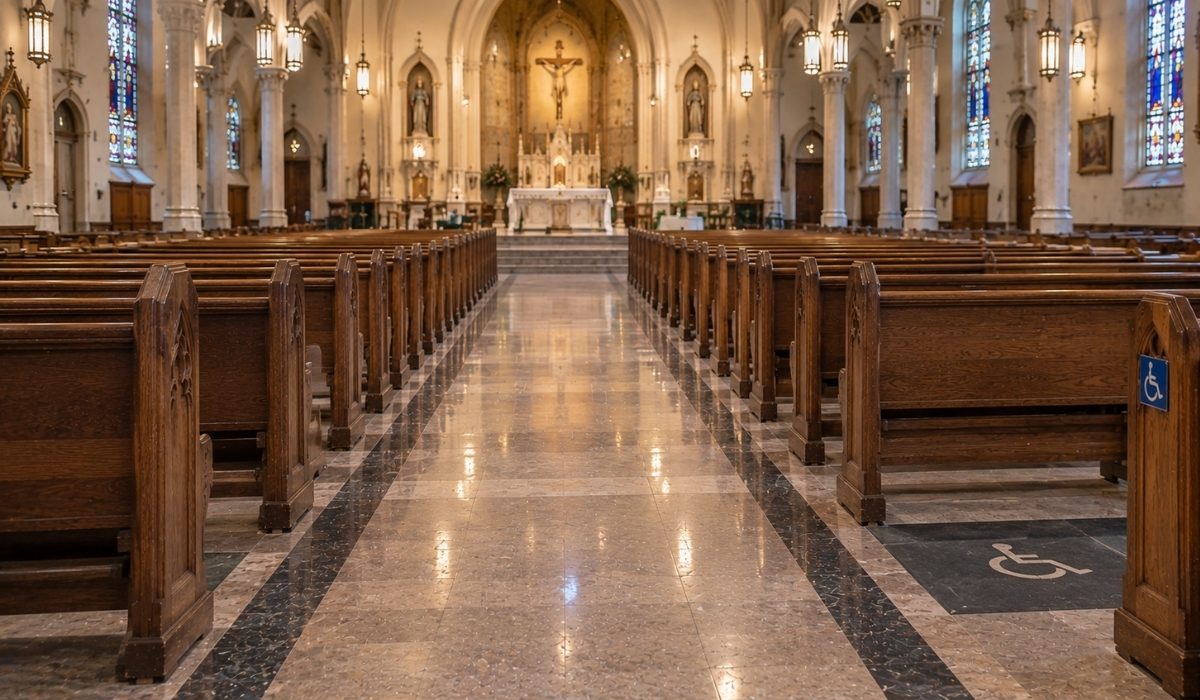
Processional routes and aisle spacing need to accommodate clergy, altar servers, wedding parties, funeral processions, and Communion lines without pinch points. Renovation plans that shift pew rows even slightly can narrow or widen these paths in ways that affect movement during Mass.
Religious organizations and entities they control, including places of worship, are exempt from Title III of the federal ADA. However, that federal exemption does not eliminate accessibility requirements that may apply under New Jersey’s Uniform Construction Code, including its barrier-free provisions, or under other applicable state and local requirements.
Accessibility planning may include wider aisles, accessible seating areas, or adjusted kneeler spacing to accommodate parishioners who use wheelchairs, walkers, or other mobility aids.
Coordinating accessibility goals with liturgical requirements, rather than treating them as separate projects, helps a parish avoid revisiting the same aisle or pew section twice.
How Should Flooring and Finishes Be Coordinated With Furnishings?
Flooring and finish choices should be selected alongside pew and kneeler materials, not decided separately. Wood tones, kneeler upholstery, carpet or stone flooring, and wall or plaster colors all interact visually within the church interior.
Reviewing material and color samples together under the church interior’s actual lighting helps committees confirm that furnishings, flooring, and finishes create a cohesive appearance.
What Role Does Historic Designation Play in New Jersey Church Renovations?
Historic designation can add review requirements, but the applicable process depends on the designation and the government approvals, funding, or actions involved. For projects subject to New Jersey Register review, the New Jersey Historic Preservation Office reviews a technically complete application and identifies encroachments within a 45-day review period. Projects determined to involve an encroachment may require additional review by the Historic Sites Council and final action by the Commissioner.
The Secretary of the Interior’s Standards outline four treatment approaches for historic buildings and their features:
- Preservation: Retains existing materials with minimal alteration.
- Rehabilitation: Allows updates for continued use while keeping historic character.
- Restoration: Returns a feature to its appearance at a specific past period.
- Reconstruction: Recreates non-surviving portions of a historic property based on documentary and physical evidence.
For a parish with original hand-carved pews or historic kneelers, understanding which treatment applies helps set realistic expectations before preservation review begins. Local historic preservation requirements may also apply to landmark-designated churches, so parishes should confirm the requirements of the municipality where the property is located.
Step-by-Step: How to Plan a Pew, Kneeler, and Sanctuary Furnishings Renovation
Step 1: Assess Current Condition
Document the condition of pews, kneelers, flooring, and sanctuary furnishings with photographs and written notes. Identify which items need repair, refinishing, or replacement, and flag any items with historic or memorial significance.
Step 2: Confirm Liturgical and Diocesan Requirements
Consult diocesan guidelines and the pastor or building committee before finalizing layout changes. Confirm whether proposed changes to the altar, ambo, tabernacle placement, or pew configuration require formal diocesan review.
Step 3: Coordinate Historic and Municipal Review
Determine whether the parish building has state, federal, or local historic designation and identify which review requirements apply to the proposed work. When review is required, submit the necessary documentation to the appropriate agency or commission before beginning work that depends on approval.
Step 4: Plan Temporary Removal and Storage
Arrange for pews, kneelers, or furnishings that require off-site work to be carefully removed, labeled, and stored. This step matters most for historic pieces that need controlled conditions to prevent warping or damage during the project.
Step 5: Schedule Work Around the Worship Calendar
Build a phased schedule that avoids Sunday Masses, Holy Days of Obligation, weddings, funerals, and other sacramental celebrations already on the parish calendar. Phasing work by section, rather than closing the entire worship space at once, often reduces disruption.
Step 6: Reinstall and Complete Final Quality Checks
Reinstall pews, kneelers, and furnishings according to the approved layout, then confirm proper alignment, secure anchoring, and consistent finish across all pieces before returning the space to regular use.
What Factors Influence Renovation Cost Estimates?
Renovation costs for pews, kneelers, and sanctuary furnishings vary based on the scope of work, the condition of existing materials, and whether the project involves historic review. There is no single price that applies to every parish, since each project depends on different site conditions and goals.
Factors that typically affect an estimate include:
- Whether pews and kneelers need repair, refinishing, or full replacement
- The size of the worship space and the number of pews involved
- Historic designation status and any related review requirements
- Custom woodwork, carving, or matching of existing finishes
- Accessibility adjustments to aisles or seating areas
- Scheduling needs tied to the parish’s Mass calendar
A parish can get a clearer picture of likely costs by requesting an on-site assessment, since estimates built around actual conditions are far more useful for budgeting than general figures.
Why Work With an Experienced Church Restoration Company?
Working with a church restoration company familiar with Catholic worship spaces can help a parish coordinate furnishings, processional routes, and review requirements during renovation planning. Experience with altar placement, kneeler design, aisle spacing, and other liturgical considerations is particularly relevant when those elements affect the proposed layout.
A restoration contractor like Artech Church Interiors, Inc. works with churches throughout New Jersey and the broader Northeast on pew refinishing, kneeler repair, and sanctuary furnishing coordination. Renovation planning benefits from a partner familiar with phased scheduling around worship calendars, historic material handling, and the liturgical function of sanctuary furnishings, since these considerations affect many decisions a building committee makes.
Frequently Asked Questions
Can original pews be kept if only some sections are damaged?
Yes. Sections with sound frames and hardware can often be repaired or refinished, while deteriorated components may be replaced. New work should be matched as closely as practical to the existing wood, finish, profile, and hardware to maintain a consistent appearance throughout the church interior.
Who approves changes to the altar, ambo, or tabernacle placement?
Approval procedures vary by diocese. Parishes should consult the pastor and appropriate diocesan offices before changing the altar, ambo, or tabernacle placement.
Should pew and kneeler work be scheduled around specific dates?
Yes. Phasing work around Sunday Masses, Holy Days of Obligation, weddings, and funerals already on the parish calendar helps reduce disruption to regular worship and parish life.
How can churches maintain a consistent look when replacing pews or kneelers?
Match details such as wood species, stain, upholstery, hardware, and end-panel design so new pieces blend with existing furnishings.
When should sanctuary furnishings be removed during a renovation?
They should be removed before flooring, painting, electrical, or structural work when needed to protect them and keep the project on schedule.
Ready to Plan Your Parish’s Pew, Kneeler, and Sanctuary Renovation?
Artech Church Interiors, Inc. has worked with Catholic parishes and other congregations across New Jersey and the Northeast on pew refinishing, kneeler repair, and sanctuary furnishing projects that respect liturgical requirements and historic character.
Contact Artech Church Interiors, Inc. to discuss a pew, kneeler, or sanctuary furnishing renovation for your parish.