
What’s In This Guide
- What Is a Realistic Church Renovation Cost?
- Church Renovation Cost by Project Type
- Church Restoration Cost vs. Renovation Cost
- What Affects Sanctuary Renovation Cost?
- How to Plan a Church Renovation Budget
- How to Present a Church Renovation Budget to Your Congregation
- Funding and Phasing a Church Renovation
- Why Specialized Experience Matters in Sanctuary Work
- Frequently Asked Questions
- Plan Your Sanctuary Renovation With Artech
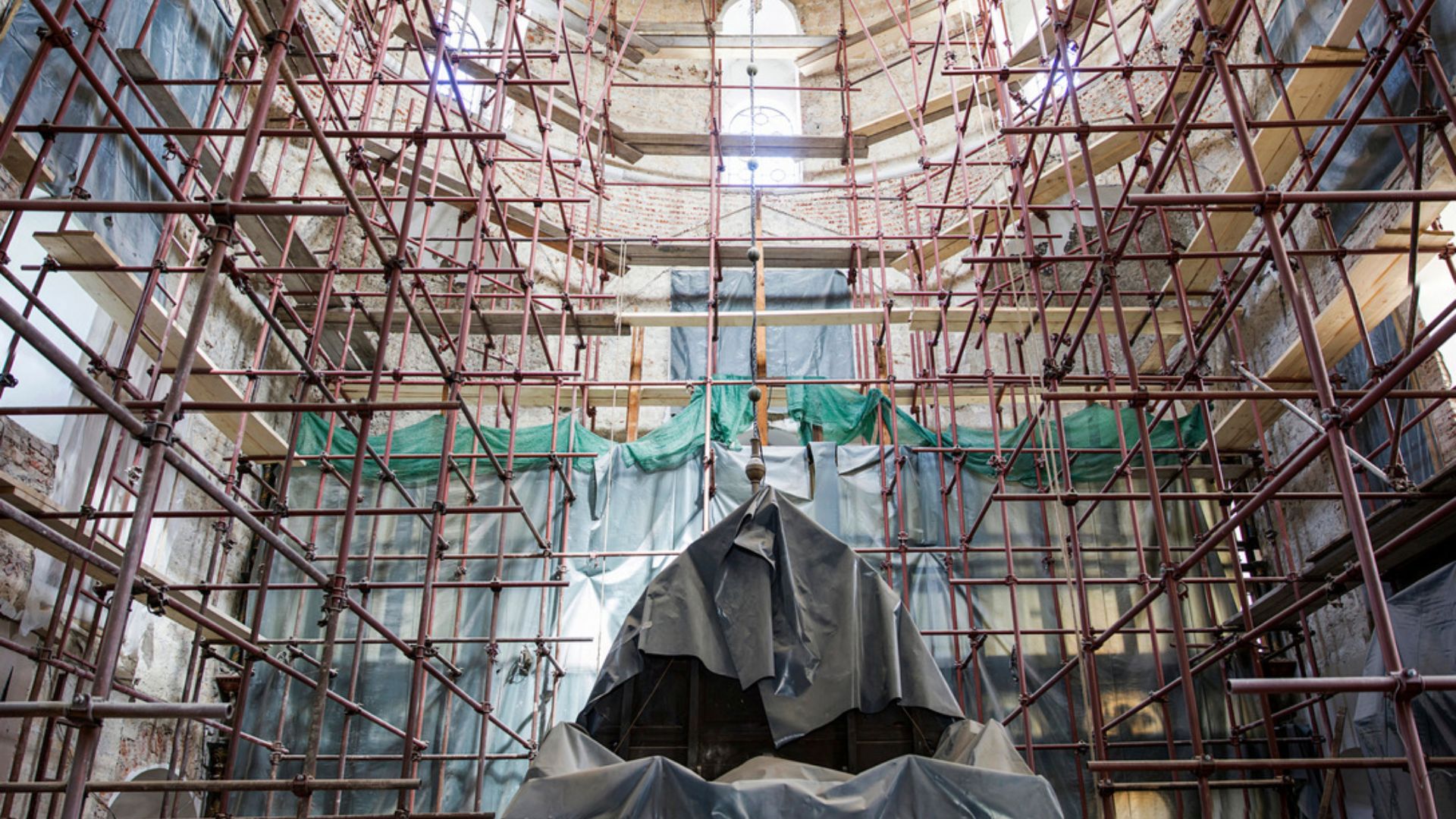
Church renovation cost is one of the first questions building committees ask, and one of the hardest to answer from a distance. A sanctuary is not a standard commercial interior. Plaster ceilings, ornamental millwork, stained glass, long pew runs, and worship schedules all shape the final figure.
Quick Facts
- Church renovation cost depends on scope, condition, materials, and approvals, so no single figure fits every sanctuary.
- Cosmetic updates sit at the lower end, while plaster, ornamental, and structural work sit higher.
- Church restoration cost often reflects hand craftsmanship and documentation, not just materials.
- A professional condition assessment helps prevent budget surprises.
- Phasing and grant funding can make larger projects more manageable.
What Is a Realistic Church Renovation Cost?
There is no single average. A project that refreshes paint and pew upholstery is a different undertaking from a full sanctuary renovation with new flooring, lighting, seating, and plaster repair. Artech's own cost guides give a useful sense of scale for individual scopes.
New pews may run roughly $200 to $500 per linear foot, while refurbished pews may run roughly $150 to $300, which puts a standard 12-foot pew at an estimated $2,400 to $6,000 when new. For stained glass, most church projects may fall between $150 and $600 per square foot, depending on size, design complexity, and installation.
A full sanctuary renovation combines several of these scopes, so the total depends on which ones apply to your building. These figures are general estimates, not quotes, and the number usually sharpens only after an on-site inspection.
Demand for capital funding is a useful reality check. In October 2026, the National Fund for Sacred Places selected 30 historic congregations from 466 applicants to receive capital grants of up to $500,000 each, for a combined total of more than $9 million. The number of applicants shows how many historic congregations are seeking outside support for capital work, which makes early planning worthwhile.
Church Renovation Cost by Project Type
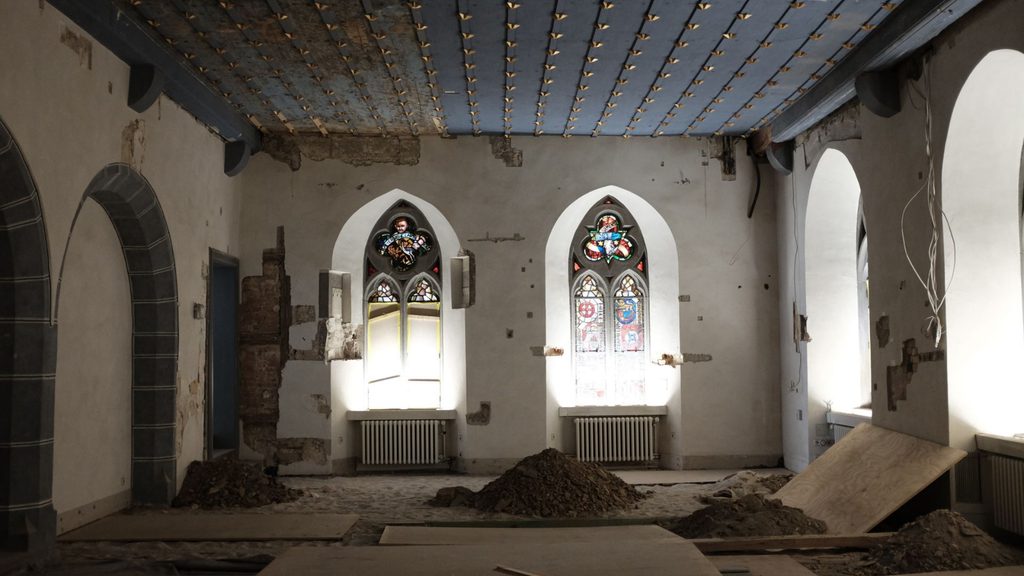
Every church renovation project is unique, with costs varying based on the size of the space, selected materials, and required specialized craftsmanship. Understanding these factors helps building committees establish realistic budgets and prioritize updates effectively.
|
Project Type |
What Shapes the Estimate |
|
Cosmetic refresh (paint, upholstery, lighting updates) |
Surface area, fabric and finish choices, wall height |
|
Flooring replacement or refinishing |
Material, subfloor condition, pew removal and reinstallation |
|
Pew refurbishment or new seating |
Wood condition, pew count, customization, refinish or replace |
|
Extent of damage, moisture source, ornamental detail |
|
|
Stained glass, steeple, or exterior work |
Access equipment, structural findings, protective glazing |
|
Full sanctuary renovation |
Layout changes, design work, multiple trades, phasing |
Church Restoration Cost vs. Renovation Cost
The two terms are often used interchangeably, but they describe different goals. Church restoration typically preserves existing layouts, features, and appearance by mending damaged elements and refurbishing finishes. Renovation modernizes parts of the space that no longer suit current worship, which may include new seating arrangements, lighting, or flooring.
That distinction affects the budget. Church restoration costs reflect labor-intensive work like matching historic plaster profiles, repairing original woodwork, or sourcing historic millwork reproduction. Renovation costs depend primarily on the price of new materials and construction.
For historic buildings, preservation guidance adds another layer. The National Park Service explains that its Standards for Rehabilitation protect character-defining features while allowing extensively deteriorated elements to be replaced with the same material or a compatible substitute. Review requirements vary by town and designation, so confirming them early protects both schedule and budget.
What Affects Sanctuary Renovation Cost?
Sanctuary renovation cost shifts with several factors. Understanding them helps committees read estimates more critically.
- Scope of work: A single trade costs differently than a coordinated, multi-trade project. A comprehensive project like interior church restoration and renovation requires careful coordination across multiple specialties.
- Building condition: Moisture damage, loose plaster, or aging substrates can expand the scope once walls and ceilings are opened.
- Materials and finishes: Natural wood, marble, custom stains, gloss, satin, or matte pew finishes, and decorative paint vary widely in price and labor.
- Specialized labor: Ornamental plaster, mural restoration, and millwork repair require trained artisans.
- Access and equipment: Tall naves often call for lifts or scaffolding.
- Customization: Carved details, custom upholstery, and design work add time.
- Approvals: Landmark or preservation review can affect timing and methods.
- Accessibility and code: Religious entities are exempt from Title III of the ADA, but state and local building codes may still apply, and many congregations improve access by choice.
- Schedule and urgency: Working around services, holidays, and funerals, or compressing a timeline, can influence cost.
Two congregations with the same square footage can receive very different estimates for these reasons, which is why a site visit matters.
How to Plan a Church Renovation Budget
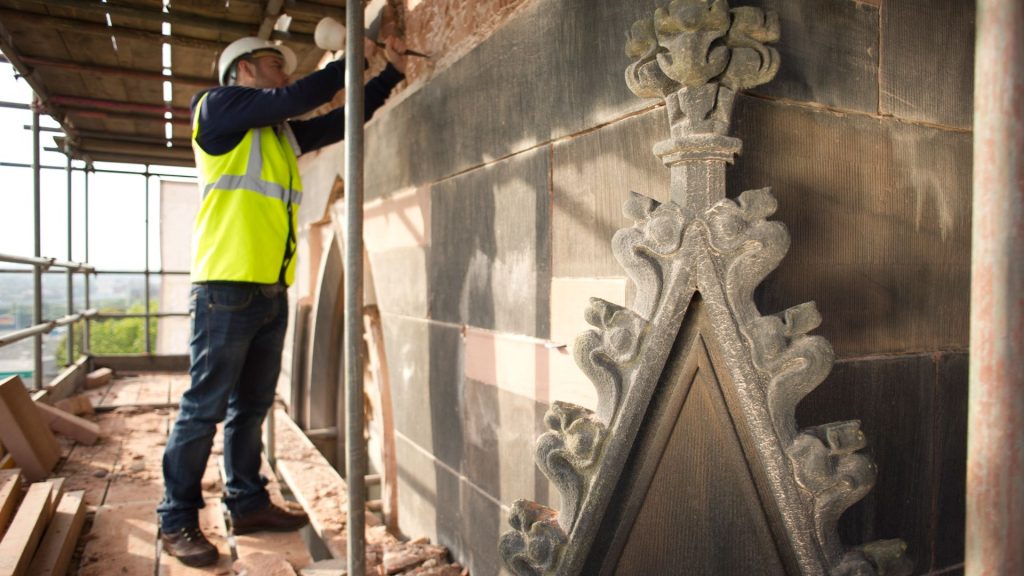
A clear process helps building committees explain their decisions to the congregation. These steps reflect how Artech approaches planning with houses of worship.
- Start with a condition assessment. Artech consultants visit the church or temple to understand the extent of needs and the congregation's vision before any proposal is written.
- Define goals with the committee. Decide whether the project is restoration, renovation, or a combination.
- Separate must-do from nice-to-have. Water intrusion and structural concerns generally come before aesthetic upgrades.
- Request itemized proposals. Line items for removal, materials, labor, and reinstallation make comparisons easier.
- Build in a contingency. Older buildings can reveal conditions that were not visible at the first inspection.
- Plan around the worship calendar. Schedule work to protect anniversaries, major feast days, and planned events.
- Confirm funding sources. Match the scope to available reserves, campaign pledges, or grants.
Common Budget Mistakes to Avoid
- Comparing unequal proposals: Bids that cover different scopes cannot be compared fairly.
- Skipping the assessment: Estimates built without an on-site review are more likely to change.
- Painting over active moisture: Cosmetic work over a live leak tends to fail and be repeated.
- Overlooking church-specific experience: Sanctuaries involve materials, heights, and traditions that general interiors do not.
How to Present a Church Renovation Budget to Your Congregation
A sound estimate only helps if the people voting on it understand it. Building committees often carry the extra task of explaining scope, cost, and timing to trustees, clergy, and members who were not part of the planning.
Start With a One-Page Scope Summary
Congregations respond best to a short, plain summary of what the project includes and why it matters. List each area of work, the condition that prompted it, and the outcome expected. Keeping the summary tied to the building’s needs, such as moisture repair, worn seating, or aging electrical and HVAC systems, helps members see the work as stewardship rather than preference.
Explain Estimates as Estimates
Members may hear a number once and treat it as a promise. Present figures as planning estimates, and explain that on-site inspection, material selections, and building conditions can refine them. Naming a contingency in advance shows careful planning and prevents surprise when older buildings reveal hidden conditions.
Share Priorities Before the Vote
Group the work into what must happen now, what should happen soon, and what can wait. This lets the congregation weigh trade-offs openly and supports a phased plan if funds are limited. Photos from the site visit make priorities easier to understand than written descriptions alone.
Keep a Record for Future Committees
Church leadership changes over the years. Keep proposals, approved scopes, material choices, and inspection notes in one place so later committees understand what was done and why. Clear records also make future maintenance and restoration planning more efficient.
Funding and Phasing a Church Renovation
Grants and Preservation Funding
Historic congregations may qualify for outside support. The National Fund for Sacred Places offers capital grants for significant projects at historic houses of worship. Eligibility, timelines, and award amounts change, so review current program terms directly and prepare a grant-ready preservation plan before applying.
Why Phasing Can Help
Many churches spread work across budget cycles rather than completing everything at once.
|
Approach |
Advantages |
Considerations |
|
Single-phase project |
One mobilization, one disruption window |
Larger upfront commitment |
|
Phased project |
Spreads cost, fits campaign timelines |
May require repeat setup and careful sequencing |
A phased plan works best when the order is deliberate. Envelope and moisture repairs usually come first, followed by plaster, painting, flooring, and finishing details.
Why Specialized Experience Matters in Sanctuary Work
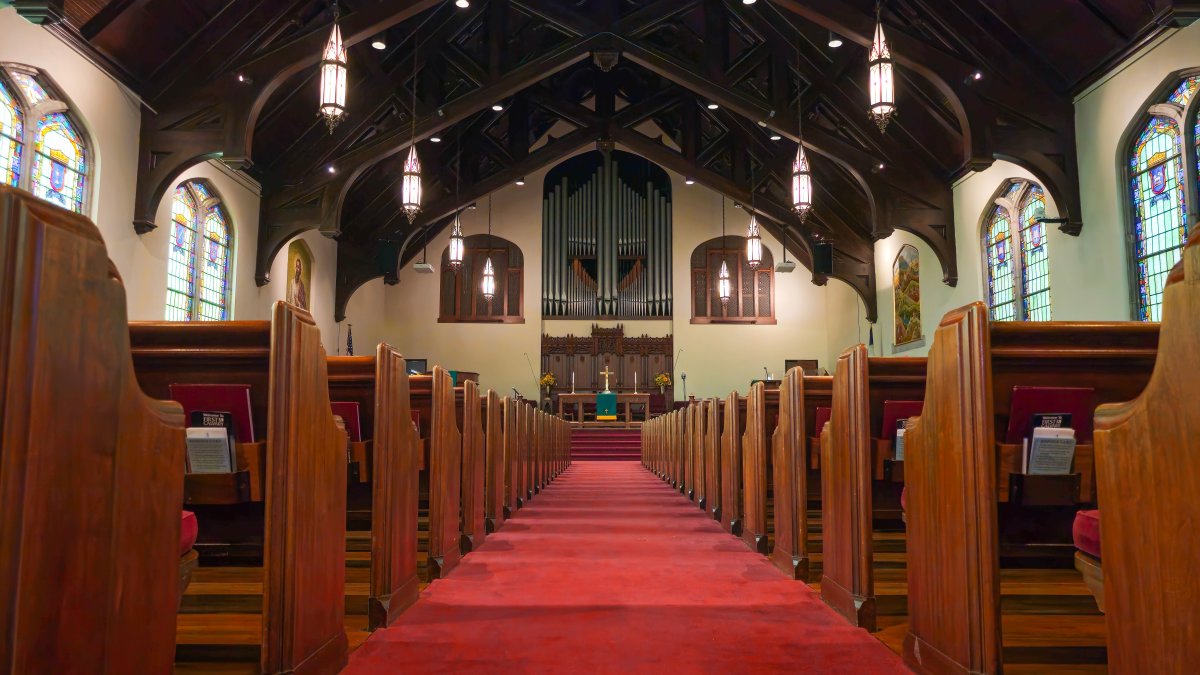
Worship spaces involve tall volumes, heavy but infrequent traffic, and finishes with devotional and historic meaning. Artech Church Interiors, Inc. provides church renovation and restoration services for congregations of many denominations, including plaster repair, church flooring, lighting, and stained glass and window work.
Projects can be managed in three ways: turnkey, where Artech handles design through finishing; joint, where Artech works alongside an architect or general contractor; or minor renovation coordination for cosmetic updates. That flexibility lets committees match the level of involvement to their budget and internal capacity.
Frequently Asked Questions
How much does a church renovation cost?
Church renovation cost varies widely. A limited cosmetic update may fall at the lower end, while a full sanctuary renovation with structural, plaster, flooring, and seating work may fall at the higher end. Costs depend on scope, building condition, materials, labor, and approvals. An on-site assessment is the most reliable way to refine an estimate.
How long does a church renovation take?
Timelines depend on scope, building condition, material lead times, and the worship calendar. A cosmetic update may be completed in a relatively short window, while a full sanctuary renovation with plaster, flooring, and seating work usually takes longer and may be phased. A site visit and written proposal can establish a realistic schedule for your building.
Can a church stay open for services during a renovation?
Often, yes. Work can be scheduled around services, funerals, weddings, and major feast days, and larger projects can be phased so part of the building stays in use. Dust control, protection of pews and flooring, and clear access routes should be agreed on before work begins.
Is it more cost-effective to restore or replace church pews?
It depends on construction and condition. Solid wood pews with sound joinery are often good candidates for refinishing, including painted or layered finishes, and reupholstering, which generally costs less than buying new seating. Pews with severe structural damage or poor-quality materials may be better replaced. Comparing itemized proposals for both options helps committees decide.
Does insurance cover church renovation or restoration costs?
Coverage depends on the cause of the damage and the terms of the church’s policy. Sudden damage, such as a covered roof or water event, may qualify, while long-term wear or deferred maintenance is often excluded. Elective renovation upgrades are typically not covered. Review your policy with your insurance provider before planning your budget.
Plan Your Sanctuary Renovation With Artech
Understanding church renovation costs starts with understanding the building. Artech Church Interiors, Inc. helps congregations across Connecticut, New York, New Jersey, Massachusetts, Rhode Island, and the wider Northeast evaluate scope, compare options, and plan work that respects both tradition and budget.
A site visit is the first step toward an estimate your committee can review with confidence.