
What’s In This Guide
- Why This Matters for NYC Congregations
- What Counts as Historic Millwork in a Church Interior?
- How Do Contractors Document Millwork Before It’s Reproduced?
- Repair, Replicate, or Replace: How Is the Decision Made?
- How Do Craftsmen Match Wood Species and Grain for a Seamless Repair?
- How Is Stain and Finish Matched to Decades of Natural Aging?
- What Should a NYC Church Committee Ask a Millwork Contractor?
- What Does Millwork Reproduction Typically Cost?
- Frequently Asked Questions
- Ready to Discuss Your Church’s Millwork or Restoration Project?
Restoring architectural woodwork in New York City churches requires balancing structural preservation with exact visual matching. When intricate altar rails, pew ends, or decorative paneling suffer damage or go missing, standard stock lumber may not provide a suitable direct replacement. Reproducing historic woodwork demands specialized documentation, precise profile replication, and careful finish techniques to ensure new sections blend seamlessly into the original sanctuary architecture.
Quick Facts
- The NYC Landmarks Preservation Commission protects more than 38,000 landmark properties. Most alterations to designated properties require LPC approval, although ordinary repairs and many interior alterations do not.
- Federal preservation standards favor repairing existing material over full replacement or replication whenever feasible.
- Matching missing millwork profiles may involve custom templates taken from surviving sections or other reliable physical, documentary, or pictorial evidence.
- Matching wood species, grain direction, joinery, and sheen helps prevent reproductions from looking like obvious patches.
- The Sacred Sites Program provides matching grants to eligible landmarked houses of worship for planning and exterior restoration projects; interior renovation is not eligible for funding.
Why This Matters for NYC Congregations
A missing altar rail baluster or a cracked panel on a century-old pew end is rarely just a cosmetic problem. It is a break in a continuous visual line that a congregation has looked at for generations. Working with experienced historic renovation contractors in NYC can help churches preserve these unique architectural details while accounting for applicable local preservation requirements.
New York City has more than 38,000 landmark properties, including buildings located within designated historic districts. Most alterations to designated properties require LPC approval, although ordinary exterior repairs and maintenance may be exempt. Interior work generally does not require LPC review unless it requires a Buildings Department permit, affects the exterior, or involves a designated interior landmark.
The commission's count of more than 38,000 landmark properties shows the breadth of its jurisdiction across the five boroughs, but whether a particular church millwork project requires review depends on the property's designation and the scope of work.
What Counts as Historic Millwork in a Church Interior?
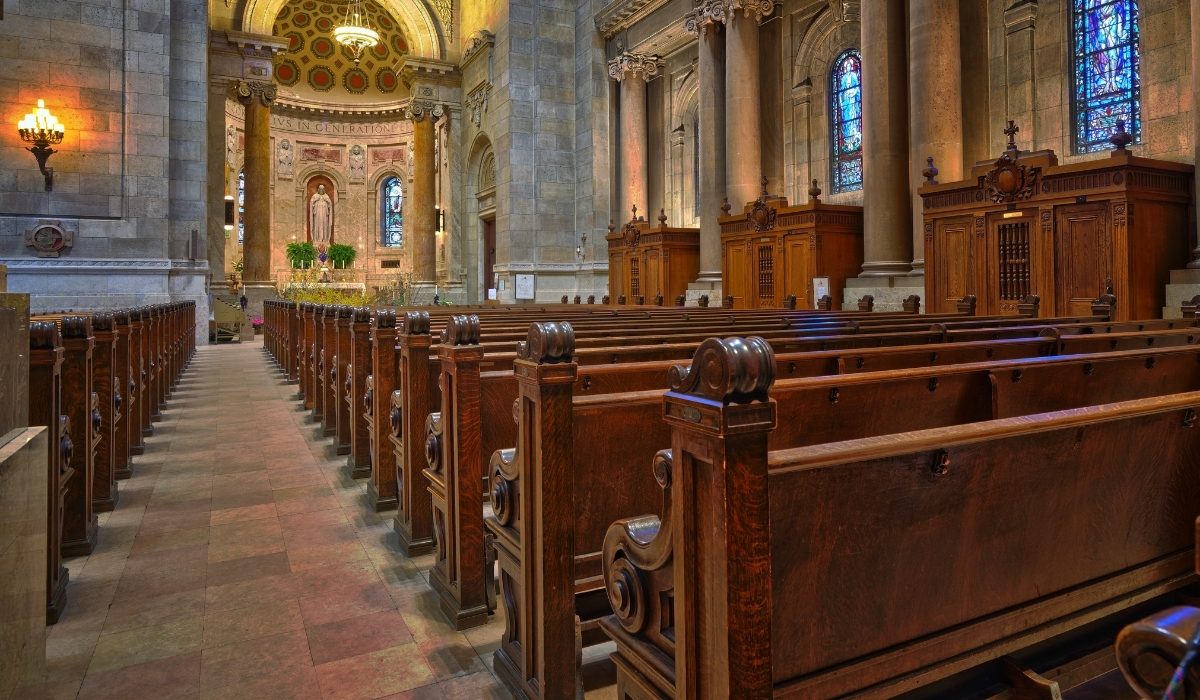
Historic millwork covers the shaped wood elements that give a sanctuary its architectural character. Common examples of architectural woodwork in NYC church interiors include altar rails, pew ends, wainscoting, door and window trim, choir stalls, and decorative panels around the reredos or bema.
Many historic church interiors contain custom millwork made to fit a particular building, which is part of why original profiles, dimensions, and details can be difficult to reproduce with stock lumber.
Common categories include:
- Structural trim: baseboards, door casings, window surrounds, and cornice moldings
- Devotional millwork: altar rails, communion rails, kneeler frames, and lectern or pulpit panels
- Seating millwork: pew ends, book rack fronts, and armrests
- Decorative surfaces: wainscoting, coffered ceiling panels, and carved or turned ornament around a bema or reredos
How Do Contractors Document Millwork Before It's Reproduced?
Documentation comes first because a reproduction is only as accurate as the record it is built from. For church millwork restoration in NYC, contractors measure, photograph, and often template the surviving pieces before anything is cut, repaired, or removed.
This matches the sequence preservation professionals recommend broadly: examine and record existing material before altering it, so nothing original is lost to guesswork later.
1. Photograph the Full Run
Wide shots establish spacing, rhythm, and how the piece relates to the surrounding wall, floor, or ceiling line.
2. Measure and Profile the Wood for Molding Replication
A profile gauge or digital scan captures the exact curve, reveal, and depth of the molding or carving.
3. Identify the Wood Species
Grain pattern, density, and color under a cleaned test area help narrow down oak, mahogany, walnut, or another period-appropriate species.
4. Note the Joinery
Mortise-and-tenon joints, dowel construction, and how stiles and rails meet all affect how a new piece needs to be built to hold up the same way.
5. Record the Finish Layers
A small paint or stain cross-section shows whether the piece was originally stained, painted, gilded, or left natural, which guides the final finish coat.
6. Create a Template or Pattern
For carved or turned elements, a full-scale pattern or duplicate carving may be made before the damaged piece is removed, helping preserve an accurate reference for its shape.
Repair, Replicate, or Replace: How Is the Decision Made?
The decision comes down to how much original material survives and whether it can still carry structural and visual weight. Preservation-minded contractors default to the least invasive option first.
|
Decision |
When It Applies |
What It Typically Involves |
|
Repair |
Original wood is sound but has surface damage, a loose joint, or minor rot |
Consolidation, splicing in new wood at the damaged section only, refinishing to match |
|
Replicate |
The piece is missing, broken beyond structural repair, or too deteriorated to save |
New wood milled to match species, profile, dimensions, and joinery, then finished to blend with surviving pieces |
|
Replace with compatible material |
Repair is not feasible or the original material is not reasonably available, and a compatible wood or substitute material can meet applicable preservation requirements |
A compatible material selected to match appearance and performance, following substitute materials guidance from the National Park Service |
Repair keeps the largest share of original fabric intact and is generally preferred when the historic material remains repairable. Replication becomes necessary when a piece is gone entirely, such as a missing altar rail section or a pew end lost in a prior renovation.
Substitute or alternative materials may be considered when repair or use of the original material is not reasonably feasible. When substitutes are used, they should provide an appropriate visual and physical match while preserving the historic character of the existing work.
How Do Craftsmen Match Wood Species and Grain for a Seamless Repair?
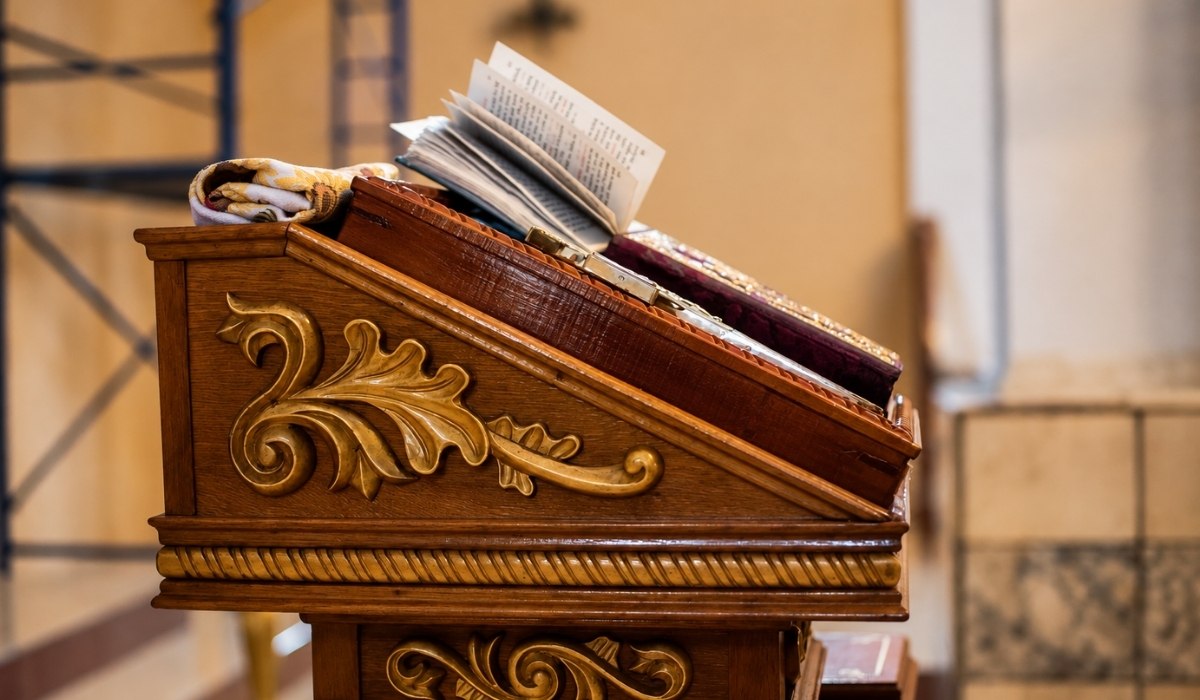
Matching starts with identifying the original species correctly, since oak, mahogany, and walnut each take stain and age differently. A mismatch here is one of the fastest ways a repair announces itself.
Craftsmen also pay attention to grain direction and cut. Quarter-sawn oak, common in late nineteenth and early twentieth century church millwork, shows a distinct ray-fleck pattern that plain-sawn lumber won't replicate no matter how close the stain color lands.
Key matching factors:
- Species and grade: New wood needs to match not just the type but the grade, since old-growth lumber often has tighter grain than modern stock
- Cut orientation: Quarter-sawn, rift-sawn, or plain-sawn boards each read differently once finished
- Moisture content: New wood should be properly dried and acclimated to the interior environment to reduce the risk of shrinkage, swelling, or warping after installation
- Color and figure: Natural variation in aged wood, including color changes caused by decades of light exposure, is part of what a skilled finisher accounts for in the stain formula
READ MORE: Church Pew Refurbishing & Modern Church Upgrades
How Is Stain and Finish Matched to Decades of Natural Aging?
Finish matching accounts for how wood color shifts over time from light exposure, oxidation, and decades of polish, wax, or oil. A brand-new piece stained to match a fresh sample will often look too flat or too uniform once it sits beside century-old wood.
Finishers typically build up color in layers rather than applying one stain coat, blending tone gradually until the new section reads as continuous with the old. Sheen matters just as much as color. A high-gloss modern varnish next to a worn, hand-rubbed original finish creates a visible line even when the wood color is nearly identical.
Common finish-matching techniques:
- Toning coats applied in thin layers to build depth rather than flat, single-pass color
- Sheen adjustment so new varnish or oil finish matches the wear pattern of surrounding wood
- Edge and highlight wear applied selectively to blend a sharp new edge into a softened original profile
- Test panels finished and reviewed on-site under the sanctuary's actual lighting before committing to the full run
What Should a NYC Church Committee Ask a Millwork Contractor?
A building or renovation committee benefits from a short, direct list of questions before hiring anyone to touch historic woodwork. These questions surface experience gaps early, before a contract is signed.
- Has the contractor documented and replicated millwork in a landmarked or historic building before?
- Will the contractor create a template or pattern before removing any damaged original material?
- How will wood species, grain, and finish be matched, and can they show a sample or prior project?
- Does the scope require LPC or another local preservation review before work begins?
- What happens to any salvaged original material once repairs are complete?
Clear, specific answers to all five questions can help the committee compare contractors' experience, documentation practices, preservation approach, and proposed scope before making a selection.
What Does Millwork Reproduction Typically Cost?
Millwork reproduction costs vary depending on the scope of damage, wood species, joinery complexity, finish requirements, and whether the church falls under landmark or historic district review. A single pew end repair carries a different scope than reproducing an entire altar rail run or matching an ornate reredos panel.
Factors that typically influence an estimate include:
- Extent of documentation needed before work begins
- Wood species and availability of matching material
- Complexity of carving, turning, or joinery
- Access conditions inside the sanctuary
- Whether LPC or another preservation review adds time to the timeline
- Finish matching requirements across the full millwork run
Because every sanctuary and every damaged element is different, accurate pricing generally requires an assessment of existing conditions and a clearly defined scope of work.
Frequently Asked Questions
How long does a typical millwork reproduction project take?
Timelines depend on the amount of documentation required, the complexity of the profile, carving, or joinery, and whether preservation review is involved. Simple trim reproduction may move faster than custom altar rails, pew ends, or carved panels that require templates and finish samples.
Can one missing piece be reproduced without replacing the entire millwork run?
Often, yes. If enough original material survives to provide an accurate profile, dimensions, wood reference, and finish sample, a contractor may be able to reproduce only the missing section and integrate it into the existing run.
Should historic church millwork be stripped before refinishing?
Not automatically. Existing finish layers can provide useful information about original color, coatings, and later alterations. A preservation-minded contractor should evaluate the finish first and determine whether cleaning, localized repair, or partial refinishing is more appropriate than full stripping.
What happens to original millwork that is removed during restoration?
Salvageable material may be retained for repair, used as a reference for reproduction, or stored for future restoration work. Churches should establish how original pieces will be labeled, documented, protected, and returned before removal begins.
Are grants available to help NYC churches fund restoration projects like this?
Some grants are available. The New York Landmarks Conservancy’s Sacred Sites Program offers matching grants to eligible landmarked houses of worship in New York State for planning and exterior restoration projects. Interior renovation is not eligible, and additional property and project requirements apply.
Ready to Discuss Your Church’s Millwork or Restoration Project?
Artech Church Interiors, Inc. works with churches, synagogues, and temples across the Northeast on wood refinishing, seating restoration, and interior renovation projects that respect a building’s original character.
Contact us to discuss your church’s millwork condition and next steps.
Related Posts
- Church Restoration Contractors: What New Jersey Synagogues Should Know Before Renovating
- Why Does Lime Mortar Matter When Repointing Historic Boston Churches?